The Upper Mustang Tour by Road is a 10-day journey through Nepal’s spectacular Mustang region, combining dramatic Himalayan landscapes, ancient villages, Tibetan Buddhist culture, sacred Muktinath, and the historic walled city of Lo Manthang. The journey travels from Kathmandu through Pokhara, Kagbeni, Ghami, and Lo Manthang before returning via Muktinath and Jomsom. With permits, transportation, accommodation, breakfast, an experienced guide and driver, and essential trip arrangements included, this tour offers a comfortable way to explore the remote and culturally rich Upper Mustang region.
Upper Mustang Tour by Road
Trip Facts
Duration
10 Days
Trip Grade
Easy
Country
Nepal
Maximum Altitude
3840
Starts
Kathmandu
Ends
Kathmandu
Group Size
1 to 15
Activities
Sightseeing
Best Time
Autumn, Spring & Winter
Upper Mustang Tour by Road Outline Itinerary
Day 1:
Arrival in Kathmandu
Altitude: 1,400m
Day 2:
Drive from Kathmandu to Pokhara
Altitude: 822m
Day 3:
Drive from Pokhara to Kagbeni
Altitude: 2,850m
Day 4:
Drive from Kagbeni to Ghami
Altitude: 3,510m
Day 5:
Drive from Ghami to Lo Manthang
Altitude: 3,840m
Day 6:
Explore the Surroundings of Lo Manthang
Altitude: 3,840m
Day 7:
Drive from Lo Manthang to Muktinath and Jomsom
Altitude: 3,800m
Day 8:
Drive from Jomsom to Pokhara
Altitude: 822m
Day 9:
Drive from Pokhara to Kathmandu
Altitude: 1,399m
Day 10:
Departure from Kathmandu
The Upper Mustang Tour by Road takes you on an unforgettable journey from Pokhara through lush valleys, dramatic mountain landscapes, and ancient Himalayan settlements into the remote, high-altitude region of the former Kingdom of Lo.
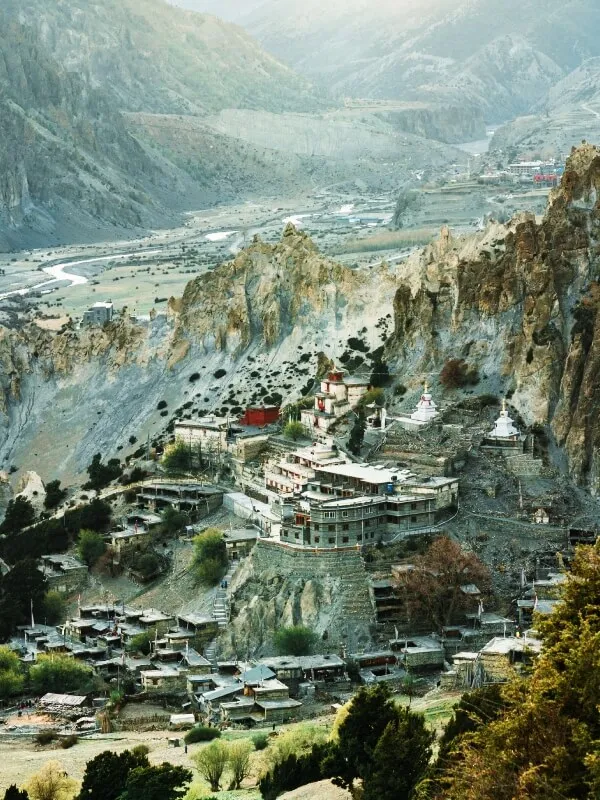
As you travel north through the Kali Gandaki Valley, you experience dramatic changes in scenery from cascading waterfalls and natural hot springs to rugged mountain terrain, ancient settlements, and the dry, desert-like landscapes of the Trans-Himalayan region.
Your journey begins with scenic stops such as Rupse Waterfall and Tatopani, where you can relax in the famous natural hot springs. Continuing onward, you reach Jomsom, the gateway to the upper Mustang region, before arriving at Kagbeni, an ancient settlement known for its narrow alleys, traditional houses, Buddhist monasteries, and distinctive Himalayan atmosphere.
As you continue toward Muktinath temple, you encounter one of Nepal's most important pilgrimage sites, surrounded by dramatic mountain scenery. From there, the road takes you deeper into the remote landscapes of Mustang, where the scenery transforms into high-altitude desert terrain, towering cliffs, colorful rock formations, deep gorges, barren hills, and expansive valleys.
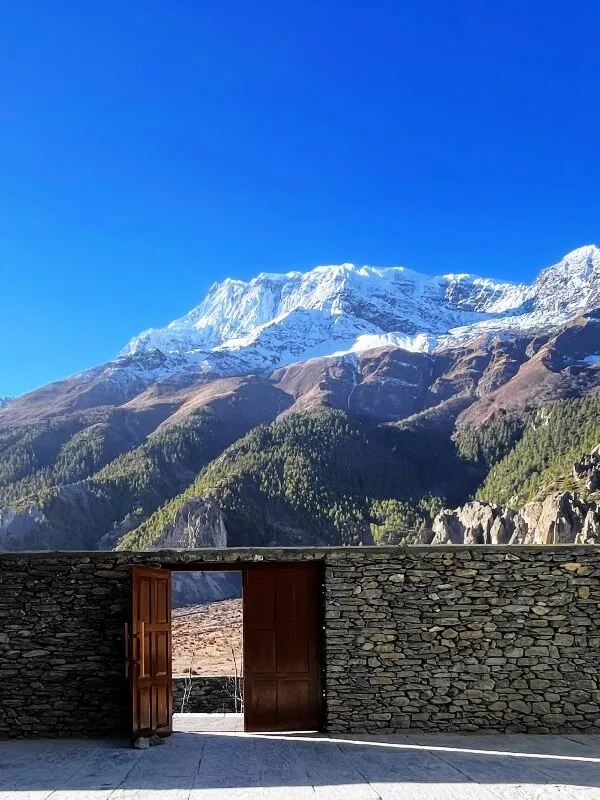
Throughout the journey, you can enjoy spectacular views of the Himalayan range, including Dhaulagiri, Nilgiri, Annapurna, and other snow-covered peaks. You also get to experience the unique Tibetan-influenced culture of Mustang as you pass through traditional villages, ancient monasteries, chortens, prayer walls, and settlements that have preserved their distinctive way of life for generations.
The highlight of your journey is Lo Manthang, the historic walled city and former royal capital of the Kingdom of Lo. Here, you can explore narrow lanes, traditional mud-brick houses, ancient monasteries, palace structures, and the remarkable cultural heritage that makes this remote Himalayan kingdom so different from other destinations in Nepal.
Your journey into Upper Mustang is also special because the region is a restricted area due to its sensitive location near the Nepal–Tibet border. You need a special restricted-area permit to travel beyond Kagbeni, and access is regulated to help protect the region's unique environment, cultural heritage, and traditional communities.
Rather than simply taking a road trip through the mountains, you get to experience the remarkable transformation of Nepal from green valleys and rushing rivers to waterfalls, hot springs, sacred pilgrimage sites, rugged high-altitude terrain, Tibetan Buddhist settlements, ancient caves, dramatic Himalayan views, and the historic Kingdom of Lo.
From Rupse Waterfall, Tatopani, Jomsom, Kagbeni, and Muktinath to the remote valleys and ancient walled city of Lo Manthang, the Upper Mustang Tour by Road gives you the opportunity to discover one of Nepal's most isolated, culturally rich, and visually striking regions at your own pace.
Highlights of Upper Mustang Tour by Road
- Discover the historic walled city and former royal capital of the Kingdom of Lo in Lo Manthang, surrounded by ancient monasteries, traditional mud-brick houses, and centuries-old Himalayan culture.
- Experience the dramatic high-altitude desert landscapes of Upper Mustang, shaped by towering cliffs, eroded rock formations, dry valleys, and rugged mountain terrain.
- Witness spectacular views of Dhaulagiri, Nilgiri, Annapurna, and other snow-capped Himalayan peaks rising above the remote landscapes of Mustang.
- Explore the ancient village of Kagbeni, with its narrow alleyways, traditional houses, Buddhist monasteries, and distinctive Tibetan-influenced culture.
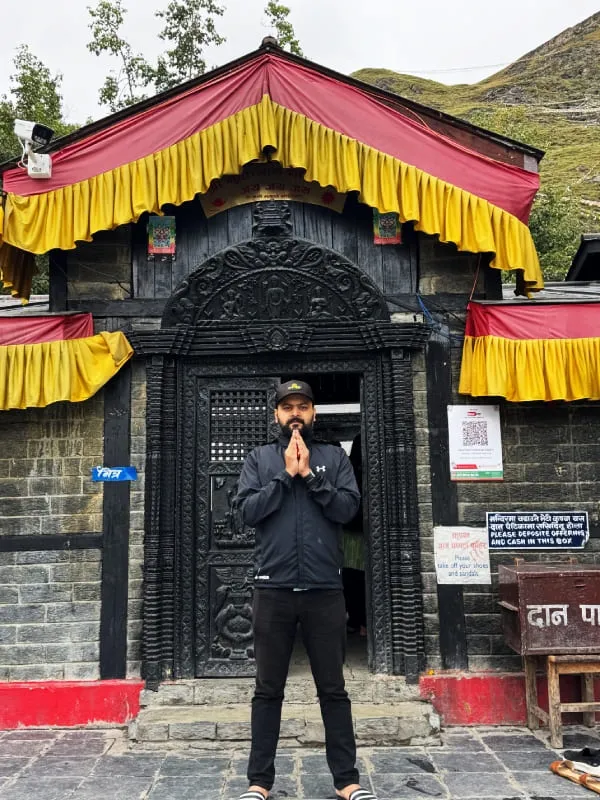
- Visit the sacred pilgrimage site of Muktinath, revered by both Hindus and Buddhists and surrounded by magnificent Himalayan scenery.
- Marvel at the cascading Rupse Waterfall as it plunges dramatically through the rugged cliffs of the Kali Gandaki Valley.
- Relax in the natural hot springs of Tatopani, enjoying a soothing break amid the surrounding green hills and mountain scenery.
- Drive through the spectacular Kali Gandaki Valley, following winding mountain roads between towering cliffs and some of the most dramatic scenery in the Himalayas.
- Immerse yourself in the Tibetan Buddhist heritage of Mustang, discovering ancient monasteries, chortens, mani walls, prayer flags, and centuries-old spiritual traditions.
- Discover the mysterious ancient cave settlements of Mustang, carved into towering cliffs and reflecting the region's fascinating history.
- Experience the traditional way of life in remote Mustang villages, where mud-brick homes, local customs, and centuries-old traditions remain deeply connected to the Himalayan environment.
- Journey through the restricted Upper Mustang region near the Nepal–Tibet border, experiencing a remote landscape and cultural heritage preserved through regulated access.
- Enjoy an adventurous 4WD journey across rugged mountain roads and high-altitude terrain, connecting remote valleys, villages, and historic settlements throughout Mustang.
Upper Mustang Tour Itinerary
Our 10-day Upper Mustang Tour itinerary begins and ends in Kathmandu, taking you on a scenic road journey through Pokhara, Lower Mustang, and the restricted landscapes of Upper Mustang before returning to the capital. Along the way, you travel through Kagbeni, Ghami, Lo Manthang, Muktinath, and Jomsom, while enjoying side excursions to Chhoser, Namgyal Gompa, Garphu, Tatopani, and Rupse Waterfall.
The trip combines high-altitude mountain scenery, ancient villages, Tibetan-influenced culture, Buddhist monasteries, sacred pilgrimage sites, rugged valleys, and the historic walled city of Lo Manthang, giving you a chance to experience the contrasting landscapes and heritage of both Lower and Upper Mustang.
The journey is arranged by Scorpio/4WD vehicle, with overnight stays according to the itinerary, and can be customized to suit your travel dates, interests, pace, and preferred stops, making the road adventure flexible whether you are traveling with family, friends, or as a private group.
Upper Mustang Tour Cost
The Upper Mustang Tour cost starts from USD 1,400 for the Budget package, USD 1,800 for the Standard package, and USD 3,000 for the Premium package. The price covers the complete journey, including Scorpio/4WD transportation from Kathmandu to Pokhara, throughout Mustang, and back to Kathmandu, along with 3-star accommodation on a twin-sharing basis, daily breakfast, lunch, and dinner, Upper Mustang Restricted Area Permit, ACAP permit, experienced guide, porter, driver, fuel, driver's food and accommodation, and other essential arrangements.
Single rooms are available at an additional cost, while the per-person rate can decrease as the group size increases, making the trip more economical for families, friends, and larger private groups.
Places to Visit in Upper Mustang
The best places to visit in Upper Mustang take you through ancient settlements, sacred sites, dramatic valleys, and remarkable cultural landmarks. Some of the key places you can explore along the journey include:
Lo Manthang
Discover the historic walled city and former royal capital of the Kingdom of Lo, surrounded by ancient monasteries, traditional houses, and distinctive Tibetan-influenced culture.
Muktinath
Visit the sacred pilgrimage site revered by both Hindus and Buddhists, set amid spectacular Himalayan scenery.
Kagbeni
Explore this ancient gateway village with narrow alleys, traditional mud-brick houses, old monasteries, and views toward the surrounding mountains.
Ghami
Experience one of Upper Mustang's traditional settlements, known for its dramatic surroundings, traditional architecture, and ancient Buddhist heritage.
Tsarang
Explore the historic village of Tsarang, featuring an old palace, monastery, chortens, and striking views across the surrounding landscape.
Chhoser Caves
Discover the fascinating cliffside caves around Chhoser, believed to have been used as ancient dwellings and meditation spaces, offering a glimpse into Mustang's mysterious past.
Best Time to Visit Upper Mustang, Nepal
Best time to visit Upper Mustang Nepal by Road can be enjoyed throughout most of the year, but each season offers a different experience. For the most comfortable road journey, spring (March to May) and autumn (September to November) are the preferred periods, with generally stable weather, clearer skies, pleasant daytime temperatures, and excellent visibility of the surrounding Himalayan peaks.
These months are particularly suitable for exploring Kagbeni, Muktinath, Lo Manthang, and the remote valleys of Upper Mustang.
Summer and monsoon (June to August) can also be suitable for an Upper Mustang Road trip because the region lies in the rain-shadow of the Annapurna and Dhaulagiri ranges and receives much less rainfall than many other parts of Nepal. However, rainfall can affect the lower sections of the journey, particularly around Kathmandu, Pokhara, and the route toward Lower Mustang, so road conditions and travel times can be less predictable.
You can also visit Upper Mustang during winter (December to February) if you are prepared for cold conditions. Temperatures drop considerably at higher elevations, and some areas can experience snow or freezing conditions, but the dry atmosphere, quieter trails and villages, and crisp mountain views can make winter a distinctive time for the journey. Road conditions should be considered carefully, particularly when traveling through higher sections.
For the Upper Mustang Tour by Road, March to May and September to November are generally the most convenient months for combining comfortable travel, good mountain visibility, sightseeing, and road conditions.
However, Upper Mustang is not limited to these seasons you can plan your journey in winter as well, while the monsoon period is the most challenging season, mainly because rainfall can affect the roads connecting Kathmandu, Pokhara, and Lower Mustang.
Whether you want clear Himalayan views, warmer daytime conditions, fewer visitors, or a quieter winter adventure, the timing of your Upper Mustang trip can be chosen according to the type of experience you prefer.
Join Tiji Festival 2027 with Adventure Vision Treks
Experience the Tiji Festival 2027 in Lo Manthang with Adventure Vision Treks and Travels. Join us on a specially arranged Upper Mustang journey and witness this three-day Tibetan Buddhist celebration featuring traditional masked dances, prayers, music, and centuries-old cultural traditions. Our team takes care of the essential arrangements, including transportation, accommodation, permits, and local logistics, allowing you to focus on experiencing the festival and exploring the remarkable landscapes and heritage of Upper Mustang. Contact us to plan your Tiji Festival 2027 journey and secure your place for this unique Himalayan cultural experience.
You'll Explore
Upper Mustang Tour by Road Itinerary
Day 1
Arrival in Kathmandu
Your Upper Mustang road tour begins with your arrival in Kathmandu, the capital city of Nepal. Upon landing at Tribhuvan International Airport, you will be welcomed by our representative and transferred to your hotel in Kathmandu. After checking in and settling into your room, you can take some time to rest after your journey or explore the nearby streets of Kathmandu if your arrival time permits.
Kathmandu is a fascinating introduction to Nepal, combining historic architecture, traditional neighborhoods, temples, monasteries, and a lively atmosphere. Depending on your arrival schedule, you may also have time to visit nearby attractions or simply relax at the hotel. In the evening, you will receive a briefing about the upcoming Upper Mustang road trip, including the route, road conditions, permits, vehicle arrangements, and important travel information. Overnight at a hotel in Kathmandu.
Max Altitude: 1,400m (4,593ft)
Duration: 1 Hour
Distance: 7 Km
Meals: Welcome Dinner
Accommodation: 3 Star Hotel
Mode of Transportation: Private Vehicle
Day 2
Drive from Kathmandu to Pokhara
After breakfast, you begin your scenic drive from Kathmandu to Pokhara, covering approximately 200 km depending on the route and road conditions. The journey generally takes around 6–8 hours, although travel time can vary because of traffic, road construction, weather, and seasonal conditions. The road follows the winding Trishuli River through green hills, terraced farmland, small settlements, and riverside landscapes before gradually reaching the Pokhara Valley.
Along the way, there are opportunities to stop for refreshments, lunch, photographs, and short breaks. As you approach Pokhara, the landscape becomes broader and the surrounding Himalayan scenery begins to appear more prominently on clear days. Pokhara is one of Nepal's most popular tourist destinations and serves as the main gateway for the Upper Mustang region. After arriving in Pokhara, check into your hotel and spend the remainder of the day relaxing or exploring the lakeside area. Overnight at a hotel in Pokhara.
Max Altitude: 822m (2,696ft)
Duration: 8 hours
Distance: 200 Km
Meals: Breakfast
Accommodation: 3 star hotel
Mode of Transportation: Private Vehicle
Day 3
Drive from Pokhara to Kagbeni
After an early breakfast, you leave Pokhara and begin the drive toward Kagbeni, the historic gateway to Upper Mustang. The journey covers approximately 155–160 km and normally takes around 7–9 hours, depending on road and weather conditions. The route follows the Kali Gandaki Valley, passing through dramatic mountain scenery and settlements such as Beni, Tatopani, Ghasa, Marpha, and Jomsom before reaching Kagbeni. As you travel north, the scenery gradually changes from the lush middle hills into the drier, more rugged landscape of the Mustang region.
You will pass waterfalls, steep cliffs, suspension bridges, apple orchards, traditional villages, and increasingly barren mountain slopes. After passing Jomsom, the road continues toward Kagbeni, an ancient settlement located at the confluence of the Kali Gandaki and Jhong Rivers. Kagbeni is famous for its traditional stone houses, narrow alleyways, prayer wheels, Buddhist monasteries, and distinctive Tibetan-influenced culture. It also marks the traditional entrance to Upper Mustang. After reaching Kagbeni, check into your accommodation and rest for the evening. Overnight in Kagbeni.
Max Altitude: 2,850m (9,350ft)
Duration: 8 Hours
Distance: 164 Km
Meals: Breakfast
Accommodation: 3 star hotel
Mode of Transportation: Private Vehcie
Day 4
Drive from Kagbeni to Ghami
Today you officially enter the restricted Upper Mustang region and begin the journey deeper into the former Kingdom of Lo. After breakfast, your drive continues north from Kagbeni toward Ghami, covering approximately 50–55 km and taking around 5–7 hours, depending on road conditions and stops along the way. Before continuing farther into Upper Mustang, the required restricted-area permit is checked at the appropriate checkpoint. The road follows the Kali Gandaki corridor through a spectacular landscape of eroded cliffs, barren mountains, deep gorges, and colorful rock formations.
You will pass through traditional settlements such as Tangbe and Chhusang before continuing toward Chele and higher Mustang villages. The landscape becomes increasingly dry and dramatic, with red, orange, gray, and brown cliffs surrounding the road. As you continue toward Ghami, you experience the distinctive Tibetan-influenced architecture and lifestyle of the region. Ghami is one of the important villages of Upper Mustang and is known for its traditional houses, fields, monastery, and long mani wall decorated with prayer stones. Upon arrival, check into your lodge and enjoy the peaceful surroundings of this remote Himalayan settlement. Overnight in Ghami.
Max Altitude: 3,510m (11,515ft)
Duration: 5 Hours
Distance: 55 Km
Meals: Breakfast
Accommodation: Standard Tea House
Mode of Transportation: Private Vehicle
Day 5
Drive from Ghami to Lo Manthang
After breakfast, you continue your spectacular road journey from Ghami to Lo Manthang, the historic capital of the former Kingdom of Lo. The drive covers approximately 35–40 km and generally takes around 4–5 hours, although frequent stops for photographs and sightseeing can make the journey longer. The route passes through some of the most dramatic landscapes in Upper Mustang. You cross high mountain passes and travel through barren valleys surrounded by unusual rock formations, cliffs, caves, and colorful geological layers.
Along the way, you may pass through traditional villages such as Tsarang and Lo Gekar, depending on the selected route and road conditions. One of the highlights of the journey is the approach toward Lo Manthang, where the landscape opens into a broad high-altitude valley surrounded by mountains. Lo Manthang is famous for its ancient walled settlement, traditional whitewashed buildings, monasteries, narrow lanes, and strong Tibetan cultural heritage.
After arriving, check into your accommodation and take some time to rest. If time permits, you can enjoy a short walk around the settlement and experience the atmosphere of this historic Himalayan town. Overnight in Lo Manthang.
Max Altitude: 3,840m (12,598ft)
Duration: 2 Hours
Distance: 20 Km
Meals: Breakfast
Accommodation: Tea House
Mode of Transportation: Private Vehicle
Day 6
Explore the Surroundings of Lo Manthang
Today is dedicated to exploring Lo Manthang and its surrounding areas without the need for a long transfer. After breakfast, you can explore the ancient walled city and its important cultural and historical sites. Lo Manthang is renowned for its traditional architecture, narrow alleys, whitewashed houses, ancient monasteries, prayer wheels, and centuries-old Tibetan Buddhist traditions.
You can visit important monasteries such as Jampa Lhakhang, Thubchen Monastery, and Chodey Monastery, depending on local access and your sightseeing schedule. The old royal palace and the traditional residential areas provide further insight into the history of the former Kingdom of Lo. You can also explore nearby villages and landscapes by vehicle or on foot, depending on your interests and road conditions.
The surrounding area features barren Himalayan mountains, high-altitude plateaus, caves, cliffs, and traditional agricultural fields that create a remarkable contrast with the green valleys of southern Nepal. This day also provides an opportunity to interact respectfully with local residents and learn about the region's distinctive culture and traditions. After exploring, return to your lodge in Lo Manthang for another night in the heart of Upper Mustang. Overnight in Lo Manthang.
Max Altitude: 3,840m (12,598ft)
Meals: Breakfast
Accommodation: Tea House
Day 7
Drive from Lo Manthang to Muktinath and Jomsom
After breakfast, you begin the return journey from Lo Manthang toward Muktinath and then continue to Jomsom. The route takes you back through the dramatic landscapes of Upper Mustang, with opportunities to stop at villages, viewpoints, monasteries, and scenic locations along the way. Depending on the exact route and road conditions, the journey from Lo Manthang to Muktinath can take approximately 6–8 hours, followed by another 1–2 hours to reach Jomsom. Muktinath is one of the most important pilgrimage destinations in Nepal and is sacred to both Hindus and Buddhists.
Upon arrival, you can visit the Muktinath Temple area, where natural springs, the sacred flame, and the surrounding Himalayan landscape attract pilgrims and travelers from around the world. After sightseeing at Muktinath, continue your drive down toward Jomsom. The landscape gradually changes as you descend from the high Mustang plateau toward the Kali Gandaki Valley. Jomsom is the administrative and commercial center of the Mustang region and lies along the Kali Gandaki River. After arriving, check into your hotel or lodge and relax after the day's drive. Overnight in Jomsom.
Max Altitude: 3,800m (12,467ft)
Duration: 4 Hours
Distance: 97 Km
Meals: Breakfast
Accommodation: 3 Star Hotel
Mode of Transportation: Private Vehicle
Day 8
Drive from Jomsom to Pokhara
After breakfast, you begin the scenic drive from Jomsom back to Pokhara. The journey follows the Kali Gandaki Valley southward, passing through Marpha, Tukuche, Kalopani, Ghasa, Tatopani, Beni, and other settlements before continuing toward Pokhara. The total road distance is approximately 155–160 km, and the journey generally takes around 7–9 hours, depending on road conditions, traffic, and stops.
As you descend, the scenery changes dramatically from the dry, barren landscape of Mustang to greener hills, forests, waterfalls, terraced farmland, and subtropical vegetation. You can stop along the way for lunch and refreshments and enjoy views of the surrounding mountains and river valleys. After reaching Pokhara, check into your hotel and spend the evening relaxing. If you have enough time and energy, you may take a leisurely walk around Phewa Lake or explore the lively Lakeside area. Overnight at a hotel in Pokhara.
Max Altitude: 822m (2,696ft)
Duration: 8 Hours
Distance: 160 Km
Meals: Breakfast
Accommodation: 3 star hotel
Mode of Transportation: Private Vehicle
Day 9
Drive from Pokhara to Kathmandu
After breakfast, you leave Pokhara and drive back to Kathmandu, covering approximately 200 km. The journey generally takes around 6–8 hours, depending on traffic, road conditions, construction, and weather. The route follows the winding highways through the hills, with the Trishuli River and numerous small settlements accompanying much of the journey.
You will have opportunities to stop for lunch, refreshments, photographs, and short breaks along the way. As you approach Kathmandu, traffic and urban development gradually increase, marking the end of your Upper Mustang road adventure. After arriving in Kathmandu, you will be transferred to your hotel and have the remainder of the day free. You can relax at the hotel, explore the nearby streets, purchase souvenirs, or enjoy a farewell dinner. Overnight at a hotel in Kathmandu.
Max Altitude: 1,399m (4,589ft)
Duration: 8 Hours
Distance: 200 km
Meals: Breakfast
Accommodation: 3 star Hotel
Mode of Transportation: Private Vehicle
Day 10
Departure from Kathmandu
Your Upper Mustang tour by road comes to an end today. After breakfast, you will have free time according to your flight schedule. Our representative will arrange your transfer to Tribhuvan International Airport for your onward flight. We recommend reaching the airport with sufficient time for international check-in and security procedures. As you leave Nepal, you take with you memories of the ancient settlements of Upper Mustang, the walled city of Lo Manthang, dramatic Himalayan landscapes, historic monasteries, Muktinath, and the spectacular Kali Gandaki Valley.
Meals: Breakfast
Are you still confuse from where to start? Adventure Vision Treks and Travels has solutions for this.
Trip Costs & Availability
Altitude Chart
Essential Information
Tiji Festival 2027
The Tiji Festival 2027, also known locally as Tenchi, is a three-day Tibetan Buddhist festival celebrated in the historic walled town of Lo Manthang in Upper Mustang, Nepal. Rooted in the ancient Buddhist traditions of the Mustang region, the festival features colorful masked dances, religious rituals, prayers, music, and traditional ceremonies performed by monks and local communities. The celebration represents the triumph of good over evil and provides visitors with a rare opportunity to experience the distinctive Tibetan Buddhist culture, traditions, and heritage of Upper Mustang.
Accommodation During the Upper Mustang Tour
During the Upper Mustang Tour, you stay in carefully selected 3-star standard hotels and comfortable lodges along the route, providing a pleasant place to rest after each day's road journey. Accommodation is arranged on a twin-sharing basis, with private rooms available at an additional cost for travelers who prefer more privacy.
In remote areas such as Upper Mustang and Lo Manthang, accommodation options are more limited, so we select the best available properties that provide comfort, cleanliness, and convenient access to the main attractions.
Food During the Upper Mustang Tour
Your Upper Mustang Tour includes breakfast, lunch, and dinner throughout the journey, with meals arranged at the hotels and local restaurants along the route. You can enjoy a mix of Nepali, Tibetan, and international dishes, including dal bhat, noodles, rice, vegetables, soups, momos, and other locally available meals.
As you travel into the remote areas of Upper Mustang, food choices can be more limited, but we arrange meals that are fresh, filling, and suitable for the high-altitude journey.
Upper Mustang Tour Permit
Upper Mustang is a restricted area in Nepal, so foreign visitors need a special permit to travel into the region beyond Kagbeni. The current government fee for the Upper Mustang Restricted Area Permit is USD 500 per person for the first 10 days, followed by USD 50 per person per additional day.
You also need an Annapurna Conservation Area Permit (ACAP) because part of the journey passes through the Annapurna Conservation Area. We arrange both the Upper Mustang Restricted Area Permit and ACAP for you as part of our tour package, so you can focus on enjoying the journey rather than handling the permit process yourself.
Permit fees and regulations may be revised by the government, so the applicable charges are confirmed at the time of booking.
How to Reach Upper Mustang?
You can reach Upper Mustang by road or by combining flights with a road journey. The most common overland option is to drive from Kathmandu to Pokhara, continue by public bus from Pokhara to Jomsom, and then rent a suitable 4WD vehicle from Jomsom for the drive toward Upper Mustang.
Alternatively, you can take a flight from Kathmandu to Pokhara, followed by a flight from Pokhara to Jomsom, and then continue by road toward Upper Mustang. For a more convenient and comfortable experience, you can also arrange a private Scorpio/4WD from Kathmandu or Pokhara, allowing you to travel directly through the Mustang route without changing transportation along the way.
Upper Mustang Road Conditions
The Upper Mustang road is a rugged mountain route that changes considerably as you travel from Pokhara toward the higher valleys of Mustang. The lower sections around Pokhara, Tatopani, Jomsom, and Kagbeni are generally easier to navigate, while the road becomes rougher, narrower, rocky, and more uneven as you continue toward Ghami and Lo Manthang. You can expect sections of dirt, gravel, stones, steep climbs, river crossings, and winding mountain tracks, making a 4WD Scorpio or similar vehicle well suited for the journey.
Road conditions can vary with the season and weather. Monsoon rainfall can cause muddy sections, landslides, and delays, particularly on the lower Mustang approach, while winter may bring snow and icy conditions at higher elevations. During the drier months, the roads are generally more suitable for a comfortable Upper Mustang road trip, although the terrain remains naturally rugged. With an experienced local driver and a suitable 4WD vehicle, you can travel through the challenging sections while enjoying the spectacular scenery, remote villages, and high-altitude landscapes along the route.
Kathmandu to Upper Mustang by Road
The Kathmandu to Upper Mustang by Road journey covers approximately 450–480 km one way, depending on the route and stops, and takes around 20–26 hours of driving time in total, which is divided across several days for a more comfortable journey. You start with a 200 km drive from Kathmandu to Pokhara, taking around 6–8 hours, passing through green hills, terraced farmland, and river valleys.
From Pokhara, you continue for approximately 160–180 km to Jomsom, which takes around 7–10 hours by Scorpio or 4WD, following the route through Beni, Tatopani, Rupse Waterfall, Ghasa, Marpha, and the Kali Gandaki Valley. From Jomsom, the road continues through Kagbeni and into Upper Mustang, with the drive to Lo Manthang taking roughly 6–8 hours, depending on road conditions and sightseeing stops. The higher sections feature rugged gravel tracks, rocky surfaces, narrow mountain roads, and steep terrain, making a Scorpio or suitable 4WD vehicle ideal for the journey.
Pokhara to Upper Mustang by Road
The Pokhara to Upper Mustang by Road journey covers approximately 250–280 km to Lo Manthang, depending on the route and stops, and usually takes around 12–16 hours of driving, which is divided over several days for a more comfortable trip. You travel from Pokhara to Jomsom, covering around 160–180 km in 7–10 hours, passing through Beni, Tatopani, Rupse Waterfall, Ghasa, Marpha, and the Kali Gandaki Valley.
From Jomsom, the route continues through Kagbeni, Chhusang, Ghami, and Tsarang before reaching Lo Manthang at 3,840 m (12,598 ft). The road becomes increasingly rugged as you enter Upper Mustang, with gravel tracks, rocky sections, winding mountain roads, river crossings, and steep climbs, so a Scorpio or suitable 4WD vehicle is recommended. Along the way, you can enjoy dramatic mountain scenery, traditional villages, ancient monasteries, and the distinctive high-altitude landscapes of Upper Mustang.
Jeep Rental for Upper Mustang Tour
You can rent a private or shared jeep from Kathmandu or Pokhara for your Upper Mustang trip. We provide Scorpio and other suitable 4WD/AWD vehicles, comfortably accommodating up to 6 people, with an experienced driver who stays with you throughout the journey.
Your jeep rental includes fuel, driver, driver's food and accommodation, required permits, and other essential arrangements. With a private vehicle, you enjoy privacy, comfort, and flexibility, allowing you to travel with family or friends, stop at scenic locations, and take photographs along the way without sharing the jeep with strangers.
You can also customize your itinerary along the route from Pokhara → Tatopani → Jomsom → Kagbeni → Muktinath → Upper Mustang → Lo Manthang. If you need a complete trip, we can arrange your guide, porter, permits, accommodation, meals, driver, and transportation as a full Upper Mustang package.
Upper Mustang Tour by Road FAQs
What is the Upper Mustang Tour by Road?
The Upper Mustang Tour by Road is a 10-day 4WD journey from Kathmandu to Pokhara, Kagbeni, Ghami and Lo Manthang, with visits to the ancient villages, monasteries and landscapes of the former Kingdom of Lo. The return route includes Muktinath and Jomsom before continuing to Pokhara and Kathmandu.
How many days are needed for the Upper Mustang Tour?
A 10-day Upper Mustang Tour by Road provides enough time to travel from Kathmandu to Lo Manthang, explore the area and return through Muktinath and Jomsom. The itinerary can also be extended if you want additional sightseeing or rest days.
What is the best time to visit Upper Mustang by road?
The best time for an Upper Mustang road trip is generally from March to November, when the region is accessible and conditions are generally favorable. Although Upper Mustang lies in the rain shadow, monsoon landslides can still disrupt roads below Jomsom, so road conditions should always be checked before travel.
Is the Upper Mustang Tour by Road difficult?
The Upper Mustang road tour is easier physically than trekking, but the journey can still be tiring because of rough roads, long drives and high altitude. A private 4WD jeep allows you to reach major destinations without walking long distances each day.
What is the highest altitude reached on the Upper Mustang Tour?
The highest point on this itinerary is Lo Manthang at about 3,840 meters (12,598 feet). Because the journey reaches high altitude, travelers should stay hydrated, avoid overexertion and allow time for acclimatization.
Is altitude sickness a concern in Upper Mustang?
Yes, altitude sickness is possible in Upper Mustang, particularly after reaching elevations above 3,000 meters. Headache, nausea, dizziness and unusual tiredness should be reported to your guide immediately rather than ignored.
What permits are required for the Upper Mustang Tour?
The tour requires the Upper Mustang Restricted Area Permit (RAP) and Annapurna Conservation Area Permit (ACAP). These permits are arranged before entering the restricted region and are included in the tour when stated in the package inclusions.
How much does the Upper Mustang Restricted Area Permit cost?
The Upper Mustang Restricted Area Permit (RAP) costs USD 50 per person per day under the current permit structure. The total permit fee depends on the number of days spent within the restricted area. For example, 5 days would cost USD 250 per person, while 10 days would cost USD 500 per person. The Annapurna Conservation Area Permit (ACAP) is required separately.
How much does the Annapurna Conservation Area Permit cost?
The Annapurna Conservation Area entry fee for foreign visitors is currently NPR 2,000 per person. This is separate from the Upper Mustang Restricted Area Permit.
Can solo travelers visit Upper Mustang?
Yes, solo travelers can visit Upper Mustang and there is no two-person minimum requirement under the current arrangement. The previous two-person minimum was removed in March 2026, although restricted-area permits and authorized agency arrangements are still required.
Do I need a guide for the Upper Mustang Tour?
Yes, travelers entering the restricted Upper Mustang area must follow the applicable agency and guide requirements. A licensed guide also handles local coordination, permits, accommodation and assistance throughout the journey.
Do I need a Nepal tourist visa for Upper Mustang?
Yes, most foreign travelers need a valid Nepal tourist visa before traveling to Upper Mustang. Current tourist visa fees are USD 30 for 15 days, USD 50 for 30 days and USD 125 for 90 days; some nationalities and categories may have different or free-visa arrangements.
What documents do I need for the Upper Mustang Tour?
You should provide a clear passport copy and accurate personal details required for permit processing, along with your travel and accommodation information when requested. Your passport should normally have sufficient validity for international travel, and your agency will use the submitted details to process the restricted-area permits.
How early should I provide my documents for Upper Mustang permits?
It is best to provide your passport copy and required details as early as possible after booking, preferably several days before departure. Early submission gives the agency enough time to prepare the restricted-area permits and correct any documentation issues before the journey.
What is included in the Upper Mustang Tour package?
The package includes Kathmandu, Pokhara and route accommodation, breakfast, Upper Mustang Restricted Area Permit, ACAP, transportation, 4WD jeep, guide, driver, fuel, staff salaries and applicable government taxes as specified in the package. The exact inclusions should always be checked on your confirmed booking.
What is excluded from the Upper Mustang Tour?
The tour excludes international airfare, Nepal visa fees, travel insurance, personal expenses, alcoholic drinks, tips, medical or emergency evacuation expenses and services not specifically listed as included. Lunch and dinner are also excluded if your package states that only breakfast is included.
Are meals included during the Upper Mustang Tour?
Breakfast is included throughout the tour, while lunch and dinner are generally paid separately unless specifically included in your selected package. Local restaurants and lodges provide meals along the route, including vegetarian options.
Is airport pickup and drop-off included?
Yes, airport pickup and drop-off are included in the Upper Mustang Tour package. Your representative will meet you at the airport and arrange your transfer to and from your Kathmandu accommodation.
What type of vehicle is used for the Upper Mustang Tour?
A private 4WD jeep is used for the Upper Mustang road journey, as the route includes rough, narrow, rocky and mountainous sections. The vehicle provides better access and comfort than a standard car on these roads.
How many passengers can travel in one Upper Mustang jeep?
The Upper Mustang tour jeep is arranged for 4 passengers, providing reasonable space for travelers and luggage during the long mountain drives. Larger groups can be divided among multiple jeeps.
Are fixed departure dates available for the Upper Mustang Tour?
Yes, fixed group departures are available on the dates published by Adventure Vision Treks. Travelers who cannot match the fixed dates can choose a private departure based on their preferred travel dates.
Can I book a private Upper Mustang Jeep Tour?
Yes, private Upper Mustang Jeep Tours are available for individuals, couples, families and private groups. A private trip allows greater flexibility with departure dates, sightseeing stops and the pace of the journey.
What does the Upper Mustang Tour cost?
The Upper Mustang Tour cost depends on the number of travelers, accommodation category, transportation arrangements, number of restricted-area days and itinerary length. Permit fees, jeep costs, accommodation, guide services and season can all affect the final price.
Why does the Upper Mustang Tour price vary?
The price varies mainly because of group size, private or shared jeep arrangements, accommodation, travel dates and the number of days inside the restricted area. The Upper Mustang permit itself is charged per person per day, so longer itineraries can also increase the total cost.
How do I book the Upper Mustang Tour?
To book the Upper Mustang Tour, confirm your travel dates, submit the required traveler documents and pay the booking deposit. Once the booking is confirmed, the agency proceeds with accommodation, transportation, guide and permit arrangements.
How much deposit is required and when is the balance due?
A 20% deposit is required to confirm the booking, with the remaining 80% balance due before the tour departure, according to the company's payment terms. The agency will provide the payment instructions and final balance deadline during booking.
What payment methods are accepted for the Upper Mustang Tour?
Payment can be made through the payment methods provided by Adventure Vision Treks, such as bank transfer or other available international payment options. The tour price and balance are normally quoted in US dollars, unless otherwise agreed.
Can I postpone or change my Upper Mustang Tour date?
Yes, date changes or postponements can be requested, but they depend on availability, permit arrangements and the timing of your request. Any additional costs caused by changing transportation, accommodation or permits may apply.
What is the cancellation and refund policy?
Cancellation refunds depend on how far in advance you cancel, because permits, accommodation, transportation and other services may already have been committed. The applicable cancellation charges are:
| Cancellation before departure | Cancellation charge |
|---|---|
| More than 60 days | Loss of 20% deposit |
| 30–60 days | 30% of total trip cost |
| 15–29 days | As per confirmed company cancellation terms |
| 7–14 days | As per confirmed company cancellation terms |
| Less than 7 days | As per confirmed company cancellation terms |
| No-show | Normally non-refundable |
Are the Upper Mustang permit fees refundable if I cancel?
Restricted-area permit fees are generally treated as non-refundable once they have been processed or paid, subject to the applicable government rules. Any refundable amount therefore depends on whether the permit has already been issued and what other supplier costs have been committed.
What happens if I leave the tour early?
If you leave the Upper Mustang Tour early, unused services are not automatically refundable because accommodation, transportation, permits, guides and other arrangements may already have been paid for. Any possible refund is considered according to the cancellation terms and actual recoverable costs.
What happens if I do not show up for the tour?
A no-show is generally treated as a cancellation on the departure date and is normally non-refundable. This is because the company may already have committed the vehicle, guide, accommodation and permits on your behalf.
What happens if the road to Upper Mustang is blocked?
If the road is blocked by landslides, heavy weather or other unavoidable conditions, the itinerary may be delayed, rerouted or adjusted for safety. Your guide and driver will coordinate the safest practical option based on current road conditions.
What happens if my international flight to Nepal is delayed?
If your international flight is delayed and you miss the scheduled tour departure, additional accommodation, transportation or rescheduling costs may apply. Travelers should provide their flight details in advance and have travel insurance covering flight delays and missed connections.
What happens if the tour is affected by force majeure?
Events such as major natural disasters, severe weather, landslides, government restrictions, road closures, strikes or other circumstances beyond the company's control may require itinerary changes or cancellation. Any refund or additional cost will be handled according to the company's Terms and Conditions and the amounts recoverable from suppliers.
Do I need travel insurance for Upper Mustang?
Yes, comprehensive travel insurance is strongly recommended, including coverage for medical treatment, emergency evacuation, trip interruption and travel delays. Upper Mustang is remote and medical facilities are limited.
What fitness level is required for the Upper Mustang Tour?
The tour requires basic to moderate physical fitness rather than trekking-level fitness, because most of the journey is by jeep. However, travelers should be comfortable with long drives, high altitude and walking around villages, monasteries and sightseeing areas.
Can I take Diamox for altitude sickness?
Diamox (acetazolamide) should only be taken after consulting a qualified doctor, especially if you have existing medical conditions or take other medication. It should not be used as a substitute for gradual acclimatization and proper altitude precautions.
Do I need vaccinations for Upper Mustang?
Routine vaccinations should be up to date before traveling, while additional vaccines depend on your health, previous vaccinations and travel history. Consult a doctor or travel-health professional before your trip for personalized advice.
Is drinking water available during the Upper Mustang Tour?
Bottled and treated drinking water is available along the route, but travelers should avoid drinking untreated tap, stream or river water. Carrying a reusable bottle and using purified or treated water is recommended.
Is there an ATM in Upper Mustang?
ATM access is very limited in Upper Mustang, so travelers should carry enough Nepalese rupees before entering the remote region. Do not depend on ATMs for daily expenses in Lo Manthang and smaller villages.
Can I use credit cards in Upper Mustang?
Credit-card acceptance is limited in Upper Mustang, particularly in small lodges and local shops. Cash in Nepalese rupees is therefore recommended for personal expenses, drinks, snacks and other purchases.
Is Wi-Fi available in Upper Mustang?
Wi-Fi is available at some hotels and lodges but is not guaranteed throughout the journey. Internet connections become slower and less reliable as you travel deeper into remote Upper Mustang.
Is electricity available in Upper Mustang?
Electricity is available in most established settlements, but power supply can be limited or interrupted in remote areas. Carry a power bank and spare batteries, especially if you use your phone or camera frequently.
What should I pack for the Upper Mustang Tour?
You should pack warm layers, a waterproof jacket, comfortable shoes, sunglasses, sunscreen, a hat, personal medicines, reusable water bottles, a power bank and essential toiletries. Even during warmer months, temperatures can drop significantly at night because of the high altitude.
Is Upper Mustang suitable for senior travelers?
Yes, Upper Mustang can be suitable for senior travelers who are in reasonable health and comfortable with long 4WD journeys and high altitude. A private jeep tour is often more manageable than trekking, but travelers with medical conditions should consult their doctor before traveling.
Can I get a single room and hot shower in Upper Mustang?
Yes, single rooms and hot showers can usually be arranged where available, but both are more limited in remote villages and may involve additional charges. Kathmandu and Pokhara generally offer more accommodation choices than remote Upper Mustang.
Can I customize the Upper Mustang Tour itinerary?
Yes, the Upper Mustang road itinerary can be customized by adding rest days, extra sightseeing, additional nights or changing the transportation arrangement. Custom itineraries must still comply with permit requirements and local road conditions.
When is the Tiji Festival in Upper Mustang in 2027?
The Tiji Festival 2027 will be held in Lo Manthang from June 1 to June 3, 2027. The three-day celebration follows the Tibetan lunar calendar, so the dates change from year to year.
Should I book the Upper Mustang Tour early for Tiji Festival?
Yes, early booking is recommended for the Tiji Festival, especially for accommodation, 4WD transportation, guides and permits. For 2027, travelers should plan to be in Lo Manthang before June 1 rather than relying on same-day arrival.
Can I take photographs inside monasteries in Upper Mustang?
Photography inside monasteries is allowed only where local rules permit it. Always ask your guide or monastery staff before photographing religious objects, ceremonies or local people.
Can I fly a drone in Upper Mustang?
Drone use in Upper Mustang requires the appropriate permissions and must follow Nepal's aviation and restricted-area regulations. Do not fly a drone in the region without obtaining the required approval.
What cultural etiquette should I follow in Upper Mustang?
Visitors should respect Buddhist traditions, dress modestly, ask permission before photographing people and follow monastery rules. Avoid touching religious objects or entering restricted areas without permission.
What happens if I become sick during the tour?
If you become sick during the Upper Mustang Tour, inform your guide immediately so that medical assistance, rest, itinerary changes or evacuation can be arranged when necessary. Because the region is remote, serious symptoms should not be ignored.
Can I customize the number of nights in Upper Mustang?
Yes, additional nights can be added to the Upper Mustang itinerary for acclimatization, photography, cultural exploration or rest. Extra accommodation, meals, transportation and guide costs may apply.
Can I change the number of people in my group after booking?
Yes, group-size changes can usually be requested before departure, but the tour price may change because jeep, accommodation, permit and guide costs can depend on the number of travelers. Any changes should be confirmed as early as possible.
Are tips included in the Upper Mustang Tour cost?
No, tips are not included in the standard tour cost. Tipping is optional, but travelers commonly give tips to guides, drivers and support staff for good service at the end of the trip.
What are the terms and conditions for the Upper Mustang Tour?
The Upper Mustang Tour is subject to Adventure Vision treks Terms and Conditions, including payment, cancellation, postponement, refunds, force majeure, travel documents and responsibility for personal belongings. Travelers should read and accept these terms before confirming their booking.
Select Your Package
Need Help? Chat Us.
+977 9841120805You May Also Like
Need Help? Call Us+977 9841120805