
Nestled in the heart of Nepal's Terai region, Chitwan National Park stands as a testament to the country's dedication to preserving its natural heritage. Established in 1973, this UNESCO World Heritage Site spans over 952.63 square kilometers, offering sanctuary to a myriad of wildlife species and providing visitors with unparalleled experiences in nature and culture.Tiger Encounter - Experience Wildlife.
History of Chitwan National Park
Historically, the dense forests of Chitwan served as royal hunting grounds for Nepalese aristocracy. Recognizing the area's ecological significance, the government designated it as the nation's first national park in 1973. In 1984, UNESCO acknowledged its global importance by listing it as a World Heritage Site, highlighting its rich biodiversity and conservation efforts.jungle
How to Get to Chitwan National Park
From Kathmandu to Chitwan
Travelers can embark on a journey from Kathmandu to Chitwan via several modes:
By Air: A brief 25-minute flight connects Kathmandu to Bharatpur Airport, followed by a short drive to the park.
By Road: Kathmandu Chitwan Tourist buses and private vehicles cover the approximately 160 km distance in 5-6 hours, offering scenic views of Nepal's landscapes.
From Pokhara to Chitwan
Those coming from Pokhara have similar options:
By Air: Direct flights to Bharatpur Airport are available, with a subsequent drive to the park.
By Road: Covering about 150 km, the journey takes approximately 5 hours by bus or car.
Exploring Chitwan National Park
Chitwan National Park Safari
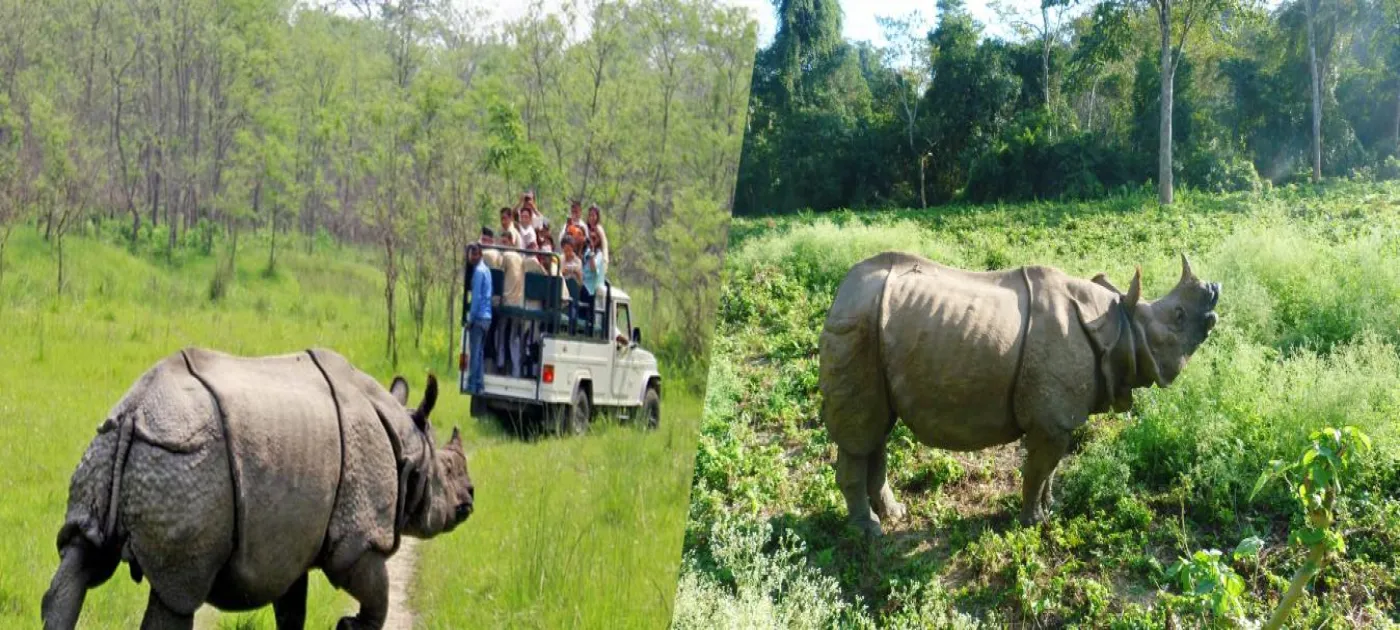
A safari in Chitwan offers an intimate glimpse into the wild. Options include jeep safaris, canoe rides, and guided jungle walks, each providing unique perspectives on the park's diverse habitats and inhabitants.Odynovo Tours+8A Little Adrift+8Tripadvisor+8
Elephant Breeding Center
Located near Sauraha, the Elephant Breeding Center is dedicated to the conservation and study of elephants. Visitors can learn about these majestic creatures, observe calves, and understand the efforts to protect and increase their population.Tripadvisor+1Third Eye Traveller+1
Bird Watching in Chitwan National Park
Home to over 500 bird species, Chitwan is a paradise for bird enthusiasts. The park's varied ecosystems support a rich avian population, making guided bird-watching tours a popular activity.

One-Horned Rhino and Bengal Tiger Spotting
Chitwan is renowned for its successful conservation of the endangered one-horned rhinoceros and the elusive Bengal tiger. While sightings can't be guaranteed, the park's thriving populations offer hopeful opportunities for visitors.
Cultural Experiences
Tharu Cultural Program
The indigenous Tharu community enriches the region's cultural tapestry. Attending a Tharu Cultural Program allows visitors to experience traditional dances, music, and rituals, fostering a deeper appreciation for the local heritage.
Accommodation Options
Hotels Near Chitwan National Park
A range of accommodations caters to diverse preferences and budgets. From luxury resorts to budget-friendly lodges, options are available in Sauraha and nearby areas, ensuring a comfortable stay amidst nature.
Additional Points of Interest
Bharatpur Airport
Serving as the nearest air gateway, Bharatpur Airport facilitates convenient access to Chitwan National Park, with regular flights connecting major Nepalese cities.
Madi Village
Situated within the park's buffer zone, Madi offers authentic rural experiences. Visitors can engage with local communities, explore traditional farming practices, and enjoy the serene countryside.
Bis Hazari Lake
Located near Bharatpur, Bis Hazari Lake is a haven for bird watchers and nature lovers. Its name, meaning "20,000 lakes," reflects the area's numerous oxbow lakes and wetlands, supporting diverse flora and fauna.
Permits and Regulations
Permit Requirements for Chitwan National Park
Visitors must obtain an entry permit to explore the park. These are available at designated entry points and offices, with fees contributing to conservation efforts and community development.
Weather and Best Time to Visit
Chitwan experiences a tropical monsoon climate. The best time to visit is from October to March when the weather is cooler and wildlife sightings are more frequent. The monsoon season, from June to September, brings heavy rains, making some areas less accessible.
Chitwan National Park stands as a jewel in Nepal's conservation crown, offering visitors a harmonious blend of wildlife adventure and cultural immersion. Whether tracking the footprints of a Bengal tiger, marveling at a one-horned rhino, or dancing alongside the Tharu community, a journey to Chitwan promises memories that last a lifetime.