Mera Peak climbing with the Everest Base Camp trek is a 27-day journey in Nepal's Khumbu region, priced at USD 4,500 per person. It takes you along the Khumbu trail to Everest Base Camp and Kala Patthar, then through the quieter Hinku Valley to the summit of Mera Peak, one of Nepal's highest trekking peaks. The trip gives you your first real mountaineering experience, with crampon, ice axe, and fixed-rope training before a glacier climb above 6,000 m. It requires a Mera Peak climbing permit from the Nepal Mountaineering Association, along with Sagarmatha National Park and local entry permits, and is best done in spring or autumn by fit trekkers with some high-altitude experience.

Everest Base Camp Trek with Mera Peak Climbing.
Trip Facts
Duration
27 Days
Trip Grade
Challenging
Country
Nepal
Maximum Altitude
6476
Starts
Kathmandu
Ends
Kathmandu
Group Size
1 to 15
Activities
Trekking & Climbing
Best Time
Sept - Nov & March - May
Everest Base Camp Trek with Mera Peak Climbing. Outline Itinerary
Day 1:
Arrive in Kathmandu
Day 2:
Gear preparation and Kathmandu sightseeing
Day 3:
Fly to Lukla and trek to Phakding
Day 4:
Trek to Namche Bazaar
Day 5:
Acclimatization day in Namche Bazaar
Day 6:
Trek to Tengboche
Day 7:
Trek to Dingboche
Day 8:
Acclimatization hike in the Chhukung Valley
Day 9:
Trek to Lobuche
Day 10:
Trek to Gorak Shep and Everest Base Camp
Day 11:
Kala Patthar sunrise and descent to Pheriche
Day 12:
Trek back to Namche Bazaar
Day 13:
Trek back to Lukla
Day 14:
Trek to Chhuthang
Day 15:
Cross the Zatrwa La to Thuli Kharka
Day 16:
Trek to Kothe
Day 17:
Trek to Tangnang
Day 18:
Trek to Khare
Day 19:
Training day at Khare
Day 20:
Mera Base Camp
Day 21:
Mera High Camp
Day 22:
Mera Peak summit and return to Khare
Day 23:
Trek to Kothe
Day 24:
Trek to Thuli Kharka
Day 25:
Trek back to Lukla
Day 26:
Fly to Kathmandu
Day 27:
Final departure
Mera Peak Climbing with Everest Base Camp (EBC) Trek is a combined Himalayan expedition that takes you to the foot of the world's highest mountain which is Mt. Everest and then up one of Nepal's most approachable trekking peaks, Mera Peak at 6,476 m (21,247 ft). The EBC section builds your altitude base: you sleep above 4,900 m at Lobuche and Gorak Shep (5,164 m) and learn how your body responds to thin air before any climbing begins.
Mera then adds what a trek can't, including crampons, fixed ropes, glacier travel, and a pre-dawn summit push. On a clear day, the summit reveals five of the world's six highest mountains: Everest, Lhotse, Makalu, Cho Oyu, and Kanchenjunga.
It is considered beginner-friendly in mountaineering terms, but approachable doesn't mean easy. Expect a high camp at about 5,800 m, roped travel through crevassed terrain, and a summit day of 8 to 12 hours starting well before dawn in temperatures that can fall below -20°C.
Altitude is the main risk, and even fit climbers can develop acute mountain sickness, so a gradual acclimatization schedule, licensed guides, and a clear turnaround policy matter more than raw strength. The combined route typically takes 27 days, with the best conditions in spring (March to May) and autumn (late September to November).
What Is the EBC Trek with Mera Peak Climb Combination?
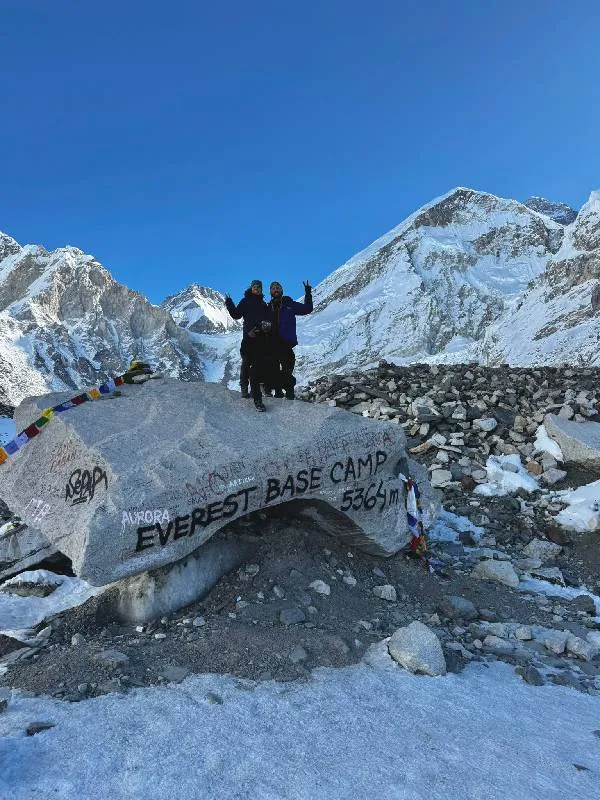
The EBC trek with Mera Peak climb combination is a single 27-day journey in Nepal's Everest region that joins two classic objectives. You first trek the Khumbu trail through Namche Bazaar, Tengboche, and Dingboche to Everest Base Camp (5,364 m) and Kala Patthar (about 5,545 m). You then return to Lukla and cross the Zatrwa La into the remote Hinku Valley to climb Mera Peak, one of Nepal's highest permitted trekking peaks.
It runs on one itinerary, one permit set, and one acclimatization plan. Doing Everest Base Camp first is deliberate: by the time you reach Kala Patthar you have slept above 4,900 m and your guides know how you handle altitude, so you reach Khare (about 5,000 m) better prepared for the glacier climb.
Mera is classed as a trekking peak because its slopes are moderate, but it is still a glacier climb at over 6,000 m, with crampons, fixed ropes, crevasse zones, and a long, cold summit day. On a clear day the top shows five 8,000 m peaks: Everest, Lhotse, Makalu, Cho Oyu, and Kanchenjunga.
This trek suits fit trekkers with some high-altitude experience who want a guided first 6,000 m summit and can stay flexible for flight delays and weather. If you have never trekked above 4,000 m, Everest Base Camp on its own is a better first step.
How Hard Is the EBC and Mera Peak Climb in Nepal?
The EBC and Mera Peak climb in Nepal is strenuous high-altitude expedition. It is demanding mainly because it is long, cold, and high, not because the climbing is steep or complex.
Over 27 days you walk most days for 4 to 7 hours, often on steep, rocky trail, with several long climbs and descents. Summit day is the hardest. You start in the dark from High Camp (5,780 m) and are on your feet for roughly 8 to 12 hours, in thin air and cold. Fitness helps, but it is the cumulative effort over three weeks that wears people down, not any single day.
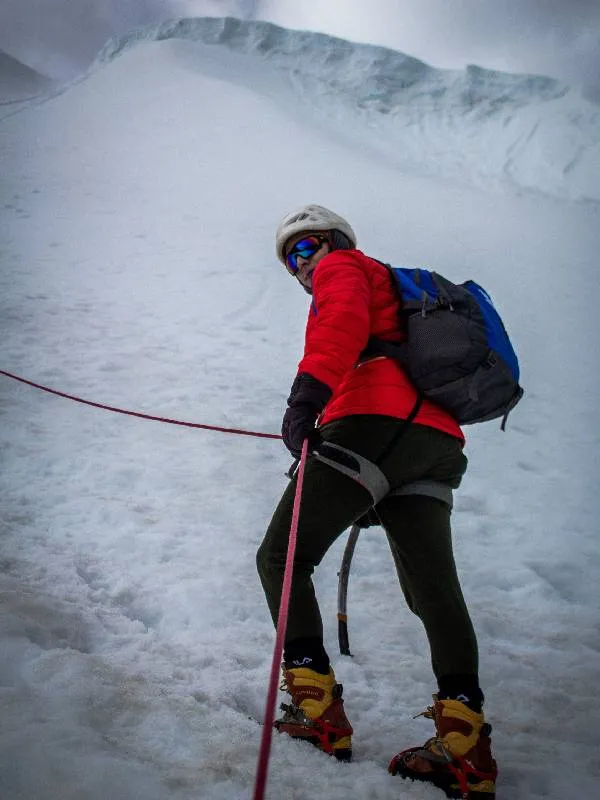
As it is a trekking peak, and its slopes are moderate about 30°. You still use crampons, a harness, an ice axe, and fixed ropes on glacier ground with crevasses. You do not need prior climbing experience, but you do need to learn the basics at Khare on Day 19 and follow your guide's instructions closely.
Everest Base Camp Mera Peak Trek Itinerary
Everest base camp Mera peak trek itinerary is of 27 days because the trip is really two expeditions joined end to end, and each needs its own time to work. The Everest Base Camp section takes you from Lukla to Namche Bazaar, Dingboche, Lobuche, and Kala Patthar, with a full rest day at Namche (3,440 m) and another at Dingboche (4,410 m).
Those days are what let your body adapt before you sleep near 5,000 m. After Kala Patthar you walk back down to Lukla, and that long descent is deliberate. It gives you a recovery period at lower altitude before you start the second half of the trip, instead of pushing straight on to a glacier climb.
The Mera Peak section then takes its own approach through the quieter Hinku Valley. You cross the Zatrwa La pass, drop to Kothe, and climb gradually through Tangnang to Khare (5,045 m). A full day at Khare is set aside for rest and for training with crampons, ice axe, and fixed ropes, so the equipment feels familiar before the climb.
You then move to Mera Base Camp and High Camp before the summit attempt. Coming down takes three days, because the way back to Lukla repeats the same valleys and passes, and rushing it makes little sense after a long summit day.
Shorter versions of this trip exist, some as brief as 20 days. They usually save time by flying a helicopter from the Everest side to Khare, which skips the walk back to Lukla and the approach through the Hinku Valley. That saves days but also removes the recovery and gradual ascent in between, and it adds cost.
We think the full walking route is the better choice for most people. You get a more gradual build-up in altitude, you see both valleys on foot, and you experience the contrast between the busy Khumbu trail and the remote Hinku. A longer schedule also gives you a better chance to cope with flight delays and weather, which are routine in this region.
These itinerary suits trekkers who want one well-paced journey that covers Everest Base Camp and a 6,000 m summit, who can spend nearly four weeks in Nepal, and who prefer a steady approach to a rushed one. If you are short on time, have never trekked above 4,000 m, or want a faster trip, it may not be the right fit, and Everest Base Camp on its own is often a better first step.
Mera Peak Climbing with EBC Trek Cost
The cost of our 27-day Everest Base Camp Mera Peak trek is USD 4,500 per person for a private trip, meaning the journey is run just for you, with no joining strangers. This all-inclusive price covers the full logistics from your arrival in Kathmandu to your final departure: airport pickups and drops, hotels in Kathmandu, the Kathmandu-Lukla return flights, teahouse and camping accommodation, all meals on the trek, welcome and farewell dinners, a licensed guide and climbing Sherpa, porters, and all required permits and park fees. Because guide, logistics, and transport costs are shared, the price per person drops as your group gets larger.
Contact us with your group size for an exact quote. You will find the full list of inclusions and exclusions below. International flights, visa, travel insurance, personal gear, and tips are not included.
Why do the Mera Peak expedition with Adventure Vision Treks?
Adventure Vision Treks has organized the Mera Peak expedition many times, with over 337+ traveller reviews and a 98% summit success rate. The few climbers who do not reach the top are usually stopped by illness, bad weather, or conditions on the day, and we always put their safety ahead of the summit.
Every group is led by a licensed guide and a climbing Sherpa who know the Khumbu and Hinku routes well, and our porters carry the loads so you walk with only a daypack. We build rest and acclimatization days into the itinerary and manage every detail, including permits, flights, lodging, camping, meals, and airport transfers. You just come, explore, and climb, and we take care of the rest.
Everest Base Camp Trek with Mera Peak Climbing. Itinerary
Day 1
Arrive in Kathmandu
Our team meets you at Tribhuvan International Airport and drives you to your hotel. In the evening we hold a welcome meeting and trip briefing, where your guide explains the route, the acclimatization plan, and what to expect.
Day 2
Gear preparation and Kathmandu sightseeing
After a morning of sightseeing, you do a final equipment check with your guide. This is the time to rent or buy anything you are missing, such as a sleeping bag, down jacket, or climbing boots. We also confirm permits and flight details.
Day 3
Fly to Lukla and trek to Phakding
An early flight takes you over the foothills to Lukla (2,840 m), where you meet your porters and crew. The trail descends gently along the Dudh Koshi River, through Sherpa villages and past prayer flags and mani stones, to Phakding. It is an easy first day on the Khumbu trail.
Day 4
Trek to Namche Bazaar
You follow the river, enter Sagarmatha National Park, and cross several suspension bridges, including the famous Hillary Bridge. A steady climb of about two hours brings you to Namche Bazaar, the main Sherpa trading town. This is the biggest altitude gain so far, so walk slowly.
Day 5
Acclimatization day in Namche Bazaar
Rest is part of the plan. You take a short walk to the Sherpa museum area, where you can learn about local mountaineering history and see your first views of Everest, then return to sleep at the same altitude. The pattern is to climb high and sleep low, which helps your body adapt
Day 6
Trek to Tengboche
The trail traces the hillside high above the Dudh Koshi, with views of Ama Dablam, Everest, and Lhotse. After a descent to the river and a climb through forest, you reach Tengboche, where you can visit the monastery, the spiritual center of the Khumbu.
Day 7
Trek to Dingboche
You walk through rhododendron forest and past Pangboche, then up the Imja Valley into open alpine meadows. Ama Dablam dominates the view as the landscape becomes more barren.
Day 8
Acclimatization hike in the Chhukung Valley
You hike up the valley toward Chhukung for views of Island Peak and Makalu, then return to Dingboche for the night. This second rest day gives your body time to adjust before you go above 4,500 m
Day 9
Trek to Lobuche
The trail climbs to the Sherpa memorials, then follows the moraine beside the Khumbu Glacier. Lobuche is cold, and the air is noticeably thin. Eat well and drink plenty of fluids.
Day 10
Trek to Gorak Shep and Everest Base Camp
You continue to Gorak Shep (5,164 m), where you rest and have lunch, then walk to Everest Base Camp over the glacier moraine. You stand at the foot of the Khumbu Icefall, and in spring you may see expedition tents. You return to Gorak Shep for the night.
Day 11
Kala Patthar sunrise and descent to Pheriche
You climb Kala Patthar before dawn for the classic panorama of Everest, Lhotse, Nuptse, and Pumori as the sun rises. After breakfast you descend to Pheriche, where sleeping lower aids recovery.
Day 12
Trek back to Namche Bazaar
A long descent takes you back through Pangboche and Tengboche to Namche. The thicker air makes this a day of recovery, and many people sleep better here
Day 13
Trek back to Lukla
You complete the Everest Base Camp section by walking down the Dudh Koshi valley to Lukla. Your crew may change here for the Mera section. Tonight is a good time to celebrate with your team.
Day 14
Trek to Chhuthang
Leaving Lukla, you climb through forest into the Hinku side of the region, a very different landscape from the busy Khumbu. The day is short, giving you time to settle in.
Day 15
Cross the Zatrwa La to Thuli Kharka
This is the first steep day of the Mera section. You climb through forest to the Zatrwa La pass, where views open toward the Hinku peaks, and descend a little to Thuli Kharka. Because the gain is large, go slowly and drink plenty of water.
Day 16
Trek to Kothe
The trail descends through rhododendron and pine forest into the Hinku Valley. Sleeping lower tonight helps your body recover before the next climb.
Day 17
Trek to Tangnang
You follow the Hinku River upstream, with Mera Peak coming into view. Tangnang lies below the Hinku Nup Glacier, in summer grazing country with simple lodges.
Day 18
Trek to Khare
A steady climb along the moraine brings you to Khare, the last staging point before the peak. You can see the route ahead.
Day 19
Training day at Khare
Your climbing Sherpas teach crampon use, ice axe technique, harness handling, and fixed-rope skills on nearby ice. You also rest and check your gear and boot fit. Do not skip this day.
Day 20
Mera Base Camp
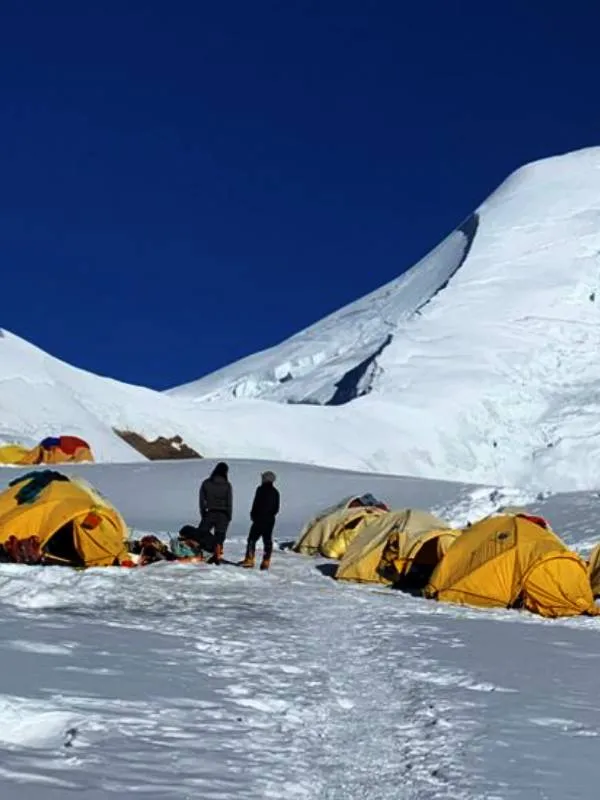
.A short but steep walk takes you to Mera Base Camp, where you move into tents. Our crew sets up camp and cooks
Day 21
Mera High Camp
You climb the glacier to High Camp, the highest and coldest night of the trip. Rest early, drink fluids, and prepare your gear for the summit push.
Day 22
Mera Peak summit and return to Khare
You start in the dark, around 2 am, depending on conditions and climb the glacier by headlamp. As the sun rises, the view opens over five 8,000 m peaks: Everest, Lhotse, Makalu, Cho Oyu, and Kanchenjunga. After time at the top you descend to High Camp, rest briefly, and continue to Khare.
Day 23
Trek to Kothe
A long descent takes you back down the Hinku Valley. The thick air feels very different, and the team marks the summit success.
Day 24
Trek to Thuli Kharka
You climb through forest on the western side of the valley, with views of Mera's faces behind you.
Day 25
Trek back to Lukla
You cross the Zatrwa La once more and descend to Lukla. In the evening we hold a farewell dinner with your crew.
Day 26
Fly to Kathmandu
An early flight returns you to Kathmandu. The rest of the day is free for rest, a hot shower, and souvenir shopping
Day 27
Final departure
Final Departure
Are you still confuse from where to start? Adventure Vision Treks and Travels has solutions for this.
Trip Costs & Availability
Equipment List for Everest Base Camp Trek with Mera Peak Climbing.
Upper Body Layers
- 2-3 moisture-wicking base layers (merino or synthetic), long and short sleeve
- 1-2 insulating mid layers, such as a fleece or light synthetic jacket
- Down or synthetic insulated jacket, warm enough for camp evenings and summit day
- Waterproof, windproof shell jacket (hard shell)
- Heavy expedition down jacket for High Camp and the summit [often provided; confirm]
- Liner gloves for dexterity
- Insulated gloves for the trek
- Insulated mittens, heavy, for summit day.
Lower Body Layers
- 2 quick-drying trekking pants
- Thermal base layer bottoms, 1-2 pairs
- Insulated trousers or fleece pants for evenings and High Camp
- Waterproof, windproof shell pants with side zips for easier fitting over boots
- Shorts or lightweight pants for lower, warmer days
- Underwear, 4-5 pairs, quick-drying
Footwear & Accessories
- Broken-in trekking boots, waterproof, with ankle support, for the main trek. Do not wear new boots
- Double or triple-layer mountaineering boots for Mera Peak, crampon-compatible. A traveler on a competitor's page warned that rental boots at Khare can be the wrong size, so check the fit early
- Crampons, ice axe, harness, helmet, carabiners, and ascender
- Trekking socks, 4-5 pairs of merino or wool blends
- Liner socks, 2 pairs, to reduce blisters
- Warm summit socks, 1-2 heavy pairs
- Gaiters, for snow and scree
- Camp shoes or sandals for teahouses and tents
- Trekking poles, adjustable, with snow baskets
- Microspikes or walking spikes, suggested by one traveler for icy trail sections
Head & Sun Protection
- Sun hat or cap with a brim for lower trail days
- Warm wool or fleece hat covering the ears
- Balaclava or neck gaiter (buff), two recommended, for wind and dust
- Glacier sunglasses, category 3 or 4, with side shields, since snow glare at altitude can cause snow blindness
- Spare sunglasses or goggles, with ski goggles useful for windy summit conditions
- Headlamp with spare batteries, essential for the pre-dawn summit start
- Sunscreen SPF 50+ and lip balm with SPF, as UV is strong at altitude
Personal & Medical Kits
- Personal first-aid kit: plasters, blister treatment, antiseptic wipes, medical tape, and elastic bandage
- Prescription medicines and a note from your doctor
- Pain relief (paracetamol or ibuprofen), anti-diarrhea tablets, rehydration salts, and throat lozenges
- Altitude medication (acetazolamide/Diamox), only if prescribed by your doctor
- Water purification tablets or filter
- Hand sanitizer and wet wipes
- Toiletries (toothbrush, small towel, toilet paper, biodegradable soap)
- Earplugs for noisy lodges
- Sleeping bag, rated for extreme cold
- Sleeping bag liner, for extra warmth and hygiene
Travel Documents
- Passport valid for at least six months, plus several photocopies
- Passport-sized photos, 4-6, for permits
- Nepal visa (on arrival or online) and visa fee in cash
- Travel insurance policy covering trekking and climbing to 6,500 m, and helicopter evacuation, with a printed copy and emergency numbers
- Flight tickets and trip confirmation
- Emergency contacts and details for your embassy
- Cash in Nepali rupees, since there are no ATMs on the Mera route
Miscellaneous
- Duffel bag for porters, with a lock
- Daypack, 30-40 liters, with a rain cover
- Water bottles, 2 x 1 liter, wide-mouth, and an insulated cover to prevent freezing
- Power bank or solar charger, as charging costs extra and cold drains batteries
- Camera or phone, with spare batteries
- Dry bags or waterproof liners
- Snacks, such as energy bars and chocolate, since appetite drops at altitude
- Book, journal, or playing cards, for rest days
- Small padlock, zip ties, and duct tape for repairs
- Quick-dry towel
- Local SIM card (Ncell or NTC), for patchy coverage
Essential Information
Acclimatization and Altitude Sickness on EBC and Mera Peak
Altitude is the main challenge on this EBC and Mera Peak, more than fitness or technical skill. The route reaches Everest Base Camp (5,364 m) and Kala Patthar (5,545 m), returns to Lukla, then climbs again to Khare (5,045 m), Mera High Camp (5,780 m), and the summit.
The Everest section does most of the early work. Rest days at Namche Bazaar (3,440 m) and Dingboche (4,410 m) let your body adjust before you sleep at Lobuche (4,910 m) and Gorak Shep. After Kala Patthar you descend, so you recover at lower altitude before the Mera section begins.
The Hinku Valley starts steeply, with a gain of about 870 m to Thuli Kharka (4,320 m). But your Everest days give you a head start, and a drop to Kothe (3,600 m) follows. A full rest and training day at Khare then prepares you for the glacier before the final gains to Mera Base Camp (5,300 m) and High Camp.
Acute mountain sickness (AMS) usually shows up as a headache, nausea, dizziness, poor sleep, or unusual tiredness. Mild cases settle with rest and fluids, and no climbing higher until you feel better. Two rarer conditions need immediate descent:
- HAPE (fluid in the lungs): breathlessness at rest, a persistent cough, or pink, frothy sputum.
- HACE (swelling of the brain): confusion, loss of balance, or odd behavior.
Our guides check every climber daily, and their decision to rest or descend is final. Walk slowly, drink plenty of fluids, avoid alcohol and sleeping pills, and report symptoms early. Diamox is a question for your doctor before you travel, not a substitute for a slow ascent. Make sure your insurance covers helicopter evacuation to at least 6,500 m.
Everest Base Camp Trek with Mera Peak Climbing. FAQs
What is Mera Peak climbing?
Mera Peak climbing is a popular Himalayan expedition that combines trekking and mountaineering. It takes you to the summit of Mera Peak at 6,476 meters, offering one of the best panoramic views in Nepal.
How difficult is Mera Peak climbing?
Mera Peak is considered a non-technical climb, which means you don’t need advanced mountaineering skills. However, it is still physically demanding due to altitude, long trekking days, and glacier walking. Good fitness and preparation are essential.
Do I need prior climbing experience?
You don’t need technical climbing experience, but having prior trekking or high-altitude hiking experience is highly recommended. Basic training is usually provided before the summit push.
How many days does the Mera Peak expedition take?
Most Mera Peak journeys take around 15 to 20 days, depending on the route and acclimatization schedule. Shorter itineraries are possible but require strong fitness and previous altitude experience.
What is the best time for Mera Peak climbing?
The best time for this expedition is during spring (March to May) and autumn (September to November). These seasons offer stable weather, clear skies, and the best mountain views.
What mountains can I see from the summit?
From the summit of Mera Peak, you can enjoy stunning views of some of the world’s highest mountains, including Mount Everest, Lhotse, Makalu, and Cho Oyu.
Is altitude sickness a concern?
Yes, altitude sickness is a real risk during this journey. Proper acclimatization, hydration, and a gradual ascent help reduce the chances. Your guide will monitor your condition throughout the expedition.
What kind of accommodation can I expect?
You stay in teahouses during the trekking portion and shift to tented camps as you move higher toward Base Camp and High Camp. The facilities become more basic as you gain altitude.
Is Mera Peak crowded?
Compared to Everest Base Camp and other popular routes, Mera Peak is much less crowded. The trail through the Hinku Valley offers a quieter and more peaceful trekking experience.
What permits are required for Mera Peak climbing?
You need a climbing permit for Mera Peak, along with entry permits for Makalu Barun National Park and local authorities.
Can beginners do Mera Peak climbing?
Yes, beginners with good physical fitness and determination can complete this journey. It is often considered one of the best introductory climbing expeditions in Nepal.
What makes Mera Peak unique?
Mera Peak stands out because it offers a complete Himalayan experience. You get to enjoy trekking through remote valleys, experience local culture, and complete a high-altitude climb all in one unforgettable journey.
Select Your Package

Need Help? Chat Us.
+977 9841120805You May Also Like
Excellent Choice
Excellent Choice
Need Help? Call Us+977 9841120805