The Island Peak Climbing with Everest Base Camp Trek is an 18-day adventure through Nepal’s Khumbu region, combining the classic walk to Everest Base Camp (5,364 m) and Kala Patthar (5,545 m) with a guided summit of Island Peak (6,189 m), an NMA-listed trekking peak. Trekkers pass through Sherpa villages, monasteries and glacier valleys, with two acclimatization days and climbing training at Base Camp before the summit push. It’s a great first Himalayan climb for fit trekkers, combining high-altitude trekking, mountaineering and Sherpa culture, from US$2,675 per person.
Island Peak Climbing with Everest Base Camp Trek
Island Peak Climbing with Everest Base Camp Trek Outline Itinerary
Arrival in Kathmandu, Gear Check and Briefing
Fly to Lukla, Trek to Phakding
Trek from Phakding to Namche Bazaar
Acclimatization Day in Namche Bazaar (Hiking to Everest View Hotel)
Trek from Namche Bazaar to Tengboche Monastery
Trek from Tengboche to Dingboche
Acclimatization Day in Dingboche (Hiking to Nangkartshang)
Trek from Dingboche to Lobuche
Trek to Gorakshep and Everest Base Camp
Kala Patthar Sunrise, Descent to Dingboche
Trek from Dingboche to Chhukung
Island Peak Base Camp and Climbing Training
Imja Tse (Island Peak) Summit Day, 6,189 m
Summit Reserve Day or Descent
Descent to Namche Bazaar from Tengboche
Namche Bazaar to Lukla
Fly to Kathmandu, Farewell Dinner
Departure
Island Peak Climbing with the Everest Base Camp Trek is our 16-day itinerary combining the walk to Everest Base Camp (about 5,364 m) and Kala Patthar with a guided summit of Island Peak, also called Imja Tse (6,189 m).
It starts and ends in Kathmandu and includes a flight to Lukla, 2 acclimatization days, climbing training at Island Peak Base Camp, and a licensed climbing Sherpa guide. It is a challenging trip as the summit day involves glacier travel, crampons and fixed ropes, so it suits fit trekkers who are willing to learn basic climbing skills.
Island Peak got its English name because, from Dingboche, it looks like an island rising from a sea of ice. From the summit you see Lhotse, Makalu, Baruntse and Ama Dablam, with the Imja Glacier below. Along the way you pass Sherpa villages, monasteries and the Khumbu Glacier.
Who Is the 18-Day Island Peak Climbing with Everest Base Camp Trek For?
The 18-day Island Peak Climbing with Everest Base Camp Trek is designed for fit and adventurous trekkers who can walk for 5–7 hours daily over consecutive days and are ready to learn basic mountaineering skills.
This is a challenging high-altitude adventure, not just a regular trek, with a technical climb to Island Peak (6,189 m) and a demanding 10–12-hour summit day starting before dawn.
Previous high-altitude trekking experience, such as the Annapurna Base Camp, Mardi Himal, Annapurna Circuit, or Manaslu Circuit, is highly recommended but not mandatory.
You should be comfortable in cold mountain conditions, where nighttime and summit-day temperatures can fall well below freezing, and be willing to follow your guides' safety decisions, even if that means turning back.
If you have heart or lung disease, a medical condition that could worsen at altitude, or a history of serious altitude sickness, consult your doctor before booking. Remember, physical fitness does not protect you from altitude sickness. Our itinerary includes two acclimatization days, and our guides will monitor your health throughout the journey, prioritizing your safety over reaching the summit.
Why combine Island Peak with the Everest Base Camp trek?
You shall combine Island peak with the Everest base camp trek because the EBC journey before climbing gives you an edge to experience the high altitude above the 5000 meters where you know how your body reacts to such high altitudes and gives you an experience of the thin air of the Khumbu region.
You will be completing the three different high altitudes treks in the single trip which are the Everest Base Camp (about 5,364 m), Kala Patthar (about 5,545 m, the classic Everest viewpoint), and the Island Peak summit (6,189 m).
Also, during the travel, you would have opportunity to experience the beautiful Namche Bazaar, Tengboche Monastery, Sagarmatha National Park, Sherpa villages, Khumbu Glacier views and the local Sherpa hospitality.
This also gives you a glance to the real mountaineering experience as you will be walking via glaciers, climbing rocks, using the crampons, staying inside the tents, walking for several hours, using the fixed ropes and standing beneath the mountains above 6000 meters.
18-Day Island Peak and EBC Trek Itinerary
The 18-day Island Peak EBC Trek itinerary is designed to give you an unforgettable first mountaineering experience while following the classic Everest Base Camp and Kala Patthar trekking route. From arrival to departure, your journey will be fully guided and supported by our experienced Adventure Vision Treks team.
After a scenic domestic flight to Lukla, the gateway to the Everest region, you will trek through Phakding, Namche Bazaar, Tengboche Monastery, Dingboche, Lobuche, and Gorak Shep before reaching Everest Base Camp and climbing Kala Patthar.
The journey then continues towards Chhukung, where you will prepare for the Island Peak expedition with practical climbing training, including crampon walking, using ascenders (Jumars) on fixed ropes, descending techniques, and harness checks.
Finally, you will attempt the summit of Island Peak (6,189 m), with one additional contingency day reserved for weather-related delays or unexpected conditions. Throughout the journey, we prioritize proper acclimatization, safety, and comfort. Although this adventure can be completed in a shorter duration, we don't recommend rushing it or compromising your health and safety just to save a few days.
Imja Tse Peak Climbing: Summit Day Step by Step
Your Island Peak summit day begins with an early dinner at around 7:00 PM, followed by a few hours of rest. At approximately 10:30 PM, our mountain Sherpa guide will wake you up and help you prepare for the climb.
We usually begin our summit attempt around 11:00 PM to allow enough time to reach the summit before weather conditions become less favourable. Depending on your pace and climbing conditions, reaching the summit of Island Peak (6,189 m) takes approximately 8–10 hours.
The climb begins with a moraine and rocky approach in darkness, where you will follow the trail using your headlamp until reaching Crampon Point at approximately 5,600 m. Here, you will put on your crampons and harness, and our guide will check your climbing equipment before proceeding.
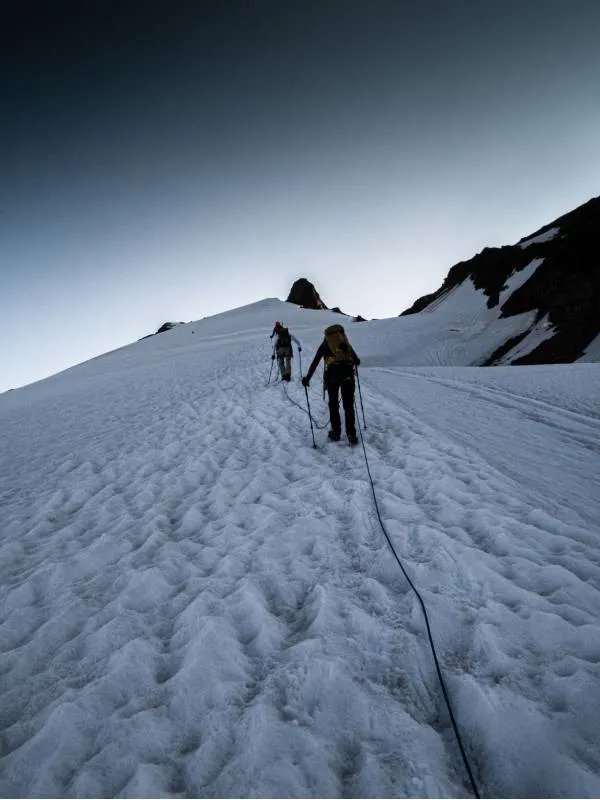
You will then continue across the glacier using ropes, where you may encounter crevasses and ladder crossings. One of the most challenging sections is the headwall, where you will climb using fixed ropes and an ascender (Jumar) under your guide's instructions. After completing the headwall, you will follow a narrow and exposed summit ridge before finally reaching the top of Island Peak at 6,189 m.
Once you reach the summit, you can enjoy spectacular Himalayan views, celebrate your achievement, and take a few photographs. However, we won't spend too much time at the top because descending safely is equally important.
We aim to begin our descent before 10:00 AM, depending on weather and climbing conditions and the senior guide's decision. Throughout the climb, remember to take short breaks, drink enough water, and have energy snacks to maintain your strength.
Most importantly, remember that reaching the summit is only half the journey. Descending Island Peak can be equally challenging and sometimes more dangerous than ascending. Therefore, follow your guide's instructions, maintain proper rope safety, stay alert, and never rush your descent. Your safety will always come before reaching the summit.
Island Peak Climbing with EBC Trek Cost
The Island peak climbing with EBC trek cost 2675 USD for per person. The cost will be the same for the one person, however if you have more than one pax then the cost will be decreased as per the group size.
This price includes every logistics you would require from the domestic flights, tea house accommodations, meals, lunch and dinner, permits, guides and porters and everything you required. For the details costs includes you can check our cost includes sections below.
Island Peak Climbing Permits and Fees 2027
The island peak climbing permits fees as per 2027 differs according to the seasons. If you are trekking in peak seasons which is March, April and May the cost for the permit is 350 USD, where as Sept, Oct, Nov, Dec, Jan, Feb, and June, July August is 175 USD per person.
These details are verified from the Nepal mountaineering Associations and Trekking Agencies Association of Nepal (TAAN). The cost for the Sagarmatha National park permits and Rural municipality fees is NPRs. 3000 each.
Departure Dates and Booking
We offer fixed departure dates for our Island Peak Climbing with Everest Base Camp Trek. However, we believe that a mountain adventure should always be about safety, comfort, and moving at your own pace.
When travelling in a group, everyone has a different walking pace, fitness level, and personal preference. Sometimes, these differences can affect your overall trekking experience. That's why we recommend booking a private group, specially organized for you and your teammates. This gives you greater flexibility to customize your journey according to your preferences, fitness level, and travel expectations.
You can book this adventure by clicking the "Book This Trip" button on this page. Alternatively, feel free to contact us directly through WhatsApp at +977 9841120805 or email us at [email protected].
Why Climb Island Peak with Adventure Vision Treks?
There are many reasons to choose Adventure Vision Treks to Climb Island peak. We are a licensed trekking agency registered with the Nepal Mountaineering Association (NMA), Trekking Agencies' Association of Nepal (TAAN), and the relevant tourism authorities.
With over 20 years of experience in the trekking and mountaineering industry, we understand the mountains, their challenges, and the logistics required for a successful expedition.
Our senior climbing guides are experienced Sherpas who were born and raised in the Khumbu region. They know the mountains, trails, and local conditions very well. Our climbing guides also have extensive Island Peak experience, with some having completed more than 100 ascents.
We take care of your accommodation, meals, transportation, porters, climbing equipment, and other essential logistics so you can focus on enjoying your adventure. Our porters carry your trekking luggage, while our experienced guides and Sherpa team support you throughout the journey.
We are also proud of the positive feedback from our previous trekkers. You can read their experiences and reviews on our Tripadvisor and Google Business Profile before booking with us.
With experienced local Sherpa guides, reliable logistics, and more than two decades of experience, we are here to make your Island Peak climbing adventure safe, memorable, and rewarding

You'll Explore
Island Peak Climbing with Everest Base Camp Trek Itinerary
Arrival in Kathmandu, Gear Check and Briefing
Namaste! Welcome to Kathmandu, the capital city of Nepal.
Upon your arrival at Tribhuvan International Airport, one of our team members will warmly welcome you and transfer you to your 3-star hotel in Thamel.
In the evening, we will organize a welcome dinner where you will get to meet our team and fellow trekkers. We will also conduct a detailed briefing about your upcoming journey, including the itinerary, trekking arrangements, safety precautions, and other important information.
If you have already brought your trekking equipment, we will check everything against our equipment checklist to make sure you have all the necessary gear for the journey. If anything is missing, don't worry! You will have time to purchase the remaining equipment from the shops in Thamel. If time is limited on arrival day, you will also have the following morning to complete your shopping.
Fly to Lukla, Trek to Phakding
Once your trekking gears and equipment are ready, we will proceed with our domestic flight to Lukla. Upon reaching the Lukla Airport, you will complete the necessary permit checks before beginning your trek towards Phakding.
Today, you will experience your first taste of trekking in the Everest region. The trail gradually descends through beautiful mountain landscapes, small Sherpa settlements, and lush forests. Along the way, you will cross your first suspension bridges over the Dudh Koshi River and enjoy beautiful views of the surrounding mountains.
After a scenic walk through the valley, you will eventually reach Phakding, where you will spend your first night in the Khumbu region.
Trek from Phakding to Namche Bazaar
Early in the morning, around 8:00 AM, you will have breakfast at the teahouse. After breakfast, your guide will give you a short briefing about the day's trek, and once you have packed your bags, you will begin your journey towards Namche Bazaar.
Today, you will enter the Sagarmatha National Park and continue trekking alongside the beautiful Dudh Koshi River. The trail takes you through pine forests, traditional Sherpa villages, and several suspension bridges. One of the major highlights today is crossing the famous Hillary Suspension Bridge, one of the highest suspension bridges in the Everest region.
The trek takes approximately 6–7 hours, depending on your walking pace and trail conditions. If the weather is clear, you may even catch your first glimpse of Mount Everest along the way.
Upon reaching Namche Bazaar, you will discover the largest Sherpa town in the Khumbu region. Namche is a lively mountain settlement with cafés, bakeries, trekking gear shops, restaurants, and ATMs. It is also an important trading and acclimatization hub for trekkers and climbers heading towards EBC.
Acclimatization Day in Namche Bazaar (Hiking to Everest View Hotel)
Today is our acclimatization day in Namche Bazaar. However, acclimatization doesn't mean spending the entire day resting or sleeping in your hotel. We will wake up early and hike to the famous Everest View Hotel (3,880 m), where you will enjoy breakfast with spectacular views of Mount Everest and the surrounding Himalayan peaks. This hike follows the important "Climb High, Sleep Low" principle, helping your body gradually adapt to the altitude.
After returning to Namche, you will visit the local Sherpa Museum, explore the traditional market, and enjoy the cafés and bakeries.
Trek from Namche Bazaar to Tengboche Monastery
After breakfast at your teahouse, you will begin your journey towards Tengboche. The trail initially descends towards the Dudh Koshi River, followed by a steady uphill climb through beautiful forests and mountain landscapes to Tengboche.
It is home to the famous Tengboche Monastery, the largest and most important Buddhist monastery in the Khumbu region, offering spectacular views of Mount Ama Dablam and the surrounding Himalayas.
Upon arrival, you can visit the monastery, attend the afternoon prayers, take photographs, and enjoy the peaceful mountain atmosphere before settling into your teahouse for the night.
Trek from Tengboche to Dingboche
After the morning briefing, you will begin your trek towards Dingboche, passing through beautiful Sherpa villages such as Deboche and Pangboche. As you gain altitude, you will notice the lush green forests gradually changing into open, barren mountain landscapes.
Along the way, you will get your first glimpse of Island Peak (Imja Tse). From this part of the trail, the peak looks like an island rising above the surrounding mountains, giving it its famous name. In just a few days, you will be standing on its summit!
Acclimatization Day in Dingboche (Hiking to Nangkartshang)
Today is another important acclimatization day in Dingboche. As recommended by experienced Himalayan mountaineers, including NMA President Fur Gelje Sherpa, proper acclimatization at 3,000 m and 4,000 m is essential before ascending higher.
However, a rest day doesn't mean sleeping all day! We will hike towards Nangkartshang Peak (approximately 5,083 m), a popular viewpoint offering spectacular views of Makalu, Lhotse, Island Peak, and Ama Dablam. Reaching the viewpoint will also give you a rewarding sense of achievement while helping your body gradually adapt to the higher altitude.
After enjoying the mountain views, we will descend to Dingboche for an overnight stay.
Trek from Dingboche to Lobuche
After breakfast, you will begin your trek towards Lobuche. The trail gradually ascends through the beautiful high-altitude landscapes, following the Khumbu Valley alongside the Khumbu Glacier moraine.
One of today's major highlights is the Thukla (Dughla) Memorial, where you will find memorials dedicated to climbers and mountaineers who lost their lives in the Himalayas. It is a peaceful and emotional place to reflect on the challenges of Himalayan mountaineering.
After spending some time at the memorial area, you will continue towards Lobuche, where you will spend the night in a local teahouse. The trek takes approximately 5–6 hours, and expect cold temperatures, especially during the night.
Trek to Gorakshep and Everest Base Camp
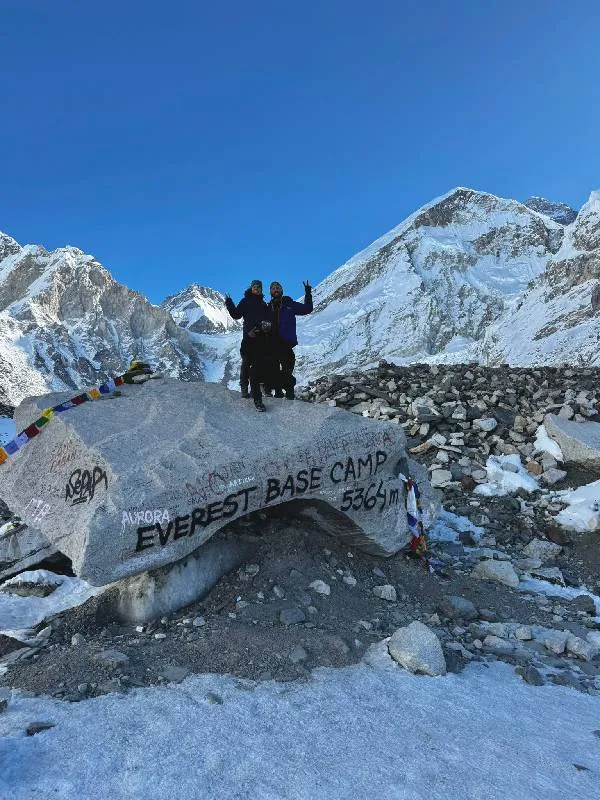
Today is one of the biggest highlights of your journey! After breakfast, you will trek towards Gorakshep (approximately 5,164 m), the last settlement before Mount Everest Base Camp. After a short break, you will continue towards EBC (5,364 m), walking along the rocky and glacial trails of the Khumbu region.
At Base Camp, you will witness the famous Khumbu Icefall and, during the spring climbing season, colourful expedition tents set up by climbers preparing for their Everest summit attempts. You will have time to celebrate your achievement, take photographs, and enjoy this incredible experience before returning to Gorakshep for the night.
The entire day takes approximately 7–8 hours. One thing to remember: Mount Everest's summit is not directly visible from Base Camp, but the surrounding Himalayan scenery and Khumbu Icefall make this destination truly special.
Kala Patthar Sunrise, Descent to Dingboche
Wake up before dawn and prepare for the climb to Kala Patthar (5,545 m), one of the finest viewpoints in the Everest region. As the first sunlight touches the summit of Mount Everest, you will witness an unforgettable Himalayan sunrise with close-up views of Everest, Nuptse, Pumori, and other surrounding peaks.
After enjoying this incredible moment, we will descend to Gorakshep for breakfast and continue our journey down to Dingboche, where we will spend the night at a lower altitude.
A special milestone: Today, you reach your highest trekking altitude before beginning your Island Peak climbing adventure. The day takes approximately 7–9 hours, depending on your pace and weather conditions.
Trek from Dingboche to Chhukung
Today, you will enjoy a relatively short trek of approximately 3 hours towards Chhukung, the last settlement before Island Peak. As you walk deeper into the Imja Valley, you will get increasingly closer views of Island Peak, Lhotse, and the surrounding glaciated mountains.
Upon reaching Chhukung, we will have lunch, rest, and prepare for the upcoming climb. Our guides will conduct a final equipment check, including your climbing boots, crampons, harness, helmet, ice axe, and warm layers.
Although Chhukung Ri is an optional afternoon hike, we recommend skipping it to conserve your energy and allow your body to rest before the Island Peak summit preparation.
Island Peak Base Camp and Climbing Training
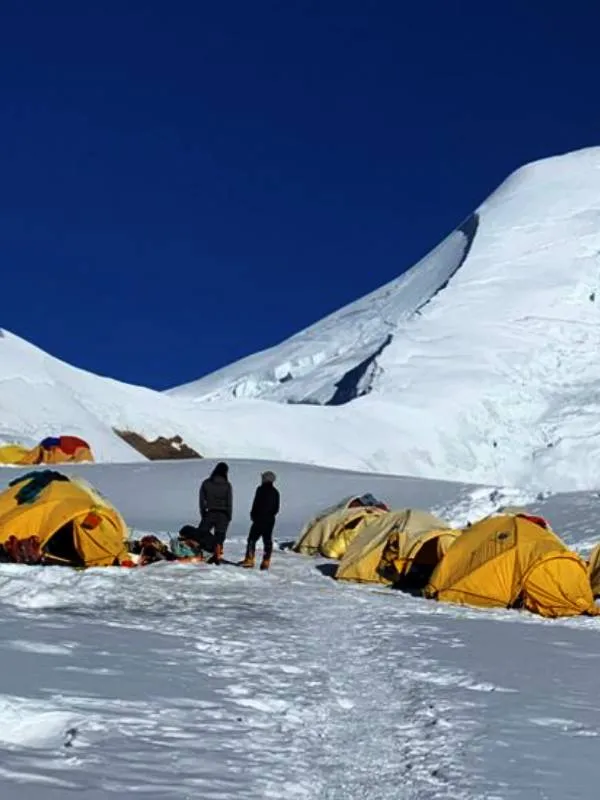
Today, you will leave Chhukung and trek for approximately 3–4 hours towards Island Peak Base Camp. Upon reaching base camp, our climbing crew will set up your tents, sleeping arrangements, and camp kitchen.
In the afternoon, our experienced climbing guides will conduct practical training on crampon walking, using ascenders (Jumar) on fixed ropes, descending techniques, and harness checks.
This training is extremely important because your confidence, climbing speed, and safety on summit day depend greatly on how well you understand and practise these techniques.
After training, you will enjoy an early dinner and get some rest in your tent. Tomorrow, the real climbing adventure begins!
Imja Tse (Island Peak) Summit Day, 6,189 m
Today is the biggest day of your climbing adventure! We will start our summit push around 11:00 PM, after an early dinner and final preparation. Our senior climbing guides will lead the rope teams and guide you through the glacier, crevasses, and fixed-rope sections towards the summit of Island Peak (6,189 m).
The climb requires endurance, proper rope techniques, and teamwork. Upon reaching the summit, you will be rewarded with breathtaking views of Lhotse, Makalu, Baruntse, Ama Dablam, and the surrounding Himalayan giants.
After celebrating your achievement and taking photographs, you will carefully descend to Island Peak Base Camp, where you will spend the night resting after approximately 10–14 hours of climbing.
Our priority: Your safety comes first. Our senior guides will lead the climbing team and make decisions according to weather, snow conditions, and each climber's physical condition.
Summit Reserve Day or Descent
Today is reserved as a weather and summit contingency day, not an acclimatization day. If the summit attempt on the previous day was unsuccessful due to weather, snow conditions, or your physical condition, we can use this day for another summit attempt.
Our senior climbing guides will make the decision based on the weather forecast, mountain conditions, and the health and fitness of each climber. Safety will always come before reaching the summit.
If the reserve day is not required, we will begin our descent towards Tengboche, enjoying the beautiful mountain landscapes along the way.
Descent to Namche Bazaar from Tengboche
After breakfast, you will begin your descent towards Namche Bazaar. The trail takes you through beautiful forests, traditional Sherpa villages, and across suspension bridges over the Dudh Koshi River. As you lose altitude, you will notice the air getting warmer and breathing becoming easier.
Upon reaching Namche Bazaar, you can relax, enjoy a hot shower, visit your favourite cafés, and celebrate the successful completion of your Island Peak climbing adventure with your team.
Namche Bazaar to Lukla
Today is your final trekking day in the Everest region. After breakfast, you will descend from Namche Bazaar, following the Dudh Koshi River through Monjo and Phakding. You will cross several suspension bridges, pass beautiful Sherpa villages, and enjoy the familiar trails one last time before reaching Lukla.
A small tradition: If you wish, you can also show your appreciation to your guides and porters through tipping. This is customary in Nepal's trekking industry, but the amount is entirely your choice.
Tonight, enjoy the final evening in the mountains, share your experiences, and celebrate the memories you have created together.
Fly to Kathmandu, Farewell Dinner
After breakfast, you will take an early morning flight from Lukla to Kathmandu, enjoying your final aerial views of the Himalayas. Please remember that Lukla flights are weather-dependent, so delays and cancellations are possible.
Upon reaching Kathmandu, we will transfer you to your hotel. If you arrive early and time permits, we will offer you a complimentary guided sightseeing tour to either Boudhanath Stupa or Swayambhunath Stupa.
In the evening, we will organize a farewell dinner where we will share our trekking experiences, listen to your feedback, learn about your satisfaction and any areas where we could improve, and celebrate the wonderful memories of our journey together.
Departure
Today marks the end of your incredible Nepal adventure. Our team will drop you off at Tribhuvan International Airport according to your international flight schedule. We hope you return home with unforgettable memories, new friendships, and the incredible achievement of completing the Everest Base Camp trek and Island Peak climb.
Trip Costs & Availability
Altitude Chart
Equipment List for Island Peak Climbing with Everest Base Camp Trek
- 2-3 moisture-wicking base-layer tops (merino or synthetic, no cotton)
- 2 trekking T-shirts or shirts (quick-dry)
- Fleece jacket or mid-layer
- Lightweight insulated jacket (optional, for lodge evenings)
- Down jacket, warm enough for sub-zero nights and summit day [provided/rent/bring]
- Waterproof, windproof shell jacket with hood
- Liner gloves (thin)
- Warm insulated gloves or mittens for summit day, ideally with a spare pair
- 2 pairs of trekking trousers (quick-dry)
- Thermal base-layer bottoms
- Waterproof, windproof shell trousers
- Insulated or warm trousers for summit day and cold nights
- Underwear (non-cotton, quick-dry)
- Shorts (optional, for lower trail sections)
- Broken-in waterproof trekking boots with ankle support
- Camp shoes or sandals for lodges
- 3-4 pairs of warm trekking socks, plus liner socks
- 1-2 pairs of thick socks for sleeping
- Gaiters (optional, for snow or mud)
- Trekking poles (foldable)
- Mountaineering boots (insulated, stiff-soled, suited to high altitude)
- Crampons that fit your climbing boots; test the boot-crampon fit before you leave Kathmandu
- Ice axe
- Climbing harness
- Ascender (jumar)
- Descender or belay device
- Carabiners (locking and non-locking)
- Tape slings or prusik cord
- Warm wool or fleece hat (for nights and summit day)
- Balaclava or neck gaiter (buff) that covers face and ears
- Wide-brimmed sun hat or cap for the lower trail
- UV-protection sunglasses (category 3 or 4, with side shields), plus a spare pair
- Glacier goggles for summit day (C), especially in wind or snow
- Headlamp with spare batteries (needed for the midnight summit start)
- High-SPF sunscreen and SPF lip balm
- Climbing helmet (C) provided
- Personal prescription medicines, in original packaging with a doctor’s note if needed
- Altitude medication only if prescribed by your doctor (discuss before the trip)
- Pain relief (paracetamol or ibuprofen), anti-diarrhea tablets, rehydration salts
- Blister care (plasters, tape), bandages, antiseptic wipes
- Throat lozenges, cold and cough remedy
- Personal first-aid kit (small)
- Water purification tablets or filter
- Check with your doctor before using sleeping aids at altitude
- Toothbrush, toothpaste, small biodegradable soap or shampoo
- Quick-dry towel
- Hand sanitizer, wet wipes, toilet paper
- Pee bottle (1 L, leak-proof, wide-mouth) for cold nights
- Feminine hygiene products, if needed
- Contact lenses or spare glasses, if used
- Nail clippers, small mirror (optional)
- Passport
- Nepal visa (many people get it on arrival; check current fees and rules
- 4-6 passport-size photos
- Travel insurance policy copy, showing altitude cover, helicopter evacuation, and technical climbing cover; confirm in writing before departure
- Insurance emergency phone number
- Flight tickets and itinerary
- Emergency contact details and your own medical information
- Photocopies or digital copies of all documents (keep separate from originals)
- Cash in Nepali rupees and some USD for personal expenses (ATMs on the trail are unreliable)
- Permits
- Duffel bag (about 70-100 L) for the porter
- Daypack (30-40 L) with a rain cover, for water, layers, camera and valuables
- Small padlocks for duffel bags
- Dry bags or large zip bags to protect gear
- Four-season sleeping bag rated for very cold nights
- Sleeping bag liner
- Sleeping pad
- 2 water bottles (1 L each), insulated bottle or thermos
- Power bank and spare batteries (cold drains batteries fast; keep them warm)
- Plug adapter (Nepal commonly uses types C, D and M
- Camera or phone, extra memory cards
- Snacks you like (energy bars, nuts, chocolate)
- Notebook and pen, book or cards for evenings
- Rubbish bags (to carry your waste out)
Essential Information
Altitude Sickness and Acclimatization on This Trek
Altitude sickness and proper acclimatization are among the most important factors during the Island Peak Climbing with Everest Base Camp Trek. Our 18-day itinerary is carefully designed to give your body enough time to adjust to increasing elevations through gradual ascent and scheduled acclimatization days.
Previous trekking experience and good physical fitness will help you handle the journey, but remember that fitness does not eliminate the risk of altitude sickness.
Throughout the trek, you should follow proper acclimatization practices, walk at a comfortable pace, stay hydrated, avoid alcoholic beverages, and eat nutritious meals. You can also enjoy traditional garlic soup and other locally prepared soups, which are an important part of the Himalayan trekking experience and help you maintain your food and fluid intake. Follow your guide's instructions, avoid unnecessary physical exertion, and practice the principle of climbing high and sleeping low where appropriate.
Our guides will regularly monitor your oxygen saturation using a pulse oximeter, particularly at higher elevations. An oxygen saturation reading below 80% will be treated as a serious warning under our trekking safety protocol, and you will not continue ascending until your condition has been assessed by the responsible medical professional. Medication such as acetazolamide (Diamox) should only be taken following appropriate medical advice.
Most importantly, never ignore symptoms such as headaches, nausea, dizziness, unusual tiredness, or breathing difficulties. Always inform your guide immediately. Reaching the summit is important, but your health and safety will always come first.
Best Time for Island Peak Climbing and EBC Trekking
The best time for Island Peak Climbing with the EBC Trekking is during the Autumn (September to November) and Spring (March to May) seasons. These are the two most popular seasons for trekking and climbing Island Peak.
During these seasons, the weather is generally more favourable, with clearer skies, better mountain visibility, and relatively stable climbing conditions. The temperatures are also more manageable compared to the extreme cold of winter.
The trails are generally in good condition, and teahouses along the trekking route are operational, making your overall journey more comfortable. You can also experience the local cultures, traditions, festivals, and beautiful Himalayan landscapes along the way.
Although Island Peak can be climbed during the winter and monsoon seasons with proper preparation, we generally do not recommend these periods. One important reason is the availability of fixed ropes.
During the main climbing seasons, rope-fixing arrangements are generally coordinated by the Nepal Mountaineering Association (NMA). However, during the off-season, additional arrangements may be required to organize rope-fixing and other climbing logistics independently. This can increase the overall cost of your expedition.
Training and Preparation for Island Peak Climbing
Island Peak Climbing with the Everest Base Camp Trek requires good physical fitness, endurance, and basic mountaineering skills. Although you don't need previous climbing experience, proper preparation will make your journey safer and more comfortable. We recommend starting your physical training at least 12–16 weeks before your departure.
Fitness Plan for Trekking and Climbing
Your training should focus on building stamina, leg strength, and cardiovascular endurance. We recommend including the following activities in your routine:
Hiking: Practice regular hikes with a 5–8 kg backpack.
Stair and hill climbing: Improve your leg strength and uphill endurance.
Strength training: Include squats, lunges, step-ups, and calf raises.
Cardio: Practice running, cycling, swimming, or brisk walking.
Long-distance walking: Gradually build your endurance and aim to walk 6–8 hours on consecutive days.
We also recommend having a medical check-up before booking, especially if you have existing heart or lung conditions.
Climbing Skills to Practice (Crampons, Ascender, Fixed Ropes)
You don't need to be an experienced mountaineer to climb Island Peak. Our senior climbing guides will provide practical climbing training at Island Peak Base Camp before the summit attempt.
You will learn how to use crampons, handle an ice axe, operate an ascender on fixed ropes, and use your harness and carabiners safely. We also organize a practice session so you can become familiar with the equipment and climbing techniques before heading towards the summit.
Accommodation, Tents and Logistics for Island peak Expeditions
We take care of your accommodation, meals, transportation, guides, porters, and climbing logistics throughout the Island Peak Expeditions.
Teahouses and Camps: Where You Sleep
In Kathmandu, we provide three-star hotel accommodation on a private-room basis. During the trek, you will stay in standard mountain teahouses on a twin-sharing basis. We try to arrange private bathrooms wherever possible, depending on availability.
Tents at Island Peak Base Camp
At Island Peak Base Camp, we provide tented accommodation with sleeping bags and sleeping pads. The tents are arranged on a two-person sharing basis, with private toilet tents available for your convenience. We also provide a dedicated kitchen team that prepares three meals a day, including warm soups, tea, and coffee. Our team takes care of the camping arrangements and meals, allowing you to focus on your summit preparation. We climb directly from Base Camp without an overnight stay at High Camp.
Lukla Flights: Kathmandu vs Ramechhap
Your journey begins with a scenic flight to Lukla. During peak trekking seasons, flights may operate from Manthali Airport in Ramechhap instead of Kathmandu. If required, we arrange transportation from Kathmandu to Ramechhap according to the flight schedule.
Guides, Climbing Sherpas and Porters
We provide experienced trekking guides, dedicated climbing Sherpa support, and 1:1 assistant Sherpa guide support for trekkers. Our porters carry approximately 20–25 kg of luggage. We also provide emergency oxygen support if required during the expedition or summit climb.
Charging, WiFi and Cash
Charging facilities and WiFi are generally available at teahouses up to Chhukung, and included in the cost. Beyond Chhukung, facilities are limited at Base Camp. We recommend carrying a power bank and enough Nepalese rupees for your personal expenses.
Safety, Insurance and Evacuation
Your safety is our top priority throughout the Island Peak Climbing. We recommend preparing physically at least 12–16 weeks before your departure, as explained in our training and preparation section.
For insurance, we strongly recommend purchasing travel insurance from your home country that covers high-altitude trekking, climbing, and emergency rescue up to 7,000 meters. In case of an emergency evacuation, the expenses are handled through your travel insurance.
Evacuation is arranged when you are in a critical condition. Otherwise, our senior guides will examine your health and coordinate with Himalayan Rescue Association (HRA), hospitals, and medical professionals. Depending on your condition, alternative measures such as descending to a lower altitude, using Diamox when appropriate, drinking garlic soup, and taking necessary rest will be considered.
Our senior guides continuously monitor your health throughout the expedition to ensure your safety and well-being.
Island Peak Climbing with Everest Base Camp Trek FAQs
Island Peak is a challenging but achievable climb, graded Alpine PD+. The difficulty comes from altitude (6,189 m), the cold, and a steep headwall of roughly 100 to 150 metres, climbed on fixed ropes. It is harder than a trekking peak like Yala Peak but much easier than a serious technical mountain.
You shall prepare for Island peak by being able to hike 5 to 7 hours a day with a pack, since summit day lasts 8 to 12 hours. Train for 12 or more weeks with cardio, leg strength work and weekend hikes carrying 8 to 10 kg. Practise walking in your boots, and ideally take a short crampon and ascender session before you arrive.
Island Peak can get very cold, especially during the summit push. In November, temperatures range from -10°C to -15°C at base camp and -15°C to -25°C on summit morning. April is slightly warmer. A -20°C sleeping bag, warm layers, and insulated mountaineering boots are essential.
You will need 18 days to complete the Island Peak Climbing with Everest Base Camp Trek. Summit day takes approximately 8–10 hours, including 5–6 hours climbing up and 3–4 hours descending.
Adventure Vision Treks has a 98% success rate based on our previous Island Peak climbing groups. Most unsuccessful attempts are due to altitude-related problems, extreme cold, or unfavorable weather conditions rather than technical difficulty. Proper acclimatization, experienced guides, and good preparation are key to a successful summit.
Island Peak is harder technically, and Mera Peak is higher and longer. Mera (6,476 m) is mostly a non-technical glacier walk but involves more days at altitude. Island Peak (6,189 m) is shorter but has the steep headwall and crevasse ladders. Beginners who are comfortable with heights often choose Mera for simplicity, and Island Peak for a more mountaineering-style experience.
Yes, you can climb Island peak in December but it is much colder and harder than in the main seasons. Expect summit temperatures of around -25°C to -30°C, strong winds, short days and some closed teahouses. It suits experienced, well-equipped climbers, and most people are better off in October, November or April.
No. Crampons must match your boot’s welt (the groove or ledge at the toe and heel). Island Peak needs stiff mountaineering boots (B2 or B3) with semi-automatic (C2) or step-in (C3) crampons. Flexible trekking boots can’t hold them safely, so bring your boots to the shop when buying or renting crampons.
No. Independent climbing of Island Peak is not permitted without a guide. Climbing permits are arranged through a registered trekking agency, and climbers must be accompanied by a licensed climbing guide. Adventure Vision Treks provides experienced, licensed climbing guides for every Island Peak expedition.
Yes, for most people who want a first 6,000 m summit. It offers a real mountaineering experience, summit views of Lhotse, Makalu and Baruntse, and a natural follow-up to the EBC trek. It’s less worthwhile if you dislike the cold, early starts or exposed climbing
Yes, a beginner can climb Island Peak after the Everest Base Camp trek, as long as they are fit and have a licensed guide. The EBC trek helps with acclimatization, so your body is better prepared for the altitude. Before the summit day, our guides teach you how to use crampons, an ice axe, an ascender and a harness at Island Peak Base Camp.
No, you don’t need prior climbing experience for Island Peak. It is a trekking peak, and our guides teach the basic skills before the summit attempt. Experience with high-altitude trekking, or a short mountaineering course at home, will make the glacier and the headwall easier.
November is the best month for most climbers because the weather is clear and stable. It is also colder, especially on summit morning. April is warmer and the days are longer, but it can have more cloud and afternoon snow, and the trails are busier. Pick November for settled weather and April if you prefer warmer temperatures.
Yes, you can rent boots, crampons, harnesses, down jackets and sleeping bags in Kathmandu, and Thamel has the widest choice. Namche Bazaar also has rental shops, but with fewer sizes. We recommend bringing your own boots and renting the rest.
Go up slowly and give your body time to adjust. The EBC trek builds your acclimatization, and the itinerary includes rest days and a “climb high, sleep low” pattern before the summit push. Drink plenty of water, eat well and tell your guide at once if you feel a headache, nausea or dizziness. If symptoms get worse, you descend. Talk to your doctor before the trip if you are considering altitude medication.