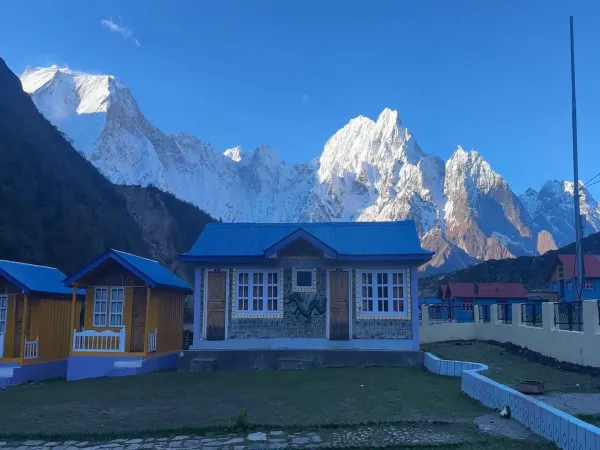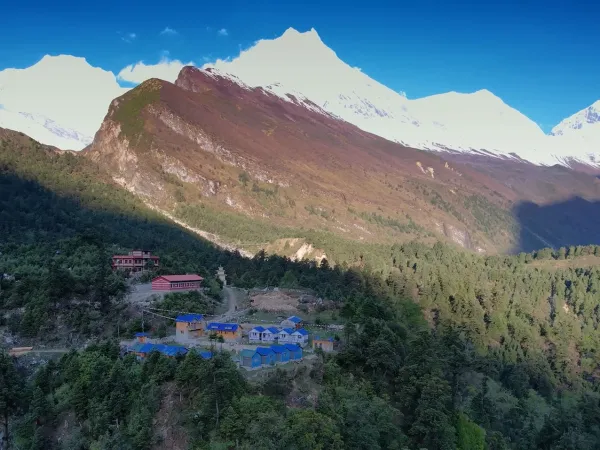
Dharamshala is a beautiful teahouse/lodge, not a village which lies inside the Gorkha district of Nepal, which also lies inside the Manaslu Conservation Area, and it is the last destination for healing and acclimatization before crossing the Larkya la Pass.
Don’t get confused with the Dharamshala that lies inside Himachal Pradesh, India. Both places are different, and both are trekking destinations in India and Nepal, but we will be discussing the place in Nepal, which is the last tea house before crossing the Larke pass because it's one main building and some sister buildings that are operated by the locals of Samdo and Samagaun. Dharamshala perches at an impressive elevation of 4,460 meters, equivalent to roughly 14,632 feet above sea level, offering breathtaking views and a unique atmosphere that captivates visitors.
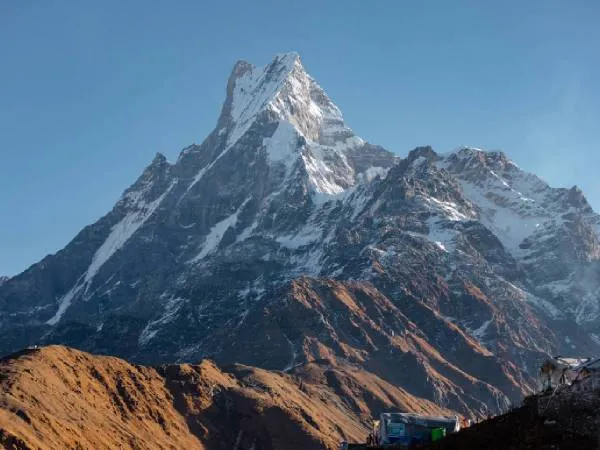
It is often referred to as the Larkya Phedi by the locals and the Larkya La base camp by the trekkers. It is a beautiful tea house with a barren alpine zone surrounded by snow-capped mountains like Manaslu (8,163 m), Larke Peak, and Cheo Himal. The place is open, and you will feel the cold breeze of the mountains, which comes back striking the mountain peaks.
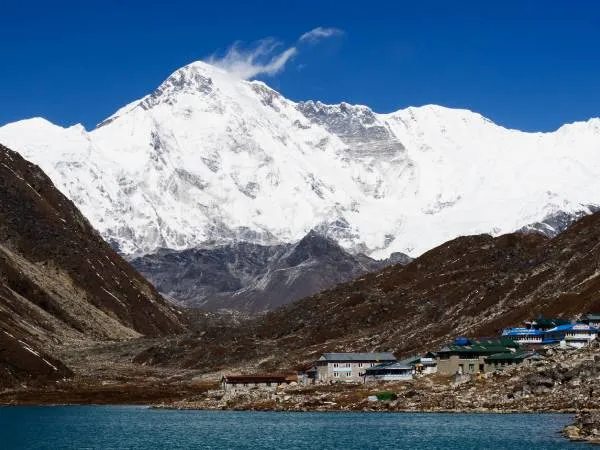
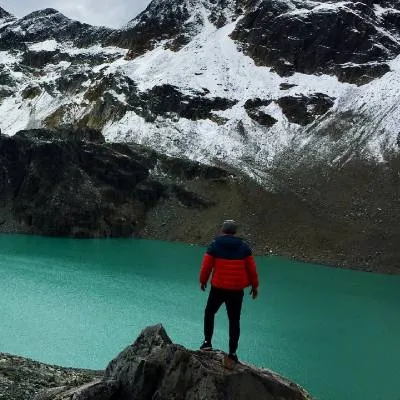
You'll see glaciers, moraines, alpine slopes, beautiful peaks, water streams, and prayer flags flying in the sky. As it is the last stop before crossing the Larke Pass, you will see the trekkers practicing, acclimating, and enjoying the perfect nature of the Dharamshala far away from the cities.
Surroundings of Dharamshala
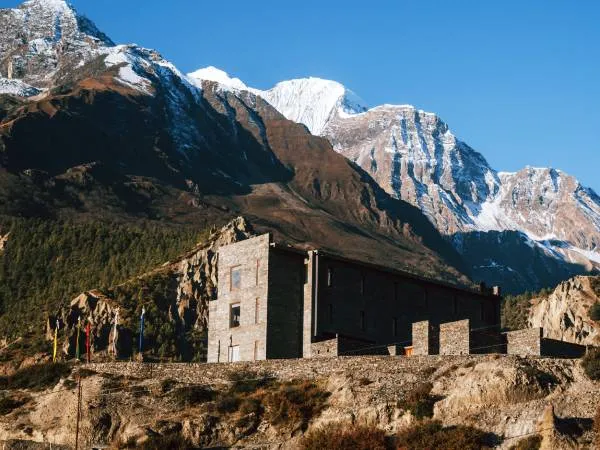
The surroundings of Dharamshala are alpine and glacial moraine. The place is peaceful and cold throughout the year because of its altitude. The landscape of the tea house is dominated by steep, rocky cliffs, scree slopes, and icy ridges. Also, you will witness the majestic peaks like Manaslu Peak, Naike Peak, and Larke Peak.
What permits are required for the trek to Dharamshala?
When planning your journey to the stunning Manaslu region and the renowned Manaslu Circuit Trek, be sure to secure the necessary permits: the Annapurna Conservation Area Permit (ACAP), the Manaslu Conservation Area Permit (MCAP), and the Restricted Area Permit. These permits are essential for gaining access to this breathtaking region and ensuring a compliant and memorable adventure.
The permits are obtained from the Tourism Board Office of Nepal in Thamel, or you will need to get them from registered trekking agencies like us (Adventure Vision Treks).In addition, You will need to gather a trekking group in order to obtain the necessary permits. As a minimum requirement to get ACAP, MCAP, and RAP permits you will need to have 2 trekking people at least. The permits ACAP and MCAP have a fixed price of NPR 3000, but the Restricted Area permit prices change according to the seasons, so make sure to check the permit price on our blog, Manaslu Circuit Trek Cost.
How to reach Dharamshala?
To reach Dharamshala, you will need to rent a private vehicle or use a public vehicle to reach the starting point of the Manaslu circuit trek, which is Soti Khola or Macha Khola, or if you want to drive to the last place, then Jagat, as there is no direct road access to Dharamshala. After reaching there, you will need to trek from the beautiful villages like Namrung, Nyak, Deng, Samagaun, Samdo, and the Dharamshala. Also, if you don’t want to do the trek from Jagat, then you can fly from Kathmandu to Samagaun and then acclimatize for 4/5 days there and then trek to Samdo and then Dharamsala.
Accommodation options for the Dharamshala
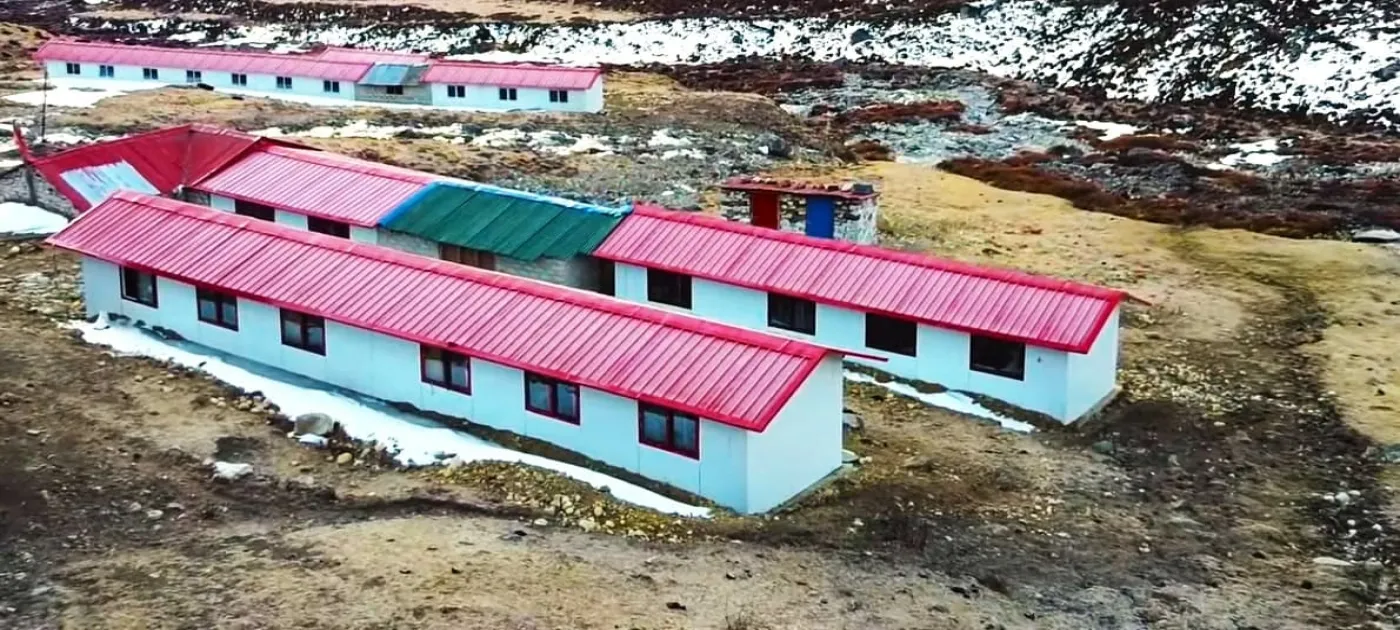
Accommodation options for Dharamshala include only one main tea house because it’s a temporary settlement especially made for the trekkers. The guest house or the tea house is managed by the locals of the nearby villages. The rooms here are dormitory-style with simple wooden beds, thin mattresses, and blankets. No indoor heating or proper insulation. Also, there are shared squat toilets, often located outside the main building.
A limited menu is offered, typically dal bhat, soup, noodles, potatoes, and hot drinks like tea and garlic soup (good for altitude). No internet access, and charging facilities are either nonexistent or solar-powered and limited.