Planning an Everest Base Camp (EBC) trek is exciting right up until you start thinking about gear. Everyone knows the basics: a warm jacket, trekking boots, a sleeping bag, gloves, a backpack, trekking poles. What most first-timers don't ask is a more important question: where should I actually buy or rent this equipment, and how do I know if a shop is any good?
Having gone through this exact process before trekking to Base Camp walking into more shops in Thamel than I'd like to admit, being sold a "waterproof" jacket that wasn't, and later finding a shop that talked me out of buying gear I didn't need I can tell you the shop matters almost as much as the itinerary itself.
The Everest Base Camp trail isn't a casual hike. Over 14 days you pass through subtropical forest near Lukla (2,860 m), alpine terrain around Namche Bazaar (3,440 m), and high-altitude desert near Gorak Shep and Base Camp itself (5,364 m).
Nighttime temperatures at Lobuche and Gorak Shep regularly drop to -15°C to -20°C even in the "warm" trekking seasons of spring (March–May) and autumn (September–November), and colder still in winter. Gear that feels fine in Kathmandu can fail badly at altitudewhich is exactly why the shop you buy from matters.
Why the Right Trekking Equipment Shop Matters for Everest Trekking?
Most trekkers spend their planning energy on flights, permits, guides, and the itinerary. All of those matters. But your gear determines your day-to-day comfort and, at times, your safety.
Uncomfortable boots on a 6-hour walking day. A sleeping bag rated for the wrong temperature. Gloves that aren't warm enough once you're above Dingboche (4,410 m). These aren't dramatic failures they're slow, grinding discomforts that add up and can turn an achievable trek into a miserable one.
A good shop does more than sell you items; it helps you match gear to the season, the route, and your own cold tolerance, and tells you honestly what to skip.
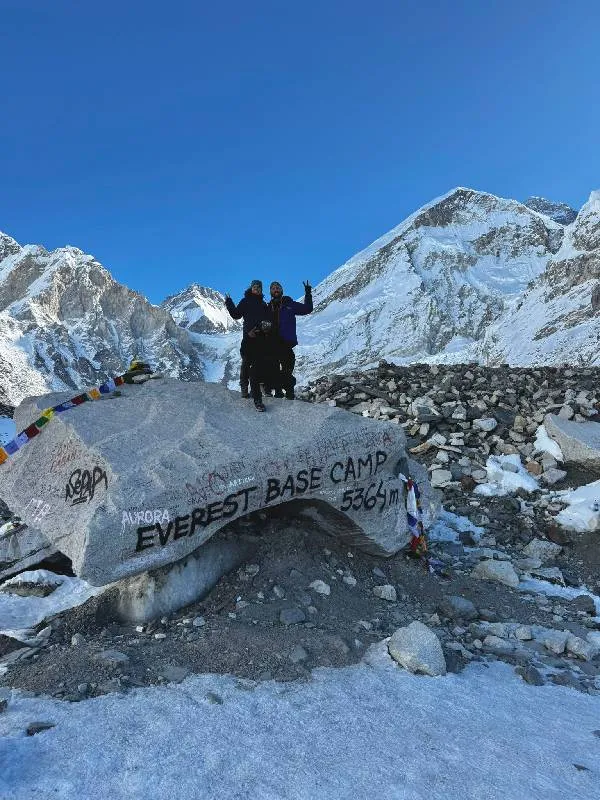
Where to start finding trekking and gear equipment shops in Kathmandu for EBC?
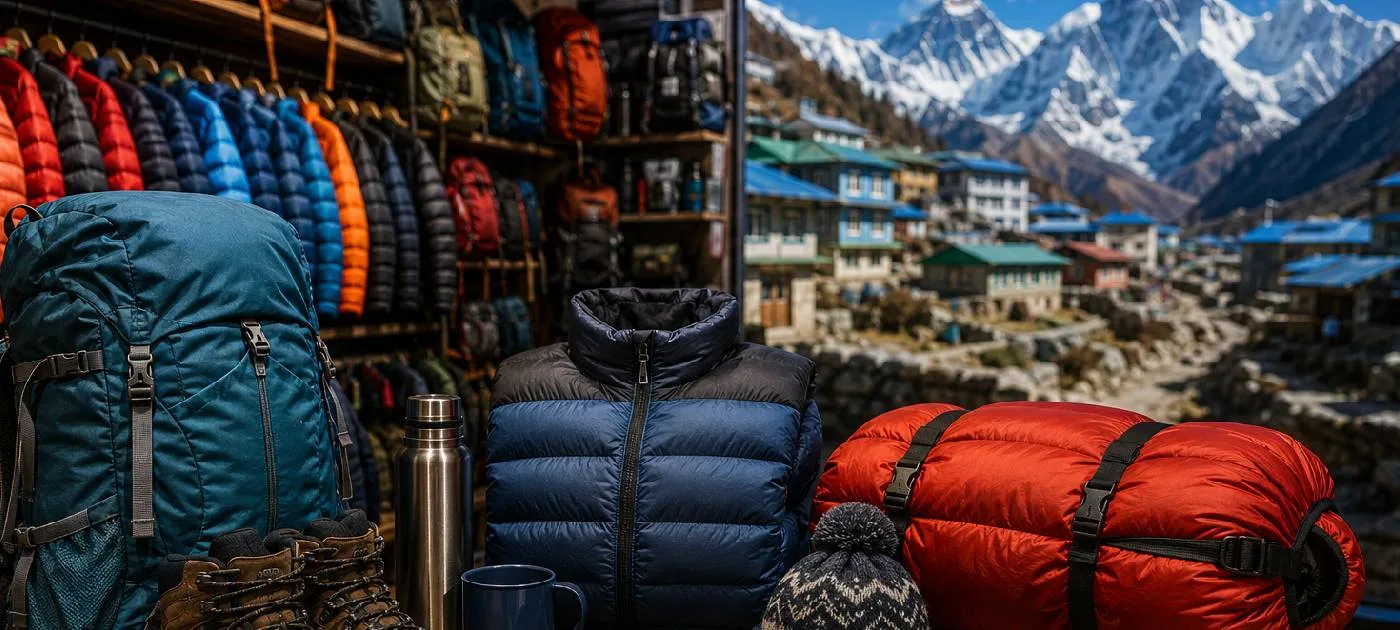
If you're sourcing gear in, Thamel in Kathmandu for EBC it is the practical starting point it has the highest concentration of trekking equipment shops in the country, ranging from established outdoor retailers to small family-run rental counters. You'll find down jackets, sleeping bags, backpacks, poles, thermal layers, headlamps, and most other EBC essentials within a few blocks.
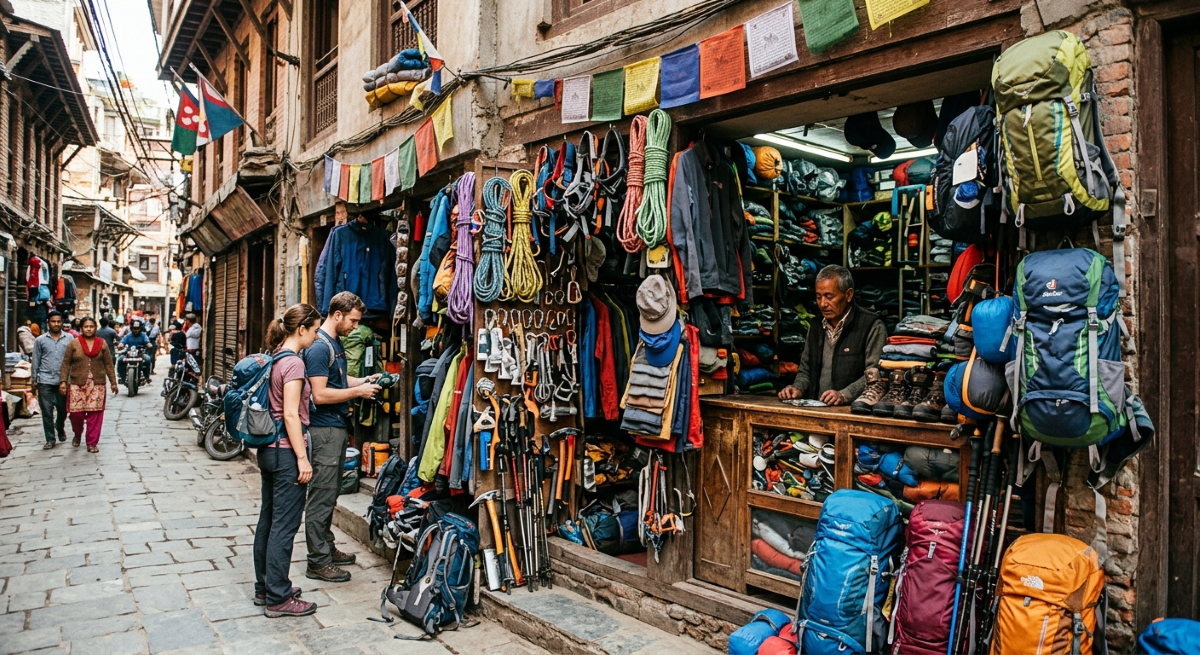
Concentration doesn't equal quality, though. Some shops are staffed by people who've actually trekked the route or worked as porters and guides; others are purely retail. Visit several before deciding a $5 difference in rental price matters far less than getting gear that actually fits and performs.
Thamel Isn't Your Only Option
You can also shop on the trail itself. Namche Bazaar, the last real town before the high country, has legitimate outdoor shops carrying both genuine brands (Sherpa, The North Face) and solid locally made gear, alongside the inevitable souvenir stalls. Selection thins out fast above Namche Lukla and the smaller villages have only a limited scattering of shops and pharmacies. Treat trailside shopping as a backup for something you forgot or a layer you underestimated needing, not your primary plan
Look for Staff Who Understand High-Altitude Trekking Specifically EBC
Not every outdoor shop understands what EBC actually demands. This is a high-altitude trek, not a technical climb, but it is a cold, long-duration trek a different problem than, say, a weekend hike in the hills around Pokhara.
- When you're in a shop, ask specific questions and pay attention to whether the answers are specific back:
- "What's the comfort rating on this sleeping bag, and is it tested to EN 13537 or a similar standard?"
- "Is this jacket's down fill power (e.g., 600, 700, 800 fill) enough for -15°C nights at Lobuche?"
- "Do these boots have a stiff enough sole and ankle support for scree and moraine near Gorak Shep?"
- "Is this actually necessary for EBC, or is it for technical mountaineering?"
A shopkeeper who answers with real numbers and route-specific reasoning is a good sign. One who just says "yes, very good, very warm" to everything is not.
Expertise checkpoint: A sleeping bag's comfort rating (not the "extreme" or "limit" rating printed in large font on the label) is the number that matters for actual sleep quality. Many shops quote only the most flattering number ask for all three if the tag shows them.
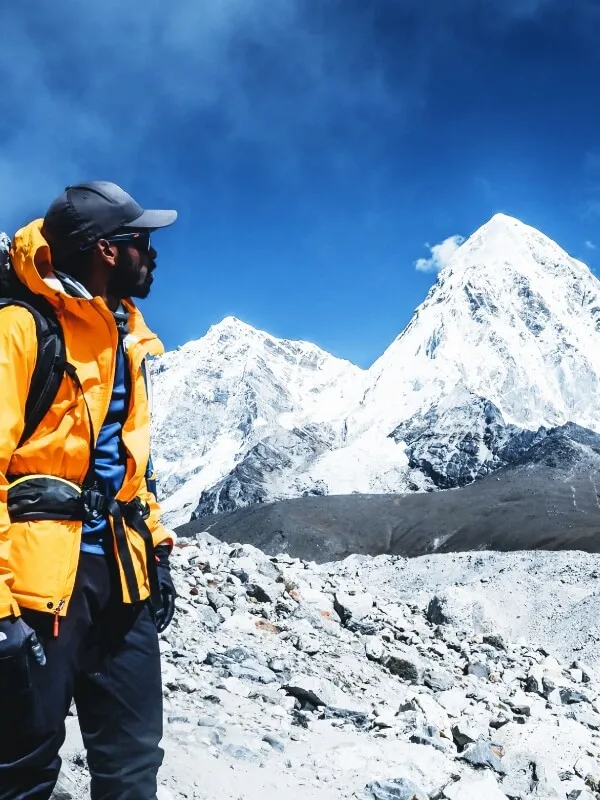
Check Reputation Before You Check Price of the Trekking Shop
Ask your trekking agency or guide which shops they recommend guides who've done the route dozens of times usually know which shops sell gear that survives the trail and which don't.
Independent trekking forums (r/EverestBaseCamp, Nepal-specific trekking Facebook groups, TripAdvisor's Kathmandu shopping section) are also useful, though treat any single glowing or damning review with some skepticism and look for patterns across many reviews rather than one outlier.
Reliable shops tend to share a few traits: they explain products without being asked twice, let you inspect gear thoroughly, quote fair prices without excessive haggling theater, and don't pressure-sell.
Compare at Least Three Shops Before Buying
Prices for what looks like an identical jacket or backpack can vary significantly between shops in the same street, often because the materials, stitching quality, or authenticity differ even when the outward design looks the same.
Before buying, compare:
Fabric weight and feel (rub the material between your fingers thin, papery outer shells are a red flag for a "waterproof" jacket)
Zipper brand and smoothness (YKK zippers are a reasonable quality signal, though not definitive)
Stitching density at stress points (shoulder seams, pack straps)
Weight of the item (a lighter down jacket at the same warmth rating is genuinely better; a lighter sleeping bag at the same rating may mean less insulation, not better engineering)
The cheapest option is rarely the best value. The goal is the best ratio of protection to cost not the lowest number on the price tag.
What to Buy vs. What to Rent for BEC trek?
If this is a one-time EBC trek, renting is usually smarter for bulky or expensive items you won't reuse:
What to rent?
- Down jacket
- Sleeping bag
- Trekking poles
- Duffel bag
- Gaiters
What to buy?
- Trekking boots
- Socks
- Base layers
- Gloves
- Sunglasses
- Underwear and personal hygiene items
Boots deserve special attention. Never start a multi-day trek in rented boots you haven't broken in a poorly fitted boot doesn't just cause discomfort, it can cause blisters severe enough to end a trek early. If you're buying boots in Kathmandu, plan to wear them around the city for at least a few days before flying to Lukla.
Inspect Everything Before You Pay
Down jacket: Check zipper action, hood adjustment, pocket stitching, and ask about the fill power. Wear it and move your arms overhead a jacket that restricts movement will be miserable on the trail.
Sleeping bag: Ask for the comfort rating specifically (not just "extreme" rating). Unzip it fully and check for cleanliness, dryness, and odor a musty rental bag is a sign of poor storage.
Trekking poles: Test the locking mechanism under real pressure. Poles that slip under load are a safety issue on steep, loose terrain.
Backpack: Load it with some weight in-store. Check shoulder straps, hip belt padding, back panel ventilation, and whether a rain cover is included.
A shop that's uncomfortable with you thoroughly testing gear before a purchase is a shop you should be cautious about.
Fake Branded Gear Is Common Know What You're Paying For
Thamel has a wide spectrum of "branded" gear: some genuinely original, some good-quality local manufacturing (Nepal has a real outdoor-gear manufacturing industry, and locally made gear is often perfectly serviceable), and some poor imitations riding on a famous logo.
If a shop claims an item is genuine international-brand stock at a price far below that brand's retail price elsewhere, treat that claim skeptically. For EBC specifically, actual performance warmth, durability, fit matters far more than the logo. Local Nepali brands and workshop-made gear are frequently a smart, honest-value choice; the issue is only when a copy is sold as an original at an original's price.
Match Gear to Your Trekking Season
Spring (March–May) and autumn (September–November): Most popular seasons, moderate daytime temperatures, but still cold at night above 4,000 m.
Winter (December–February): Requires a warmer sleeping bag (comfort-rated closer to -20°C), heavier gloves, thicker socks, and more aggressive layering.
Monsoon/summer (June–August): Rarely used for EBC due to rain and cloud cover, but waterproofing becomes the priority over insulation.
A shop that asks when you're trekking before recommending gear is doing its job properly. One that gives identical advice regardless of season is not accounting for real conditions.
The layering system that actually works for EBC: base layer → fleece or light insulating mid-layer → down jacket → waterproof/windproof outer shell, paired with warm socks, insulated gloves (plus a thin liner glove for dexterity at camp), and a warm hat. This system, not one heavy jacket, is what handles the temperature swings between a sunny midday and a -15°C night.
Return, Exchange, and Rental Policies
Before paying, ask directly:
- Can clothing be exchanged if the size is wrong?
- What's the rental deposit, and is it refundable in cash or only store credit?
- What's the daily late-return charge?
- What counts as "damage" for a rented item, and what's the charge?
A professional shop will have clear, consistent answers. Vague or evasive answers on money matters are a legitimate reason to walk away.
A Basic EBC Packing List
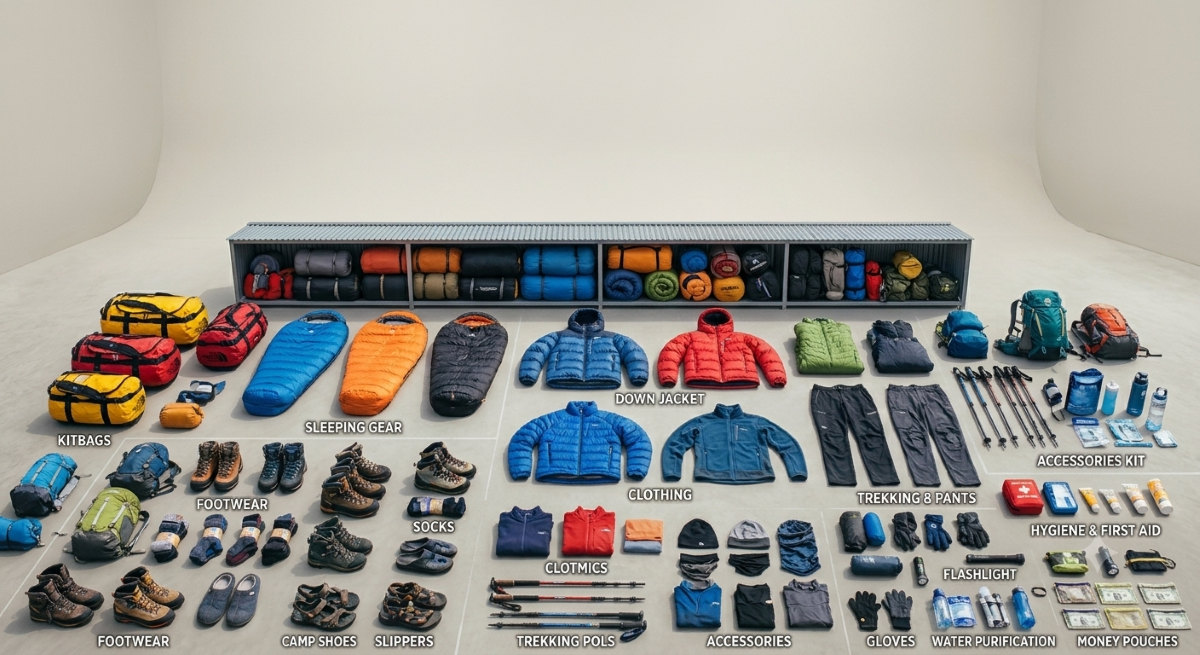
A basic Everest Base Camp (EBC) packing list includes the essential gear and equipment you will need for the trek. This is only a simplified list of the most important items. For a complete and detailed packing guide, please read our blog: What are the packing lists required for Everest Base Camp trekking?
- Trekking boots
- Warm socks (wool or synthetic blend, several pairs)
- Base layers (top and bottom)
- Fleece jacket
- Down jacket
- Waterproof/windproof outer jacket
- Trekking pants
- Insulated gloves + liner gloves
- Warm hat
- Sun hat
- UV-rated sunglasses (important above the snowline near Kala Patthar and Base Camp)
- Sleeping bag (comfort-rated for your season)
- Headlamp with spare batteries
- Water bottle or hydration bladder
- Trekking poles
- Backpack (daypack) and/or duffel bag (for porter-carried gear)
- Toiletries and basic first-aid kit
- Sunscreen (high SPF UV exposure is significantly stronger at altitude)
Check what you already own before buying anything. Every extra item is extra weight, either on your back or your porter's.
Don't Overpack
The instinct to buy "just in case" is understandable but usually counterproductive. Multiple heavy jackets, excess clothing changes, and unnecessary gadgets add weight without adding meaningful safety or comfort. If you're unsure whether something is necessary, ask your guide or trekking company directly they've seen what actually gets used on the trail and what sits unused in a duffel bag for two weeks.
Where Not to Cut The list
Some categories are worth paying more for, because failure has a real cost on the trail: trekking boots, sleeping bag, down jacket, gloves, socks, sunglasses, and waterproof outerwear. A weak zipper or thin insulation is a minor annoyance in Kathmandu and a real problem at 5,000 meters.
Buy Early, not at the Last Minute
Boots especially need breaking in ideally worn and walked in for at least a few days before the trek starts. Buying early also leaves time to exchange a poor fit. Last-minute gear shopping, the night before flying to Lukla, is when rushed, regrettable decisions happen most often.
The Lukla Flight Weight Limit Changes What You Should Buy
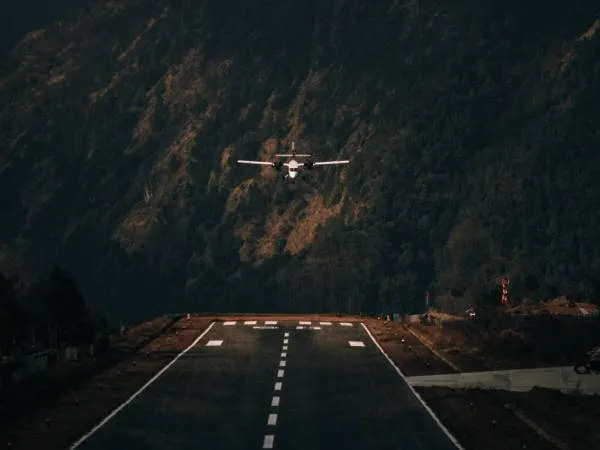
This is easy to miss until you're already packed: the Kathmandu–Lukla flight enforces a real weight limit, generally around 10 kg for checked luggage and 5 kg for hand luggage per person, which also lines up with the standard porter allowance of about 10 kg per trekker. Airlines do weigh bags, and overage fees are real.
Two practical consequences for your shopping decisions:
Wear your heaviest items on the plane. Hiking boots and a bulky jacket worn rather than packed don't count against your checked weight the same way a trick most first-timers only learn after their bag is already overweight at the counter.
This is another reason renting beats buying for bulky items. A rented down jacket and sleeping bag you return in Kathmandu never has to survive round-trip flights in your luggage at all.
If you're flying in with gear from home, weigh everything at your hotel before heading to the domestic terminal most Kathmandu hotels catering to trekkers keep a luggage scale at the front desk for exactly this reason.
How Much Should You Actually Budget for the gears and equipments for the Everest trekking?
This is the question every trekker asks and almost no gear article answers directly, so here are real numbers, which exactly answers your budget for the gears and equipments for the everest trekking.
Renting a sleeping bag or down jacket typically costs around $1 USD per day in Thamel genuinely one of the best value decisions in the entire trip.
Small rentable items gloves, warm hats, wool socks run roughly $3–10 USD if you decide to buy rather than rent them.
Budget clothing (fleece jackets, waterproof pants, generic hiking boots) at the lower-cost Thamel shops generally lands around $10–30 USD per item. This is the tier where the "you get what you pay for" warning applies most directly fine for a single trek, riskier if you're pushing it hard for two weeks straight.
Genuine branded boots and jackets (the kind sold on Tridevi Sadak, above) cost close to what you'd pay at home budget accordingly if authenticity matters more to you than price.
On second-hand gear: a smaller, easy-to-miss option in Thamel is used equipment sometimes gear that high-altitude porters received as part of their pay and later sold on, occasionally never even used. It's not marketed the way rentals are, so you may need to ask specifically. It's also becoming less common as counterfeit new stock has taken over much of that market, so inspect it exactly as carefully as anything else on this list.
Frequently Asked Questions about Best trekking gear shops in Kathmandu for EBC
Where can I buy trekking gear in Kathmandu for the Everest Base Camp Trek?
The best place to buy trekking gear in Kathmandu is Thamel, where you'll find the largest selection of outdoor equipment shops. You can purchase or rent trekking boots, down jackets, sleeping bags, trekking poles, backpacks, thermal clothing, and other essential gear for the Everest Base Camp Trek.
Is it better to buy or rent trekking equipment for Everest Base Camp?
If you're trekking to Everest Base Camp only once, renting expensive items such as a down jacket, sleeping bag, trekking poles, and a duffel bag is usually the most economical option. However, trekking boots, socks, base layers, and personal clothing should be purchased for comfort and hygiene.
How much does it cost to rent trekking gear in Kathmandu?
Rental prices vary by shop, but a down jacket or sleeping bag typically costs around USD 1–2 per day, while trekking poles, duffel bags, and other accessories are also available at affordable daily rental rates.
Can I trust branded trekking gear sold in Kathmandu?
Kathmandu offers a mix of genuine international brands, locally manufactured trekking gear, and imitation products. Always inspect the quality carefully, ask about the product's origin, and purchase from reputable shops if authenticity is important.
Should I buy trekking boots in Kathmandu?
Yes, you can buy trekking boots in Kathmandu, but make sure they fit properly and break them in before starting your trek. Avoid using rented boots for a multi-day trek, as poor fitting boots can cause painful blisters.
What should I look for when choosing a trekking gear shop?
A reliable trekking gear shop should have knowledgeable staff, transparent pricing, quality equipment, clear rental policies, and allow you to inspect or test the gear before purchasing or renting.
Can I buy trekking gear in Namche Bazaar?
Yes. Namche Bazaar has several outdoor shops selling trekking equipment and clothing. However, the selection is smaller and prices are generally higher than in Kathmandu, so it's best to buy most of your gear before flying to Lukla.
What trekking gear is essential for the Everest Base Camp Trek?
Essential gear includes trekking boots, thermal base layers, a fleece jacket, a down jacket, waterproof outerwear, trekking pants, gloves, warm socks, sunglasses, a sleeping bag, trekking poles, a backpack, a headlamp, and a basic first-aid kit.
How do I know if a sleeping bag is warm enough for Everest Base Camp?
Check the comfort temperature rating, not just the extreme rating. For spring and autumn, a sleeping bag with a comfort rating around -10°C to -15°C is generally suitable, while winter treks require even warmer bags.
Are trekking gear prices negotiable in Kathmandu?
Many trekking shops in Thamel allow some price negotiation, especially when purchasing multiple items or renting several pieces of equipment. However, don't choose a shop based on price alone quality and reliability are more important.
Can I complete the Everest Base Camp Trek with rented gear?
Yes. Many trekkers successfully complete the Everest Base Camp Trek using rented down jackets, sleeping bags, trekking poles, and duffel bags. Just make sure you inspect the equipment carefully before taking it.
When should I buy trekking gear before my Everest Base Camp Trek?
It's best to purchase or rent your trekking gear at least a few days before your trek begins. This gives you enough time to test the equipment, exchange items if necessary, and break in new trekking boots before flying to Lukla.
Choosing the right trekking equipment shop can make a significant difference to your Everest Base Camp experience. Take your time to compare shops, inspect the gear carefully, and don't hesitate to ask questions before buying or renting. A little extra preparation in Kathmandu can save you from discomfort on the trail and help you enjoy your trek with confidence.
If you still have questions about trekking gear, rentals, or planning your Everest Base Camp trek, feel free to get in touch with our team. We're always happy to help you prepare for your adventure.