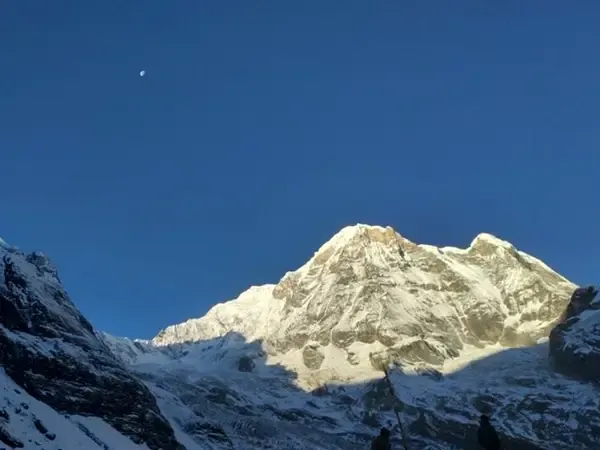
13-day Annapurna Circuit Trek takes you through remote Himalayan landscapes, rich local culture, and peaceful mountain villages. You’ll enter the Annapurna Conservation Area and cross the challenging Thorong La Pass at 5,416 meters, one of the highest trekking passes in the world. The journey also includes visits to scenic valleys and the sacred Muktinath Temple, making it one of the best trekking experiences in Nepal during spring and autumn.
Annapurna Circuit Trek 13 Days
Annapurna Circuit Trek 13 Days Outline Itinerary
Welcome to Kathmandu
Drive from Kathmandu to Dharapani
Trek from Dharapani to Chame
Trek from Chame to Pisang
Trek from Pisang to Manang
Acclimatization day at Manang
Trek from Manang to Yak Kharka
Trek from Yak Kharka to Thorong-la Phedi
Trek from Thorong Phedi to Muktinath, crossing Thorong La Pass
Drive from Muktinath to Kagbeni, Jomsom, Marpha, and Tatopani
Drive from Tatopani to Pokhara
Early morning scenic drive to Kathmandu
Departure
The Annapurna Circuit Trek is one of Nepal's most diverse Himalayan journeys, taking you through lush valleys, traditional mountain villages, pine and alpine forests, and the dramatic high-altitude desert landscapes of Manang and Mustang.
The trail passes through culturally rich settlements such as Chame and Pisang, where Tibetan-influenced traditions, ancient monasteries, fluttering prayer flags, yak grazing pastures, and centuries-old farming practices offer a glimpse into authentic Himalayan life.
As the trek climbs deeper into the Annapurna region, trekkers explore landmarks such as Gangapurna Lake and acclimatize in Manang before crossing the challenging Thorong La Pass (5,416m), above sea level, which is one of the world's highest trekking passes.
The journey rewards adventurers with spectacular views of Annapurna, Dhaulagiri, Gangapurna, Tilicho Peak, the Chulu Peaks, and many other Himalayan giants before descending to the sacred Muktinath Temple, a revered pilgrimage site for both Hindus and Buddhists.
Combining breathtaking mountain scenery, cultural immersion, spiritual significance, and ever-changing landscapes, the Annapurna Circuit remains one of the most iconic trekking experiences in the Himalayas.
Highlights of the Annapurna Circuit Trek in Nepal
The highlights of the Annapurna Circuit trek in Nepal are:
- Trek around the world-famous Annapurna massif, one of Nepal's most diverse trekking regions.
- Cross the challenging Thorong La Pass (5,416 m), one of the highest trekking passes in the world.
- Experience dramatic landscape changes, from lush subtropical forests to high-altitude deserts.
- Enjoy breathtaking views of peaks such as Annapurna I, Dhaulagiri, Manaslu, and Tilicho Peak.
- Explore traditional villages inhabited by Gurung, Thakali, and magar communities.
- Visit the sacred Hindu and Buddhist pilgrimage site of Muktinath Temple.
- Walk through the beautiful Marshyangdi and Kali Gandaki valleys.
- Trek through the world's deepest gorge, the Kali Gandaki Gorge.
- Experience the unique Tibetan-influenced culture of the Manang and Mustang regions.
- Acclimatize in the picturesque village of Manang.
- Discover ancient monasteries, prayer wheels, chortens, and colorful prayer flags along the trail.
- Relax in the natural hot springs at Tatopani after days of trekking.
- Experience a complete Himalayan journey combining adventure, culture, spirituality, and spectacular mountain scenery.
Why visit the Annapurna Circuit in Nepal?
Annapurna circuit in Nepal takes you through the diverse terrains from subtropical forests and terraced fields to alpine meadows and high mountain deserts. When you are walking via the trails, you can see the beautiful Views of snow-capped peaks like Annapurna I, Dhaulagiri, Machapuchhre, and Manaslu ranges.
The Annapurna region is also the cultural hub for the Nepali ethnic communities, including Gurung, Thakali, and Manangi cultures. On the way to the trek, you will be experiencing the traditional villages with ancient monasteries, stone houses, and local festivals. The trek gives you a mix of the Hindu and Buddhist cultures.
The Annapurna circuit trail features Rich flora and fauna, including rhododendron forests, Himalayan blue poppies, and sightings of snow leopards or Himalayan tahr in higher regions. Also, when trekking, you will see that the trails have Numerous teahouses and lodges, making it accessible without heavy camping gear. The Manaslu circuit trek also gives you the gateway to the Annapurna circuit with Tilicho Lake trek, Nar Phu valley trek, North Annapurna base camp trek, and many other trekking destinations. The sunrise and sunset over the mountain ranges are once-in-a-lifetime moments to experience.
About Thorong La Pass Himalayas
Thorong La Pass himalayas is a beautiful high-altitude mountain pass located in the Annapurna region between the Dhaulagiri and the Annapurna ranges, and the gateway to Manang and Mustang. Thorong La Pass is located at an altitude of 5,416 meters (17,769 feet), which is one of the highest passes in the world.
As Nepal is also known as the land of the high passes, it offers panoramic views of the Himalayas, including Annapurna, Dhaulagiri, Machapuchhre, and Nilgiri peaks. During the trek, you will witness a dramatic transition from lush green forests in lower altitudes to barren, snow-covered landscapes near the pass.
The Thorong La lies just above the Muktinath temple, which is a traditional pilgrimage route and sacred to both Hindus and Buddhists. When reaching the Thoorng la pass, you will see the Steep climb with high altitude, the land is rocky and snowy in the winters, and everywhere it's a white snowland in every season you visit.
About the Gurung and Magar Community
The Gurung and Magar communities are the locals of the Annapurna region, starting from Ghandruk to Manang, Mustang. The Gurung and Magar communities stand out as two of the most significant and historically important indigenous groups of the Himalayas. These communities are known for their bravery, traditions, and harmonious lifestyles. They have played a vital role in shaping Nepal’s cultural identity.
Gurung Community
The Gurung people are also known as Tamu. The Gurung language is a part of the Sino-Tibetan family and is still spoken by many, though Nepali is widely used in daily life. Historically, the Gurungs were pastoralists and traders, but over time, they became well-known for their service in the British and Indian Gurkha regiments, earning them a reputation as brave warriors.
Their faith is a blend of Bon, Buddhism, and Hinduism, creating a unique spiritual identity. Gurung men wear a short shirt called bhoto with a white cloth called kachhad, while women often wear colorful blouses with shawls and ornaments.
Magar Community
Magar community is one of the oldest communities in Nepal. They are found in the Nepal sidderent hills and mountains region, like Palpa, Rolpa, Rukum, Pyuthan, Baglung, and the different places of the Annapurna region as well. The Magar language belongs to the Tibeto-Burman family, and it is widely spoken by the Magar people. Historically, they were influential in the political and military history of Nepal, playing important roles in the unification campaigns of King Prithvi Narayan Shah and later serving in the Gurkha armies.
Traditionally, the Magars community people engaged in agriculture and animal rearing. They are hardworking farmers, often cultivating maize, millet, and rice in hilly terraces. Magars follow a mix of shamanism, Buddhism, Hinduism, and animism, with rituals performed by shamans (Jhankri).
What does our guide, Pemba Sherpa, say about the Annapurna Circuit Trek?
Our guide, Pemba Sherpa, says that “the trek is not just about reaching Thorong La Pass (5,416 m); it is also about the journey through local villages, interacting with Gurung, Thakali, and Tibetan-influenced communities, and witnessing ancient monasteries and sacred sites like Muktinath Temple. I believe that these cultural encounters are what make the Annapurna Circuit stand out from other treks in Nepal."
Total Annapurna Circuit Trekking Distance
The total Annapurna circuit trekking distance is 80km which is around 50 miles starting from Dharapani and ending at Muktinath temple. You will need to walk around 6 to 8 hours a day covering an avergae of 10 to 15 km walking distance everyday.
| S.No | Trekking Route | Distance (km) |
|---|---|---|
| 1 | Dharapani to Chame | 16 km |
| 2 | Chame to Pisang | 15 km |
| 3 | Pisang to Manang | 17 km |
| 4 | Manang to Yak Kharka | 10 km |
| 5 | Yak Kharka to Thorong Phedi | 7 km |
| 6 | Thorong Phedi to Muktinath (via Thorong La Pass) | 16 km |
| Total | Dharapani to Muktinath | 81 km |
The table above explains the daily trekking distances covered during the Annapurna Circuit Trek from Dharapani to Muktinath. These distances represent only the walking portion of the journey and do not include any transportation by road. If you are looking for the total road transportation distance, including the drives from Kathmandu to Dharapani and from Muktinath back to Pokhara and Kathmandu, please refer to the table below.
| S.No | Route | Mode of Transport | Distance (km) |
|---|---|---|---|
| 1 | Kathmandu to Dharapani | Drive | 230 km |
| 2 | Muktinath to Tatopani | Drive | 90 km |
| 3 | Tatopani to Pokhara | Drive | 105 km |
| 4 | Pokhara to Kathmandu | Drive | 200 km |
| Total | Road Transportation Distance | 625 km |
Annapurna Circuit Trek itinerary
Our Annapurna Circuit Trek itinerary is designed for 13 days, including vehicle support in road-accessible sections. This helps reduce unnecessary walking on dusty road parts and allows you to focus more on the scenic trekking trails.
We have carefully planned the itinerary to match your walking pace, proper acclimatization, and overall trekking experience, ensuring a safer and more enjoyable journey in the Himalayas.
Along the route, we also include cultural interaction sessions where you can meet local people, monks, and village communities. This gives you a deeper understanding of the lifestyle, traditions, and spiritual side of the region.
Our experienced guides support you throughout the trek, helping with altitude management, safety, and route guidance. In remote areas, they also carry satellite communication devices for emergency situations.
The itinerary is flexible and can be adjusted based on your fitness level, comfort, and preferences, making it suitable for both first-time and experienced trekkers.
Annapurna Circuit trek cost for 2026/2027
The cost of the Annapurna Circuit Trek for 2026/2027 depends on several factors, including the type of transportation you choose, the standard of tea houses and accommodations, the experience level of your guide, whether you hire a porter, the meals you have during the trek, and the season in which you travel.
Trekking during the peak seasons of spring (March–May) and autumn (September–November) generally costs more than trekking during the off-seasons of winter and monsoon. On average, you can expect the cost to range from USD 1,185 for a standard trek to around USD 2,500 or more for a luxury Annapurna Circuit Trek.
A Special Note on Choosing the Right Trek Operator
Trekking is a service-based industry, and while many companies may offer similar itineraries, the quality of service, safety standards, and overall experience can vary significantly. When comparing trek prices, it is important to look beyond the final cost and carefully evaluate what is included.
Consider the guide's experience and qualifications, the porter-to-client ratio, the quality of accommodations, the meals provided, the transportation arrangements, the trekking gear, and the level of support available throughout the journey.
The Annapurna Circuit crosses remote mountain terrain and reaches high altitudes, where proper planning and professional support are essential. Choosing a trek solely based on the lowest price may compromise your comfort, safety, and overall experience. A well-organized trek with experienced staff and reliable services often provides far greater value than the cheapest option available.
Guide and porter for the Annapurna circuit trek Nepal
Why Do I Need a Guide?
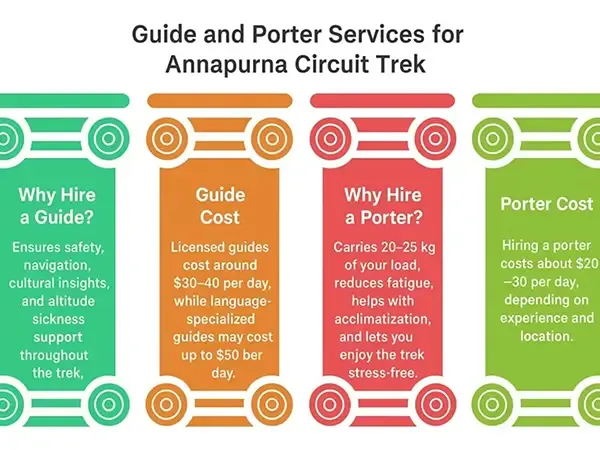
A guide and a porter have different responsibilities on the Annapurna Circuit Trek, and both are highly recommended for a safe and enjoyable journey. A guide is not only there to show you the trail, but they also manage all the logistics, including accommodation, permits, meals, and transportation arrangements.
They also act as your companion and provide support throughout the trek. This is especially important on the journey because you will be crossing Thorong La Pass, one of the highest and most challenging sections of the route. The weather around the pass can change suddenly, and an experienced guide can assess conditions, monitor weather forecasts, and help ensure a safe crossing.
Why Do I Need a Porter?
A porter helps by carrying your main trekking bag. During the walk, carrying a heavy backpack every day can quickly drain your energy, especially as you gain altitude. If you are carrying too much weight, you may become exhausted and struggle to walk comfortably on the higher sections of the trail.
This can make the ascent to Thorong La Pass much more difficult. By hiring a porter, you can conserve your energy, trek with only a light daypack, and increase your confidence in completing the pass comfortably and safely. Therefore, we strongly recommend hiring both a guide and a porter for the trek to make your journey safer, easier, and more enjoyable.
What are the Difficulties and Challenges on Thorong La Pass Trek?
The Thorong La Pass trek is one of the most adventurous and thrilling treks, but it does come with some difficulties and challenges. One of the biggest difficulties is the altitude. The trail crosses Thorong La Pass at 5,416 meters, where the air is thin and the risk of Acute Mountain Sickness (AMS) becomes real.
Another challenge is the long trek duration. Covering 230 kilometers over 13 days, the trek demands excellent stamina and endurance. Daily hikes can last 6–8 hours, often with steep ascents and descents that test both physical and mental strength. Weather adds another layer of difficulty.
The Annapurna region is known for unpredictable conditions; sunny mornings can quickly turn into rain, snow, or strong winds at higher elevations. Basic infrastructure and facilities along the circuit can also be a challenge for some trekkers. While teahouses offer food and shelter, amenities become increasingly limited at higher altitudes.
To overcome all these challenges and difficulties, you will need to prepare properly, and to do so, you can read the paragraphs below for how to prepare for the Annapurna Circuit trek for a better trek experience.
Why choose Adventure Vision Treks for the Annapurna Circuit in Nepal?
You shall choose Adventure Vision Treks for the Annapurna circuit in Nepal because we have been operating since 2014, led by our founder, who personally explored Nepal’s trails through hands-on field experience, and we have successfully guided over 1,000 treks across the Himalayas.
We prioritize your safety with licensed guides trained by the Nepal Tourism Board, supported by satellite phones for emergency communication in remote areas. Our itineraries are designed with proper acclimatization, gradual ascent, good nutrition, and comfortable accommodation to reduce altitude risks and ensure a smooth journey.
We also focus on small-group, personalized trekking so you can enjoy the experience at your own pace with full support throughout. With a safety-first approach, responsible tourism values, and real on-the-ground expertise, we ensure your Annapurna Circuit Trek is not just completed but experienced safely, comfortably, and confidently.
Special Offer for 2 Trekkers – Autumn 2026
Special Offer for Autumn 2026: As autumn is the most popular trekking season in Nepal, we are excited to offer an exclusive 30% discount to the first two trekkers who book the Thorong La Pass Trek with us for the Autumn 2026 season. Secure your adventure early and take advantage of this limited-time offer before the spots are gone.

You'll Explore
Annapurna Circuit Trek 13 Days Itinerary
Welcome to Kathmandu
We welcome you to the country of hills and mountains, where the North welcomes you with breathtaking mountain views, and the South welcomes you with flat and fertile agricultural lands. We will be waiting for you at the Tribhuvan International Airport arrival gate and welcome you with the motto of Atithi Devo Babha, which means Guest is God for us.
After your arrival, we will take a short drive to the mid-city of Kathmandu Thamel, famous for its vibrant streets, handicraft shops, and National and International cuisine restaurants. After you arrive, you can rest in your hotel, and in the evening, we will have an authentic Nepali dinner while enjoying the melodies, songs, and music.
Drive from Kathmandu to Dharapani
The drive from Kathmandu to Dharapani is a long yet incredibly scenic journey that takes you from the busy capital city deep into the heart of the Himalayas. Early in the morning, you begin your trip heading northwest, leaving behind the urban landscape and gradually entering winding mountain highways that follow rivers, terraced hills, and lush green valleys. The route passes through several small towns and rural settlements, offering a fascinating glimpse into Nepal’s countryside life, where daily routines unfold against dramatic natural backdrops.
As the journey continues, the road becomes more rugged and adventurous, especially after Besisahar, where off-road terrain begins. You will travel along narrow mountain roads carved into steep hillsides, crossing suspension bridges and following the roaring Marshyangdi River. Along the way, if weather permits, you’ll be rewarded with distant views of snow-capped peaks and cascading waterfalls.
By the time you reach Dharapani, a gateway village to the Manaslu and Annapurna regions, the environment feels noticeably more remote, peaceful, and alpine setting the perfect tone for the trekking adventure ahead.
Trek from Dharapani to Chame
The walk from Dharapani to Chame marks the first major ascent into the upper Himalayan region, where the landscape begins to feel truly alpine and remote. After an early morning start, the trail gradually climbs through dense pine and fir forests, crossing suspension bridges over the rushing Marshyangdi River while the sound of waterfalls echoes through the valleys. The path is well-defined but steadily uphill, offering a rewarding balance of challenge and natural beauty.
As you move higher, the scenery becomes increasingly dramatic, with deep gorges, rocky cliffs, and occasional glimpses of snow-capped peaks peeking through the forest canopy. Small villages along the route provide short rest points, where you can observe traditional mountain life and Tibetan-influenced culture beginning to emerge. After several hours of trekking, you finally arrive at Chame, the administrative center of the Manang District, surrounded by towering mountains and hot springs an ideal place to rest and prepare for the higher elevations ahead.
Trek from Chame to Pisang
After breakfast, you will walk for 5 hours from Chame to Pisang. On the journey, you will encounter many tall and fierce waterfalls. Our path leads us to ascend to the steepest part of the Marshyangdi valley. After the steep rock roads, fascinating landscapes like green rhododendron forests, oak tree areas, and some unique cultural villages lie ahead. You should consider exploring one or two of them. Rest overnight at Pisang.
Trek from Pisang to Manang
After breakfast, you will trek through dense forests and steep hills, followed by Marshyangdi, the fast-flowing river near Manang. After that, you reach Ghyaru village, which is one of the Annapurna Conservation Area's beautiful settlements, and from there explore the chortens and monasteries, while enjoying the beautiful panoramic views of Annapurna II, Annapurna III, Annapurna IV, Gangapurna, Tilicho Peak, and Pisang Peak.
Acclimatization day at Manang
Explore Manang, the village of a private and scenic haven. You may visit the famous Gangapurna Glacier Lake, some ancient and holy places, or just sit down and relax. This village will also amuse you with the locals’ warm and generous hospitality. Witness the beautiful mountain views of the mountains and hike to the Praken Gompa and explore the high mountains bakeries, cafes, monasteries, or the Himalayan Rescue Association information center.
Trek from Manang to Yak Kharka
We will trek from Manang, walking for 3-4 hours along the scenic route with little streams, juniper trees, and small villages. Travelers will be amazed at exploring the unique landscapes, quaint villages, diverse topography, beautiful hills, Mani walls, alpine yak pastures, and diverse flora and fauna of the Manang to Yak Kharka area during this endeavor. After Manang trekkers reach above the tree line, the landscape looks like a wasteland dominated by grass, bushes, and rocks. Rest overnight at Yak Kharka.
If you want to trek Tilico Base Camp and Tilicho Lake, the world's highest-altitude lake. It would help if you walked to Khangsar from here.
Trek from Yak Kharka to Thorong-la Phedi
We will trek for 4 hours uphill to the snow-covered Thorang-La Phedi. Explore around and experience the challenging climate of the high Himalayas. Yak Kharka to Thorong Phedi is located in the northernmost part of the latter. The distance between Yak Kharka and Thorong Phedi is 7.3 kilometers / 4.5 miles. The flat trail gradually ascends to Thorong Phedi, and the steep ascent from Phedi to high camp takes 4 to 5 hours by foot.
Trek from Thorong Phedi to Muktinath, crossing Thorong La Pass
We will cross Thorong La Pass, the mountain pass with an elevation of 5,416 meters (17,769 ft), with the holy Muktinath being our destination of the day. Situated at 3710 m, Muktinath Temple is one of Nepal's most ancient and sacred temples for God Vishnu. Besides exploring and learning more about the history of this special place, you can also enjoy the mountain view of the Annapurna southern range and the Tibetan plateau.
Muktinath Darshan Yatra is popular among Hindus and Buddhists worldwide, so there are many visitors to Muktinath these days.
Rest overnight at the teahouse.
Drive from Muktinath to Kagbeni, Jomsom, Marpha, and Tatopani
Early in the morning, we will have our breakfast and then drive to Kagbeni, which is just downhill from the Muktinath temple. Kagbeni is located on the riverbank of the Kali Gandaki River and is revered as a sacred place in Nepal. It is believed that if you do the Pitri Puja, which means the worship of ancestors, they go to heaven and are free from the cycle of death and rebirth. After visiting Kagebni, we will visit Jomsom, a beautiful place and the headquarters of Mustang. From Jomsom, you can see the beautiful views of the Mustang landscapes and enjoy the mountain views in the background.
Also, we will have our lunch in Jomsom and rest for a while. After that, we will drive to the Marpha village, which lies on the way to Pokhara. The Marpha village is famous for its apple orchards, the Marpha local beer, the ancient houses, the monasteries, and the Jerry Galli (Jerry street), which is famous after the shooting of the Nepali movie Jerry. The Marpha village is also the gateway to the Dhaulagiri circuit trekking, as when you explore Marpha, you will see stairs that take you to the base of Dhaulagiri.
After exploring the Marpha village, we will drive to Lete village, stop there and witness the beautiful views of the Dhaulagiri mountains. Click photographs and then we will drive to the Tatopani and check in into our hotel and then we will relax ourself in the Tatopani hot spring which is formed naturally and comes from the Kali Gandaki river. We can enjoy the BBQ and music as well in the evening at the hotel, and relax.
Drive from Tatopani to Pokhara
Early in the morning, we will have our breakfast, pack our bags, and then drive to Pokhara valley. The distance between Tatopani and the Pokhara valley is 96 kilometers, which can be reached in 4 to 5 hours. We will be driving through the beautiful places like Beni and Baglung. If you are an adventure seeker and you want to do the world’s 2nd highest bungee jump, then we can stop for you at the Kushma bridge, which is the 2nd highest bungee jump in the world, with a height of 228 meters.
The bungee jump here feels like the real adventure as you will be jumping from the Swinging bridge to the Kali Gandaki river. After that, we will drive to Pokhara, and on the way, we will stop at the Binda Basini Mandir (temple), which is one of the sacred temples in the Pokhara valley. After visiting the temple, we will drive to the Mahendra gufa and then explore the place, and then to the Chamero Gufa, also known as the Bat cave, and then explore there, and then drive to the hotel.
After checking into the hotel, you can relax for sometime. In the evening, you can go for a walk to explore the Phewa Lake. You can go boating and then enjoy the boating. Also, you can do cycling from the side to the Pame, which is peaceful.
Early morning scenic drive to Kathmandu
If you want to spend more time exploring Pokhara city, then you can add an extra day to the itinerary with some additional costs, or else we will follow our fixed itinerary, which includes breakfast and driving to Kathmandu.
On the way, we will see the local lifestyle, the Marshyangdi and Trishuli Rivers, the local Dhaba (highway restaurant), views of mountains, and green hill stations. Snatch the last moment to enjoy the vibes of Kathmandu and grab the last chance to capture a memorable moment in Nepal.
Departure
We will serve you breakfast in the morning if your flight is planned for the morning. Per your travel plans, our team member will drop you at the airport (in a private vehicle). If your flight is in the evening, you may go shopping and pick up some souvenirs for your loved ones or hang around Kathmandu city. Additionally, if you wish to stay in Nepal for a few extra days, we can set up some of the best adventure activities there.
Trip Costs & Availability
Includes
- 2 nights' Kathmandu and 1 night's Pokhara accommodations with breakfast
- 10-night tea house accommodation and full meals during trek days
- Kathmandu Besisar Transportation, Besisar to Jagat Sharing Jeep
- Trekking permits
- Jomsom-Pokhara Sharing Transportation
- Pokhara to Kathmandu sharing Transportation
- English-speaking Trekking Guide
- Duffle Bag for porter
- Trekking Certificates,
- Comprehensive medical kit
- Government and local taxes
- Preparatory session before and after arrival.
- Farewell Dinner
Excludes
- isa cost
- International airfare
- Excluded meals in the city
- porter
- Drinks and beverage costs.
- Insurance cost.
- Trekking equipment.
- Additional potter or equipment cost.
- Personal expenses, tips, and shopping cost
Annapurna Circuit Trek 13 Days Route Map
Altitude Chart
Equipment List for Annapurna Circuit Trek 13 Days
- Moisture-wicking base layer (thermal top – 1–2 pairs)
- Lightweight trekking shirts (quick-dry)
- Insulating mid-layer (fleece or softshell jacket)
- Down jacket or synthetic insulated jacket (essential for Thorong La)
- Waterproof & windproof shell jacket (Gore-Tex or equivalent)
- Optional: lightweight vest (extra warmth without bulk)
- Moisture-wicking thermal leggings (base layer)
- Trekking pants (quick-dry, stretchable)
- Insulated pants or fleece trousers (for cold nights)
- Waterproof shell pants (rain & snow protection)
- Comfortable pants/shorts for teahouse evenings
- Sturdy trekking boots (well broken-in)
- Lightweight sandals or camp shoes
- Trekking socks (wool or synthetic – 4–6 pairs)
- Gaiters (optional, useful for snow/dust)
- Trekking poles (highly recommended for descents)
- Microspikes or crampons (seasonal – late autumn/winter)
- Warm woolen or fleece hat (for mornings & high passes)
- Sun hat or cap with brim
- Buff / neck gaiter (multi-purpose: sun, dust, cold)
- UV-protection sunglasses (Category 3 or 4 recommended)
- Lightweight scarf or bandana
- Sunscreen (SPF 30+ or higher)
- Lip balm with SPF
- Personal medications (with prescription if needed)
- Basic first-aid kit (bandages, antiseptic, blister care)
- Diamox (for altitude sickness consult doctor)
- Pain relievers & anti-inflammatory tablets
- Water purification tablets or filter
- Hand sanitizer & wet wipes
- Toothbrush, toothpaste, biodegradable soap
- Toilet paper & small towel
- Moisturizer (cold & dry weather causes skin cracks)
- Passport (original + photocopies)
- Nepal visa (printed or digital copy)
- TIMS Card
- Annapurna Conservation Area Permit (ACAP)
- Travel insurance documents (must cover high-altitude trekking)
- Emergency contact list
- Passport-size photos (2–4 copies)
- Cash (ATMs are limited after Besisahar)
- Backpack (50–65L) or duffel bag (if using a porter)
- Daypack (20–30L)
- Sleeping bag (rated to at least -10°C)
- Headlamp with extra batteries
- Power bank & charging cables
- Universal travel adapter
- Lightweight towel
- Notebook & pen
- Snacks (energy bars, nuts, chocolates)
- Camera or smartphone
- Zip-lock bags (electronics & documents protection)
Essential Information
How to reach the Annapurna Circuit starting point?
You can reach the Annapurna Circuit trek starting point from a drive from Kathmandu to Besi Sahar, which is a distance of 179 kilometers, and the rest. The next day, you can drive from Besi Sahar to Chame and then start your trek. The distance between Besi Sahar and Chame is 67 kilometers. If you are renting a vehicle to reach the starting point of the Annapurna circuit trek, then on the first day, only you can drive to Chame from Kathmandu, which can be reached in 10 to 12 hours.
Can I do a solo trek during the Annapurna Circuit trek?
No, you cannot do solo trekking in the Annapurna circuit trek, as it's banned from 2024, considering the trekkers' safety, as when trekkers used to trek solo, they often got confused with the navigation. Also, there was a high altitude risk.
If you are a solo trekker, at least get a guide for yourself, and then trek so that you can complete the trek safely. You can also join our fixed departures, where we have trekkers going for the trek every week 2/3 times, which will help you with safety as well.
Best Time To Trek In Annapurna Circuit Trek
The best seasons to trek in the Annapurna circuit are March to May and September to November. There is peak trekking season during these times due to the clear skies. Flowers bloom, the forests become more lush green, and birds are seen everywhere. We also see incredible views of the Annapurna and Dhaulagiri ranges, a once-in-a-lifetime experience. Similarly, fall offers consistent weather conditions with moderate temperatures and a bright sky, allowing for beautiful vistas of the mountains and lush landscapes.
While some may like the unique challenges of trekking during the monsoon season (June to August), marked by heavy rains and probable route obstructions, others may prefer winter owing to freezing weather and the chance of snow blocking higher passes. Planning the hike around these peak seasons guarantees pleasant weather and adventure. You can read out detailed blog on Best time to visit Annapurna region.
Note: Due to global warming effect currently you need to see the weather on your desired month of trekking instead of looking a whole season. In winter of 2025 there was less snow fall in Himalaya range than Spring of 2026.
Accommodations during the Annapurna Circuit Trek
The Accommodations during the Annapurna circuit trek are basic family-run guest houses and tea houses. These accommodations are made for the trekkers to relax after their long trek journey. The tea houses are usually twin-bedded with a small table. Blankets available. The toilets (washrooms) are shared. Some tea houses may offer Western-style toilets, while higher altitudes often have squat toilets. There is also availability of Hot showers, which are available in most villages, often solar or gas-heated. To use the hot shower facilities, you will need to pay an extra fee of (200–500 NPR), depending on the number of days.
Basic Facilities to expect during the Annapurna circuit trek in Accommodations
- Basic wooden beds with foam mattresses. Always carry a sleeping bag for warmth, especially above 3,500 meters.
- Dining areas often have a wood or yak-dung stove to keep warm. Bedrooms are usually unheated.
- Available in most villages, though sometimes for a fee. Solar charging is common in higher regions.
- Available in larger settlements, but expect slow connections and occasional outages.
- Most lodges offer a standard trekking menu: dal bhat, soups, noodles, momos, pasta, and tea/coffee.
Foods during the Annapurna Circuit trek
Food options found during the Annapurna circuit trek are local and authentic. You will find a variety of foods from International to national cuisine. There are tea houses in each village when trekking, and in each tea house, you can find a variety of foods. As you trek higher, you might see fewer food options, as in the higher altitudes, the raw materials are hard to provide, resulting in fewer varieties of food options. However, what you get is still fulfilling and delicious. You will get common foods during the Annapurna circuit trek, like:
Dal Bhat
Dal bhat is a supercharged food for Nepalis and is consumed in the morning and the evening. A Dal Bhat plate usually includes rice, lentil soup (dal), vegetables, pickles, and sometimes meat or curry. And if you think you want more, then you can do the unlimited filling of the plate like a buffet.
Noodles and Soups
As the Annapurna circuit trek lies on the way to the Tibetan villages, you can see different kinds of soups and noodles. You can get a variety of food options, like Noodle soups (thukpa), fried noodles, and instant noodles, which are popular choices, especially at higher altitudes. Also, you will have different options of the soups like vegetable soup, chicken soup, garlic soup, and many more. Soups like garlic soup are highly recommended as they help with acclimatization.
Bread and Bakery Items
You will also find bread and bakery items, which are made locally in the tea houses. Chapati (Roti), Tibetan bread, pancakes, and toast are commonly available in all the tea houses during the trek.
Momos (Nepali Dumplings)
Momo, which is known as the Nepali dumplings, is a famous dish in Nepal and is loved by most of the Nepalese. Dumplings are mainly steamed or fried, stuffed with vegetables, potatoes, cheese, or meat.
Rice and Curry Dishes
During the trek, you will find varieties of rice and curry dishes, which are filling and comfort foods for the trekkers. Vegetable curry with rice, chicken curry, or potato curry are commonly found in the tea houses.
Western Dishes
If you think you cannot always have the local Nepali foods and you want to enjoy your own local foods, then most of the tea houses have Western dish options as well. You can find varieties of options like Pasta, macaroni, spaghetti, and pizza, Burgers, fries, and omelets, Porridge, muesli, or oats for breakfast.
Drinks and Beverages
When you are trekking in the Annapurna circuit, you need to avoid any kind of alcohol consumption. Instead of that, you can have many options for the drinks and beverages like Tea and Coffee, Hot Lemon with Honey, Soft Drinks, and Beers (avoid them), and water as well.
How to prepare for the Annapurna Circuit Trek?
To prepare for the Annapurna circuit trek, you need to start 2/3 months before, as you will be trekking to one of the highest passes in the world, so to reach your destinations and complete your trek, you need to start your preparations before the trek. There are many things that you need to prepare before trekking the Annapurna circuit trek, like:
Physical Preparations
When you are crossing the Thorong La Pass, it's important for you to have physical strength in order to avoid any issues during the trek. You will need to do jogging, cycling, swimming, or stair climbing for at least 30–45 minutes, 4–5 times per week. You will need to build endurance for long trekking days (6–8 hours daily). You shall focus on legs (squats, lunges, step-ups), core (planks, crunches), and shoulders (push-ups, light weights). Carry a backpack during hikes to simulate trekking conditions. Before heading towards the Annapurna circuit, you shall practice hiking in your nearby areas.
Mental Preparation
Another preparation that you need to do is the mental preparation, as when you are mentally prepared for something, you are already 50%. You will need to be prepared for long walking days, basic lodges (teahouses), and limited facilities in higher regions. You shall prepare for walking in different weather conditions: rain, sun, and cold. You will need to stay flexible, as trails may change due to landslides or snow.
Acclimatization & Health
Another important part of the Annapurna Circuit trek is preparation for acclimatization and health, as acclimatization is very important for you to trek at the higher altitudes. You shall plan at least one acclimatization day (Manang is the most common stop), and our itinerary also has an acclimatization day in Manang. You shall always follow the rule: “Trek high, sleep low.” You should also be aware of AMS (Acute Mountain Sickness) symptoms: headache, dizziness, nausea, and loss of appetite.
For the safety precautions, you shall carry Diamox if recommended by your doctor. Also, when you are doing your trek, don’t forget to stay hydrated and drink 3–4 liters of water daily. Even if your body does not demand the water, you shall drink it to overcome any kind of issues during the trek.
Gear & Packing List
It's important for you to pack your gear and packing lists according to the seasons and demands. You shall always pack light and smartly so that you can carry your things, and even if the porter is carrying your items, they should be less than 15 kg so as not to pay an extra amount. Also, with that, you shall read the below for the packing list for the Annapurna circuit trek to get the ideas of what to pack and what not to pack.
Budgeting
When you are doing the Annapurna circuit trek, you should also prepare a budget for the trek so that when you are on the trek, the money you carry is enough for you, and it does not hamper your budget. Usually, the trek costs per day $25–50 (lodging + food).
The guide may cost you around $25–35/day, and the porter may cost you around $20–25/day. If you are planning to do the Annapurna circuit trek, 11 days from arrival to departure, then it would cost you around a total of $800–1500, depending on the style you are choosing for the trek.
Insurance
Insurance is very important, and you should have insurance before starting your trek for the Annapurna circuit. You can take your insurance from your home companies so that you don’t have to face any difficulties during the trek. When in need, your insurance shall cover the rescue over 5000 meters above, along with the baggage lost, and everything. The insurance might cost you around 50 to 100 USD. You can check your nearby areas for that.