
Are you planning a high-altitude trek in Nepal but are not sure how to prepare for the challenges ahead? You’re not alone. As you gain elevation, the air becomes thinner, temperatures drop, and even simple walking can feel more difficult if you are not properly prepared. Many trekkers underestimate these conditions and face fatigue, discomfort, or even altitude sickness during their journey.
High-altitude trekking requires more than just excitement; it demands proper physical fitness, smart packing, mental preparation, and an understanding of how your body reacts to altitude. Whether you are heading to Three Passes, Larke Pass, Thorong La Pass, or any other Himalayan trail, the right preparation can make your journey safe and enjoyable.
In this guide, you’ll learn everything you need to prepare for high-altitude trekking, including fitness training, packing essentials, acclimatization tips, altitude sickness prevention, and practical trekking advice.
What Counts as a High-Altitude Trek in Nepal?
High altitude trek in Nepal generally begins around 2,500 metres, with "very high" altitude from about 3,500 metres and "extreme" altitude above 5,500 metres. Nearly every well-known trek in Nepal spends days in the first two bands and often touches the third at a pass or viewpoint, which is exactly why acclimatization matters so much here.
The table below shows where the popular routes sit, so you can match a trek to your experience and the time you have. Maximum elevation is the single most useful number when judging how demanding a high-altitude trek will be.
| Trek | Maximum Elevation | Typical Duration | Difficulty |
|---|---|---|---|
| Ghorepani Poon Hill | 3,210 m | 4–5 days | Easy (good first high-altitude trek) |
| Annapurna Base Camp | 4,130 m | 7–10 days | Moderate |
| Everest Base Camp | 5,364 m | 12–14 days | Moderate to Challenging |
| Annapurna Circuit (Thorong La) | 5,416 m | 12–16 days | Challenging |
| Manaslu Circuit (Larkya La) | 5,106 m | 14–16 days | Challenging |
| Everest Three Passes | 5,545 m | 18–20 days | Strenuous |
If this is your first time at altitude, starting with a route in the 3,000 to 4,200 metre range is a sensible way to learn how your body responds before committing to a 5,000 metre pass.
How to Train Your Body for High-Altitude Trekking?
You do not need to be an athlete, but you do need physically fit, because a typical high-altitude trek means five to seven hours of walking a day on uneven ground for many days in a row. Your cardiovascular base is the strongest predictor of how comfortable those days will feel. Aim to begin six to eight weeks out. Build toward three or four cardio sessions a week of brisk hill walking, jogging, cycling or stair climbing, working up to a continuous sixty to ninety minutes at a pace where you can still talk.
Once a week, do two long walks on consecutive days, because it is multi-day fatigue rather than any single big day that tends to catch trekkers out. Add two strength sessions a week focused on legs and core, since squats, lunges and step-ups protect your knees on the long descents that high passes inevitably involve.
Crucially, do several sessions in the actual boots you will trek in while carrying a five to seven kilogram daypack, which breaks the boots in and reveals blister problems at home rather than on day two. In the final week, taper off and arrive rested, because turning up exhausted from last-minute training helps no one.
How to Identify and Manage Altitude Sickness During High-Altitude Treks?
Altitude sickness is the most important subject in any high-altitude trek, and it deserves more attention than fitness. Being young, fit, or experienced does not make you immune. In fact, fit trekkers sometimes fare worse because they push too hard, too fast.
There are three conditions to understand. Acute Mountain Sickness (AMS) is common and usually manageable, while High-Altitude Cerebral Edema (HACE) and High-Altitude Pulmonary Edema (HAPE) are rare but life-threatening emergencies. The defining feature of both severe forms is that they can become fatal within hours if ignored, and the treatment is the same and non-negotiable: descend at once and get medical help.
The practical rule for mild AMS is simple: do not go higher until the symptoms settle. Rest and fluids resolve most cases within a day. The moment symptoms worsen, or you notice confusion, loss of balance, or breathlessness while resting, you descend, ideally by 500 to 1,000 metres, without waiting for daylight. Your guide has the experience to spot these signs early, so tell them honestly how you feel rather than trying to push through.
Acclimatization Tips for High-Altitude Trekking in Nepal
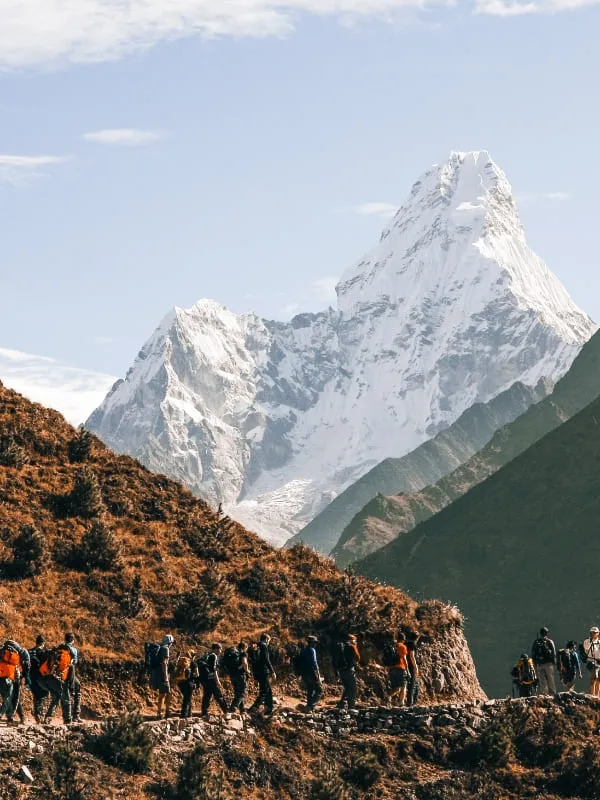
Acclimatization is how your body adapts to thinner air, and giving it enough time is the single most effective thing you can do to prevent altitude sickness. The governing principle on a high-altitude trek is to gain height slowly. Above 3,000 metres, plan to sleep no more than 300 to 500 metres higher each night, and build a rest or acclimatization day into the schedule every three to four days or roughly every 1,000 metres of elevation gained.
On those rest days, follow the "climb high, sleep low" approach by hiking a few hundred metres higher during the day and then returning to a lower elevation to sleep, which is the most reliable acclimatization trick there is. Drink three to four litres of water a day, because dehydration both imitates and worsens AMS.
Avoid alcohol and go easy on sleeping pills in the first days at altitude, since both blunt the breathing your body relies on to adapt. Acetazolamide, sold as Diamox, can help prevent and reduce AMS, but it is a prescription medication with side effects such as tingling fingers and frequent urination, so discuss dose and suitability with your doctor before you travel rather than self prescribing. One last point worth raising with your operator: a well-designed itinerary already builds in these ascent rates and rest days. If a schedule shows large daily altitude jumps and no acclimatization days, treat that as a red flag rather than a bargain.
High-Altitude Trekking Gear List: What to Pack?
On a high-altitude trek, good gear is a safety issue rather than a luxury, because exposure and blisters end more treks than fitness ever does. The foundation is a layering system you can adjust as conditions swing from warm midday sun to freezing nights and windy passes. The table below covers the essentials for a typical Nepal teahouse trek.
| Category | Essentials | Why It Matters at Altitude |
|---|---|---|
| Layers | Merino or synthetic base layers, fleece mid-layer, down jacket, waterproof shell | Temperatures change quickly, and cotton retains moisture which can cause chilling |
| Footwear | Broken-in waterproof trekking boots, trekking socks, liner socks | Long descents and uneven trails put heavy stress on feet and knees |
| Sleep | Sleeping bag rated around -10°C to -15°C | Higher-altitude teahouses are often unheated and can be extremely cold |
| Sun and Eyes | High-SPF sunscreen, SPF lip balm, category 4 glacier sunglasses | UV radiation is much stronger at high altitude and reflected by snow |
| Health and Safety | Headlamp, personal first-aid kit, blister plasters, water purification, trekking poles | Self-sufficiency is essential as medical help can be hours or even days away |
Almost all of this can be bought or rented affordably in Thamel, Kathmandu, so there is no need to fly everything in if you would rather travel light and kit out on arrival.
Food and Hydration for High-Altitude Treks
At high altitude, many trekkers lose their appetite, but eating enough food is very important to keep your body strong and energized. Try to eat meals rich in carbohydrates because your body can use them more easily at higher elevations. This is why dal bhat a traditional Nepali meal made of rice and lentil soup is very popular among trekkers and often comes with free refills. You should also eat eggs, vegetables, and warm soups to get extra nutrients and stay warm.
Staying hydrated is just as important as eating well. At high altitudes, your body loses water more quickly through breathing and physical activity, even if you do not feel sweaty. Drink water regularly throughout the day and enjoy warm drinks when it is cold to help keep yourself hydrated.
Avoid eating too much right before walking, as a heavy meal can make you feel uncomfortable or nauseous. It is also best to avoid alcohol and smoking during the trek because they can make altitude sickness worse and affect your body's ability to adjust to higher elevations.
Mental Preparation for High-Altitude Trekking
Mental Preparation for High-Altitude Trekking is as important as physical strength when trekking at high altitude. Many trekkers focus only on fitness, but the mind plays a major role in how well you handle the challenges of the mountains. In fact, staying mentally strong often determines how successfully you complete the journey.
At high altitude, trekking is not always comfortable. You may feel tired even after short walks, experience headaches, loss of appetite, or poor sleep. In such situations, mental strength helps you accept discomfort instead of resisting it. Understanding that these feelings are normal allows you to stay calm and continue moving forward without panic or frustration.
Patience is another key part of mental preparation. Trekking in the Himalayas is slow by nature, and progress is not about speed but consistency. Long walking hours, steep trails, and rest days are all part of the process. A patient mindset helps you enjoy the journey instead of rushing toward the destination.
A positive mindset also keeps you motivated. Every day in the mountains brings something new snow-covered peaks, changing landscapes, forests, rivers, and sometimes stunning views of glaciers. Thinking about these experiences helps keep your mind fresh and excited throughout the trek.
However, mental fitness is not just about excitement. It is also about handling uncertainty. Weather can change, trails can become difficult, and your body may respond differently than expected. Sometimes plans need to be adjusted, or you may need to walk slower than usual. Being flexible and accepting these changes without stress is an important part of trekking in high-altitude regions.
It is also helpful to manage fear and self-doubt, which can naturally appear during challenging sections of the trek. Instead of focusing on “Can I finish this?”, it is better to break the journey into small steps, reaching the next village, the next rest stop, or simply completing the next hour of walking. This makes the journey mentally easier and more manageable.
Having a clear purpose helps maintain strong motivation. Most trekkers go to high-altitude regions with the goal of reaching a destination or enjoying a once-in-a-lifetime experience. Keeping this purpose in mind, while focusing on little daily progress, helps maintain both mental energy and physical endurance throughout the trek.
Trekking Permits for High-Altitude Routes in Nepal
Most high-altitude trekking regions require permits, and the exact combination depends on the route. Common ones include a TIMS card together with a national park or conservation area permit, such as Sagarmatha National Park for the Everest region or the Annapurna Conservation Area permit for the Annapurna routes.
Restricted areas like trekking to Manaslu Circuit and Upper Mustang require a special permit and a registered guide. Your operator usually arranges these on your behalf, but keep copies with you on the trail, because they are checked at several points along the way.
Choosing a Guide for High-Altitude Treks in Nepal
Choosing the right guide for a high-altitude trek in Nepal is very important for your safety, comfort, and overall trekking experience. A good guide is not just someone who leads the way, but is a trained professional who supports you throughout the journey, especially in difficult mountain conditions.
A professional trekking guide should be strong, healthy, and experienced in high-altitude environments. In Nepal, licensed guides are trained to understand mountain terrain, weather patterns, and altitude-related risks. Their experience in treks like Everest, Annapurna, Manaslu, or other high regions helps them recognize critical situations before they become dangerous.
At high altitude, conditions can change quickly. There may be strong winds, sudden snowfall, or poor visibility that covers the trail. In such situations, a guide must be able to stay calm, identify safe routes, and provide clear instructions to the group. Good navigation skills and awareness of the environment are essential to keep trekkers safe.
A reliable guide also needs strong decision-making skills. High-altitude trekking often requires quick thinking about whether to continue, rest, or change the route based on weather and physical conditions. This ability to react quickly and make the right choices can be crucial in emergencies.
Communication and people skills are also important. A good guide should be able to explain situations clearly, keep trekkers informed, and provide reassurance when conditions become challenging. At the same time, they should understand the physical and mental state of trekkers and adjust the pace accordingly.
Ultimately, the best high-altitude guides are those who combine physical strength, experience, and mental alertness with calm decision-making. They play a key role in ensuring that your trek is not only successful but also safe and enjoyable from start to finish.
Best Time for High-Altitude Trekking in Nepal
Best Time for High-Altitude Trekking in Nepal is during the two main trekking seasons in Nepal, which are spring (March to May) and autumn (September to November). These months are considered the best time for high-altitude trekking because the weather is generally stable, the skies are clear, and the views of the Himalayas are excellent. Trails are also in good condition, making trekking safer and more enjoyable.
The monsoon season lasts from June to August. During this time, heavy rainfall is common, especially in lower and mid-altitude regions. Trails become muddy and slippery, leeches are common, and mountain views are often blocked by clouds. Because of these conditions, monsoon is generally not recommended for high-altitude trekking in Nepal.
After the monsoon, the autumn season begins and continues until late November and early December. This is one of the most popular trekking periods because the weather is fresh, clear, and stable, offering some of the best mountain views of the year.
Winter in Nepal runs from December to February, and temperatures drop significantly, especially at high altitudes. Snowfall is common, and many high passes and trails can become difficult or even blocked. Early winter (late November to December) can still be manageable in some regions, but January is extremely cold and generally not recommended for high-altitude trekking, especially for beginners or remote routes
Frequently asked questions about High-Altitude Trekking Preparations.
How fit do I need to be for a high-altitude trek in Nepal?
You will need to be fit enough to walk 5–7 hours a day on hills for consecutive days. Six to eight weeks of regular cardio, some strength work, and a few loaded practice hikes are enough for the most popular routes like Everest Base Camp or the Annapurna Circuit.
What's the most common mistake first-timers make?
The common mistake first-time trekkers make is ascending too fast. Almost all serious altitude problems trace back to gaining height quicker than the body can adjust. Respect the slow-ascent rules and rest days.
Can I prevent altitude sickness completely?
No method is 100% reliable, but slow ascent, good hydration, "climb high, sleep low," avoiding alcohol, and (with a doctor's guidance) Diamox dramatically reduce your risk.
What should I do if I feel symptoms?
If you feel the AMS symptoms, tell your guide immediately and don't go higher until mild symptoms resolve. If they worsen or you see confusion, loss of balance, or breathlessness at rest, descend without delay and seek medical help.
When is the best time to trek in Nepal?
The best time to trek in Nepal is Spring (March–May) and autumn (late September–November), which offer the most stable weather and clearest mountain views. Winter and monsoon treks are possible but bring extra challenges.