
"Heaven is a myth. Nepal is real." It sounds like a tourism slogan, but ask anyone who has stood at Poon Hill at sunrise, watching the Annapurna range catch fire in the early light, and they will tell you it barely does the place justice.
Nepal is a small country wedged between two giants, India and China, and it somehow packs more variety into that narrow strip of land than countries ten times its size. The world's highest mountain rises less than 200 kilometers from steamy jungle plains where rhinos wade through elephant grass. Ancient temple bells ring in Kathmandu's backstreets while, a few hours away, monks chant beneath prayer flags that have faded to near-white from decades of wind and sun.
Trekkers come for the mountains and stay for something harder to name. Ask a dozen returning travelers what they loved most about Nepal, and most won't mention Everest at all. They'll talk about the family who invited them in for tea in a village with no name on any map, or the old man in Bhaktapur who spent twenty minutes explaining how his grandfather carved the temple strut outside his door. Nepalis have a saying for this: Atithi Devo Bhava, "a guest is like God." It isn't a marketing line. It's how people actually live here.
What Makes Nepal Worth the Trip?
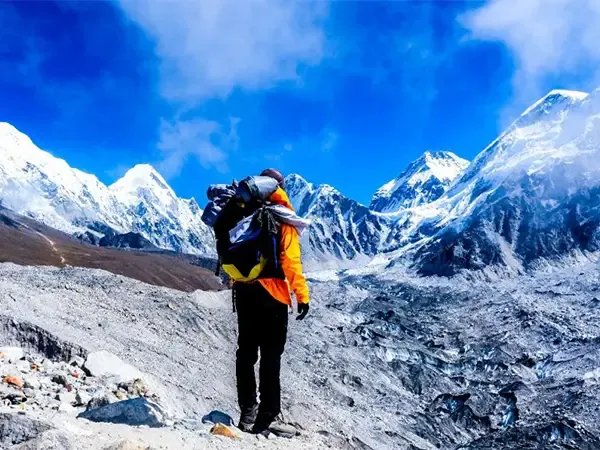
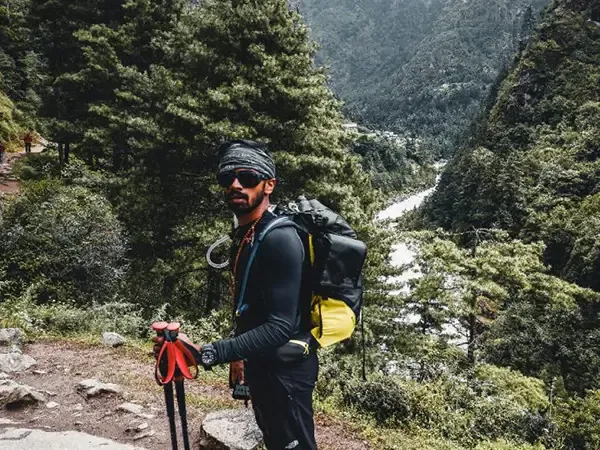
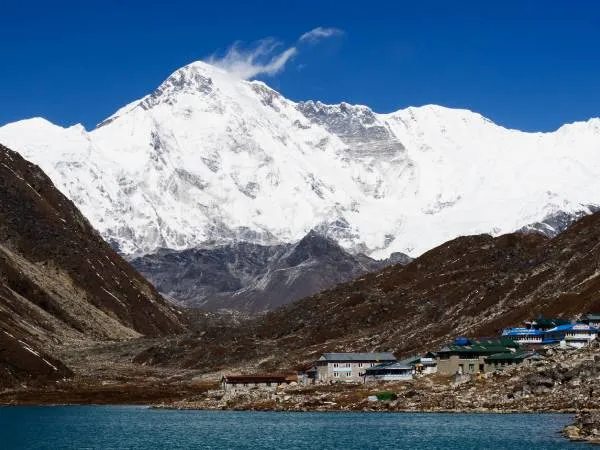
The mountains are only the beginning. Nepal holds eight of the world's fourteen tallest peaks, and you don't need to be a mountaineer to feel their pull. A three-day teahouse trek near Pokhara puts you close enough to touch that scale, no expedition permit required.
The history runs deep. Ten UNESCO World Heritage Sites are packed into a country roughly the size of Illinois: fifth-century temples, medieval royal squares, stupas where pilgrims have circled clockwise for over a thousand years. Kathmandu's Durbar Square alone holds more centuries of carved wood and stone than most European capitals.
Adventure isn't an afterthought here, it's the main export. Whitewater rafting through canyon walls, paragliding off a ridge above Phewa Lake, bungee jumping into a gorge near the Bhote Koshi River. Whether you're chasing an adrenaline rush or a gentle walk through rice terraces, the infrastructure and guides exist for both ends of the spectrum.
The wildlife will surprise you. Swap crampons for a canoe and head to Chitwan National Park, where one-horned rhinos graze at dusk and Bengal tigers still move through the sal forests, largely unseen but unmistakably present. It's a different Nepal entirely, humid and green instead of high and thin-aired.
It's genuinely one of the world's spiritual centers. Lumbini, the birthplace of the Buddha, draws pilgrims from Thailand, Japan, Sri Lanka, and beyond. You don't need to be religious to feel something shift in the quiet of Boudhanath at dusk, when hundreds of maroon-robed monks and ordinary Kathmandu residents alike circle the stupa in silence, spinning prayer wheels as they go.
Where to Go First in Nepal?
Kathmandu is chaos with a soul. Rickshaw bells, incense smoke, motorbikes weaving through alleys barely wide enough for two people to pass. Beneath the noise sit Pashupatinath, Boudhanath, Swayambhunath (the "Monkey Temple," and yes, mind your snacks), and the twin Durbar Squares of Kathmandu and Patan. Give it at least two full days before you head for the hills.
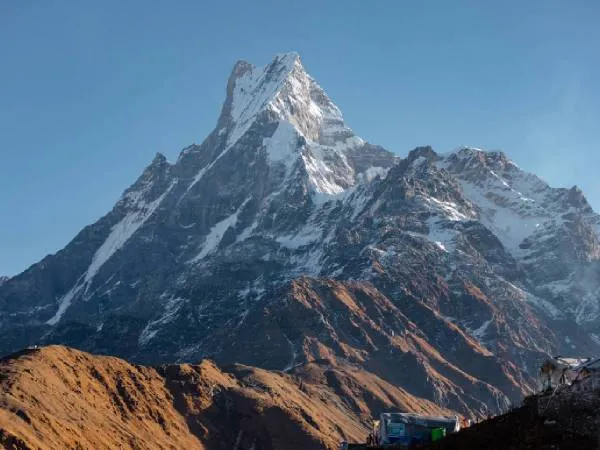
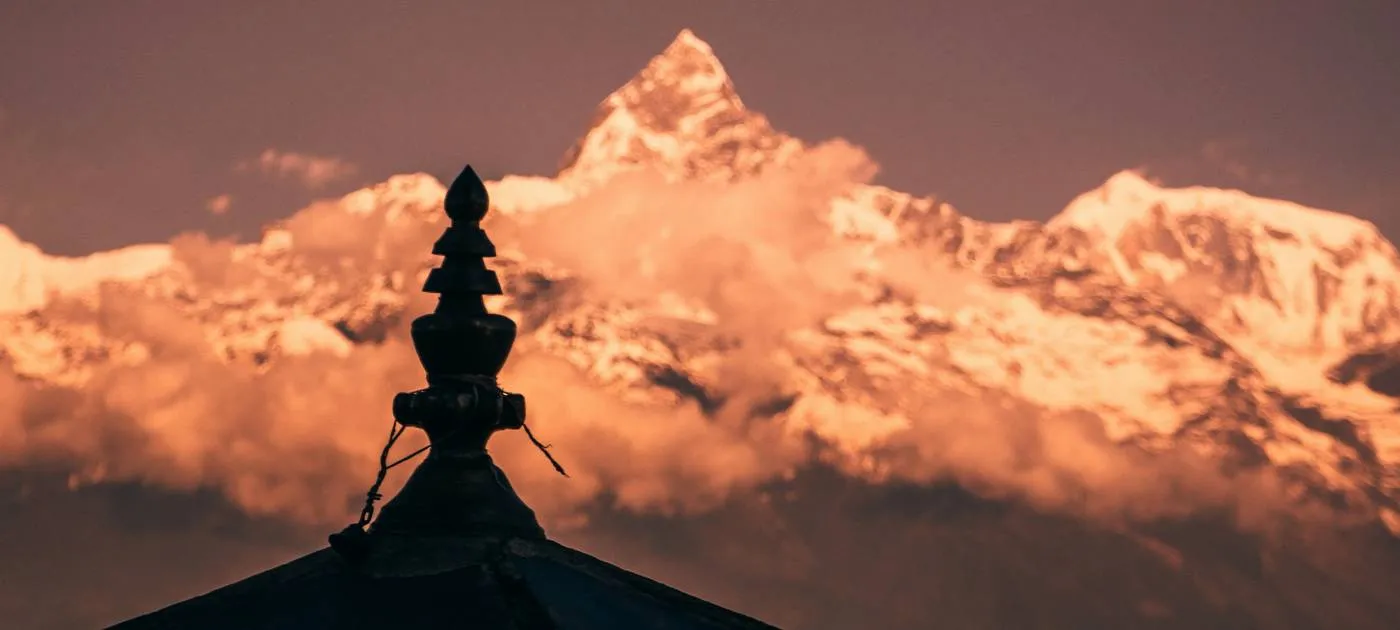
Pokhara is where Nepal exhales. Phewa Lake mirrors the Annapurna range on a clear morning, and the town has built an entire identity around getting you into the sky or onto the water, paragliding, boating, ziplining, or simply a lakeside coffee with Machhapuchhre framed in the window.
Chitwan trades altitude for humidity. Jeep safaris, canoe rides at dawn when the mist is still on the river, and evenings with Tharu cultural performances make it feel like an entirely separate country.
Lumbini is quiet in a way the rest of Nepal rarely is. The Maya Devi Temple marks the exact spot, archaeologists believe, where the Buddha was born, and the surrounding monastic zone (built by different Buddhist nations, each in their own architectural style) rewards slow wandering.
Gorkha gets fewer visitors and is better for it. Prithvi Narayan Shah, the king who unified modern Nepal, was born here, and the hilltop fort above town still has the sightlines to prove why he chose it.
Popular Treks, Ranked by What You're After
- Everest Base Camp Trek for the bucket-list moment. Sherpa villages, monasteries, and the mountain itself, closer than photos ever suggest.
- Annapurna Base Camp Trek for scenery without the crowds of EBC. Forests give way to alpine bowls, with hot springs at Jhinu Danda to soothe the climb down.
- Annapurna Circuit Trek for range. Subtropical valleys to the 5,416-meter Thorong La Pass, with the landscape and culture shifting almost daily.
- Langtang Valley Trek for limited time. Closest major trek to Kathmandu, with strong Tamang culture and views that outperform the shorter distance.
- Mardi Himal Trek for a taste without the commitment. A five-to-seven day route with Machhapuchhre practically overhead by the end.
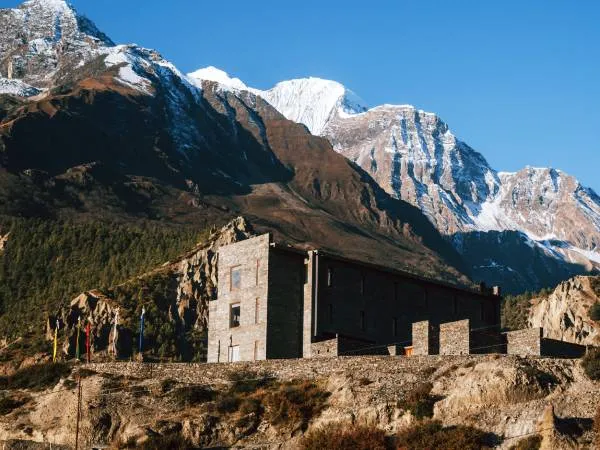
- Upper Mustang Trek for something that doesn't look like Nepal at all. Wind-carved desert cliffs, Tibetan-influenced villages, and a culture that feels closer to the Tibetan plateau than the Kathmandu Valley.
When to Go in Nepal?
Spring (March to May) brings rhododendron forests into bloom across the mid-hills and clear mountain views, arguably Nepal's most photogenic stretch of the year.
Autumn (September to November) is peak season for good reason: stable skies, crisp air, and the best trekking visibility Nepal gets.
Winter thins the crowds and suits lower-altitude cultural trips, though high passes may close.
Summer, the monsoon months, turns the hills lush and green and keeps trekkers away, which some travelers count as a feature rather than a drawback.
The Real Reason People Come Back
Ask anyone who has been, and the mountains rarely top the list of what they remember. It's the tea shared with strangers who become friends within the hour, the monastery bell at 5 a.m. that you didn't ask for but ended up grateful for, the guide who turned a six-hour trek into a lesson on his village's history without you ever asking a question.
Nepal doesn't just show you the Himalayas. It hands you a version of hospitality and quiet spectacle that's genuinely hard to find anywhere else, and that's usually what pulls people back for a second trip.