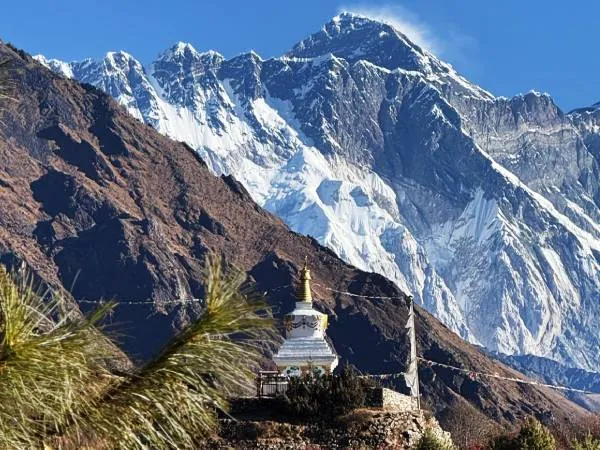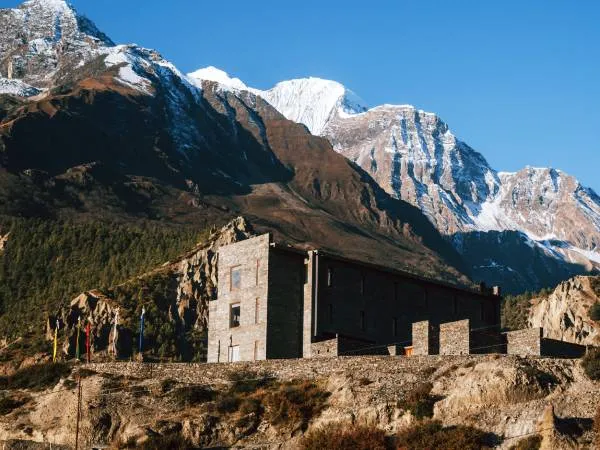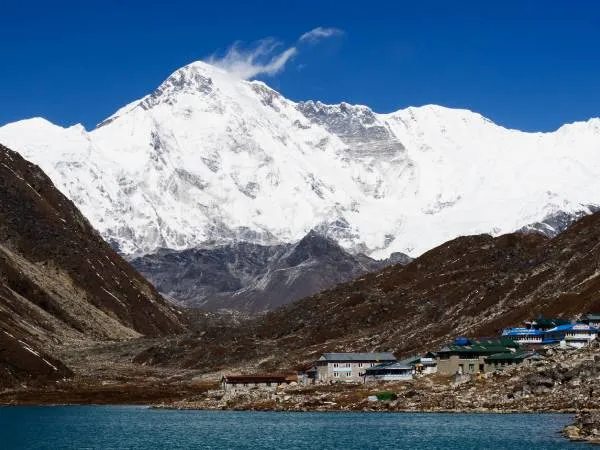

Chhomrong Village is located on, terraced hillside in Nepal's Annapurna region, roughly two to three days' walk from the roadhead at Nayapul. At an elevation of approximately 2,170 metres (7,120 feet), it is the last large, permanently inhabited settlement before the trail narrows into the wild, high-altitude terrain of the Annapurna Sanctuary.
Every trekker heading toward Annapurna Base Camp (ABC) passes through it, which is why local guides often call Chhomrong the "gateway village" of the entire route.
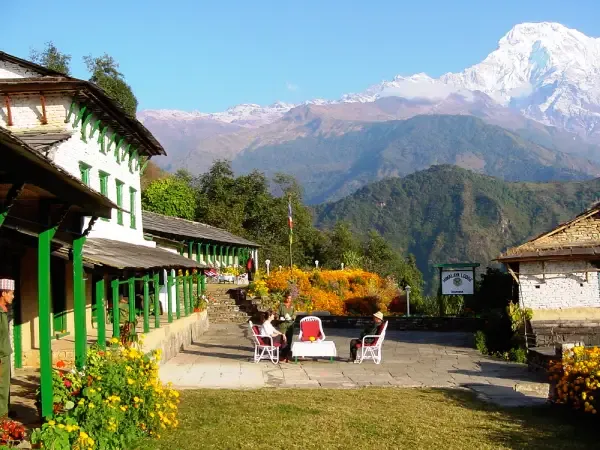
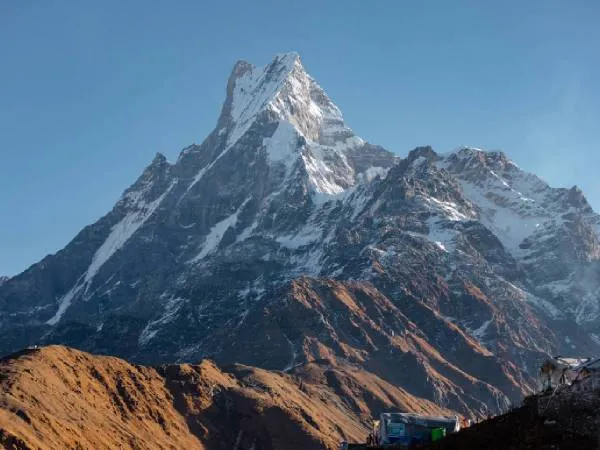
The village is one of the largest Gurung settlements in the Annapurna foothills, with stone-and-slate houses stacked along a ridge that faces Annapurna South, Machhapuchhre (Fishtail Mountain), and Hiunchuli. Chhomrong predates organised trekking tourism by generations it grew as an offshoot settlement from nearby Ghandruk and today balances that older agricultural life with a well-run teahouse economy built specifically around ABC trekkers.
Why Chhomrong Is Famous Among Trekkers?
Chhomrong is famous among trekkers because it is the last major village before the high alpine terrain of the Annapurna Sanctuary, making it the natural place to rest, resupply, and acclimatise. It hosts an ACAP (Annapurna Conservation Area Project) permit checkpoint, where every trekker's paperwork is formally verified. The village offers some of the most photographed sunrise views on the entire ABC route, with Annapurna South catching first light directly above the rooftops.
Its teahouses are noticeably more comfortable than those higher up the trail, with better food variety, hot showers, and stronger mobile signal the last such comforts before Sinuwa, Bamboo, and Deurali.
What is the Cultural Importance of Chhomrong village?
Chhomrong is home to the Gurung community, one of the indigenous ethnic groups of the Nepalese hills, historically linked to farming, animal husbandry, and service in the Gurkha regiments. Stone steps connect the upper and lower parts of the village, prayer flags mark the trail junctions, and many households still farm barley, millet, and vegetables on the surrounding terraces even while running guesthouses.
Staying a night here gives trekkers a much closer look at Gurung Mountain culture than the busier lowland towns on the route.
How are the Mountain Views and Landscape of the village?
Chhomrong's real draw is its position: it sits on a ridge directly opposite Annapurna South and Machhapuchhre, with Hiunchuli visible to the south. Because the village faces the mountains rather than sitting beneath them, the panorama is unusually open there is no need to hike to a separate viewpoint to see the peaks at sunrise.
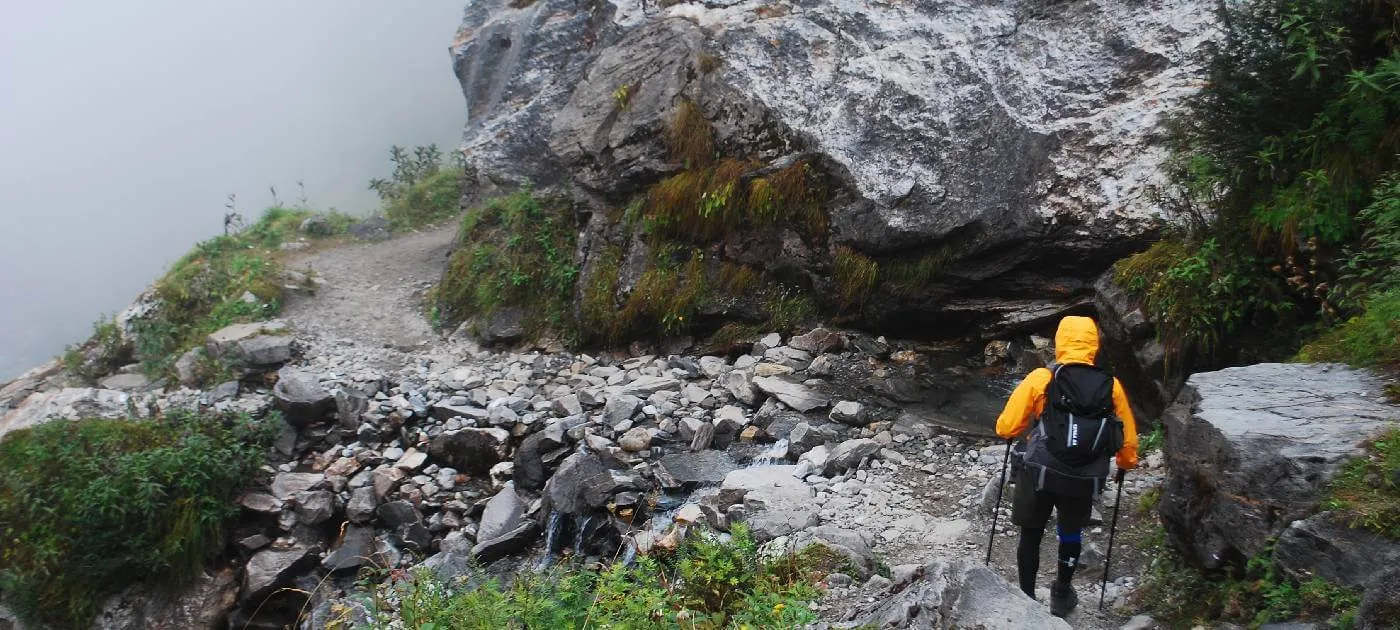
Below the village, the trail drops steeply into the Chhomrong Khola gorge before climbing again toward Sinuwa, so the surrounding landscape is one of sharp, terraced drops rather than gentle valley walking
Where Is Chhomrong Village Located?
Chhomrong lies in Kaski District, Gandaki Province, in the hill region of central Nepal, roughly 45 km (28 miles) northwest of Pokhara as the crow flies though there is no direct road, so the practical distance covered on foot and by vehicle combined is considerably longer.
The village sits inside the Annapurna Conservation Area, Nepal's largest protected area, on the southern flank of the Annapurna Massif, overlooking the Modi Khola river gorge.
How to Reach Chhomrong Village?
You can reach Chhomrong village via many ways such as:
Route 1: Kathmandu to Pokhara to Chhomrong
Almost every ABC trek begins with getting from Kathmandu to Pokhara, either by a 25–30 minute domestic flight or a 6–8 hour drive along the Prithvi Highway. From Pokhara, a private jeep or local bus covers the paved Pokhara–Baglung Highway to Nayapul (about 1.5–2 hours), or continues further on rougher rural roads toward Kimche, Ghandruk, or even Jhinu Danda depending on current road conditions. Recent years have seen road-building push higher into the valley, so the exact vehicle cut-off point should always be confirmed locally before departure
Route 2: Pokhara to Ghandruk to Chhomrong
This is the classic approach and still the most rewarding for first-time visitors. A jeep or bus takes trekkers from Pokhara to Kimche or Ghandruk trailhead, followed by a walk into Ghandruk village itself for an overnight stay. From Ghandruk, the trail descends to the Kimrong Khola river and climbs steadily back up to Chhomrong, a walk of roughly 4–5 hours through forest and terraced farmland.
Best Time to Visit Chhomrong Village
The best time to visit Chhomrong village are:
Spring Season (March–May)
Spring is one of the two peak seasons for the ABC trek. Daytime temperatures in Chhomrong are mild and comfortable for walking, while nights remain cool. This is rhododendron season across the lower and middle Annapurna forests the hillsides between Ghandruk and Chhomrong turn shades of red, pink, and white as the national flower blooms.
Mountain visibility is generally good in the mornings, though afternoon haze and cloud build-up are common, especially later in May.
Autumn Season (September–November)
Autumn is widely considered the single best season to visit Chhomrong and the wider Annapurna region. The monsoon has just cleared the air of dust and haze, skies are typically at their clearest, and mountain views from the village are consistently sharp both morning and evening.
Weather is stable with low rainfall probability, making this the busiest and most reliable trekking window of the year.
Winter Season (December–February)
Winter brings noticeably colder nights to Chhomrong, occasionally dropping below freezing, with the possibility of light snow at this elevation and heavier snow higher up toward Annapurna Base Camp. Days are often clear and crisp with excellent visibility, but trekkers should be prepared for cold teahouse rooms, potential trail closures higher up after heavy snowfall, and a much quieter village with fewer lodges operating at full capacity. The benefit is solitude this is the least crowded season on the trail.
Monsoon Season (June–August)
Monsoon rains fall heavily across the Annapurna foothills from June through August, and the Ghandruk–Chhomrong stretch is no exception. Trails become muddy and slippery, leeches are common in the forested sections, and cloud cover frequently obscures mountain views for days at a time.
Landslide risk increases on steeper sections of trail after sustained rain. The advantage of this season is near-total solitude and lush, vividly green scenery for trekkers who don't mind wet gear.
Accommodation Facilities in Chhomrong Villag
Chhomrong has one of the widest selections of teahouses and lodges on the entire Annapurna Base Camp route, spread across its upper and lower sections. Accommodation here is simple by international hotel standards but genuinely comfortable by trekking-trail standards this is the last village before the lodges higher up become noticeably smaller and more basic.
Expert tip: If mountain views matter to you, ask specifically for an upper-Chhomrong lodge room facing Annapurna South rather than simply booking the first available bed the difference in outlook between rooms in the same village can be significant.
Food Available in Chhomrong Village
Chhomrong offers one of the most diverse teahouse menus on the Annapurna Base Camp route, with a mix of traditional Nepali meals and international comfort food. Popular choices include Dal Bhat (rice, lentils, vegetables, and pickle with refills), momos, thukpa, and Tibetan bread, along with pasta, noodles, pancakes, porridge, sandwiches, and pizza.
Most lodges serve breakfast from around 6:00–8:00 AM and dinner from 6:00–8:00 PM, with boiled or filtered water refills available as a better option than bottled water. Vegetarian meals are widely available, and vegan trekkers can request dishes without dairy products. At this altitude, Dal Bhat remains the best trekking fuel fresh, filling, rich in carbohydrates, and easy to digest as you continue toward higher elevations.
Things to Do in Chhomrong Village
Mountain View Experience
Chhomrong's biggest single draw is its unobstructed panorama of Annapurna South, Machhapuchhre (Fishtail Mountain), and Hiunchuli. Because the village faces the peaks directly across the valley, no separate hike is required to catch sunrise a spot on any upper-village terrace or dining hall balcony is usually enough.
Cultural Exploration
Walking through Chhomrong's stone-paved lanes offers a genuine look at Gurung mountain life: terraced barley and vegetable plots, traditional slate-roofed houses, and locals moving livestock along the same paths trekkers use. Respectful, low-key interaction a greeting of "Namaste," buying snacks from a local shop, asking before photographing people is welcomed.
Photography
Chhomrong is a paradise for mountain photography, offering breathtaking Himalayan views right from the village itself. The upper village lodges and terraces provide spectacular sunrise viewpoints, with golden morning light illuminating Annapurna South and the surrounding peaks.
Beyond the mountains, the village offers endless cultural photography opportunities, from stone-paved staircases and colorful prayer flags to terraced fields and traditional Gurung houses.
For wider landscape shots, the ridge above the Chhomrong Khola gorge offers dramatic views of the valley, hills, and Himalayan range, making it one of the best places to capture the beauty of the Annapurna region.
Weather and Temperature at Chhomrong Village
At roughly 2,170 m, Chhomrong sits in a temperate mountain climate zone noticeably cooler than Pokhara but far milder than the alpine conditions at Annapurna Base Camp (4,130 m). Daytime temperatures are generally pleasant for walking in a light layer, while nights require warm clothing year-round. The figures below are typical seasonal averages used for trip planning rather than exact forecasts, since mountain weather can shift quickly.
| Month | Avg. Day / Night Temperature | Typical Weather Condition |
|---|---|---|
| January | 12°C / -1°C | Cold, clear days with occasional light snow |
| February | 13°C / 0°C | Cold mornings, generally clear days |
| March | 16°C / 4°C | Mild weather; rhododendrons begin blooming |
| April | 18°C / 7°C | Warm days with some afternoon haze |
| May | 20°C / 10°C | Warm conditions with increasing pre-monsoon clouds |
| June | 21°C / 13°C | Humid weather with early monsoon showers beginning |
| July | 21°C / 14°C | Heavy monsoon rain with frequent cloud cover |
| August | 20°C / 14°C | Continued monsoon rain with lush green landscapes |
| September | 19°C / 11°C | Rain gradually decreases and skies begin clearing |
| October | 17°C / 6°C | Clear skies, stable weather, and peak trekking conditions |
| November | 14°C / 2°C | Cool, crisp weather with excellent mountain visibility |
| December | 12°C / -1°C | Cold, dry conditions with occasional light snow |