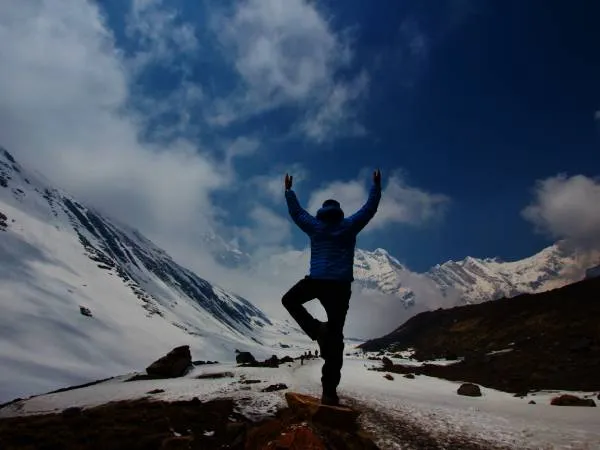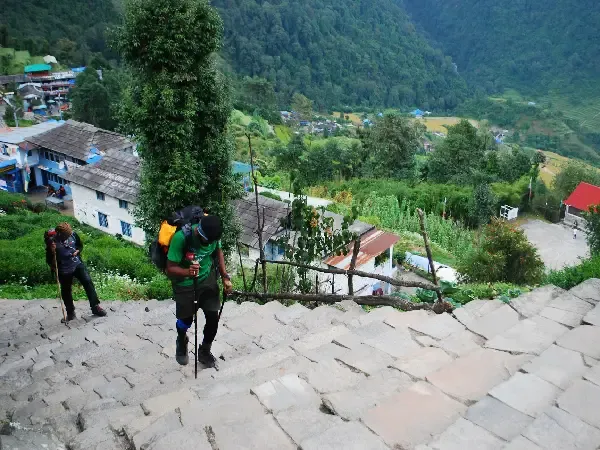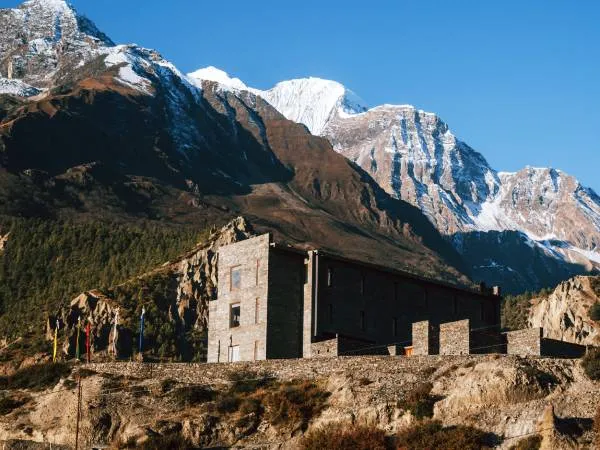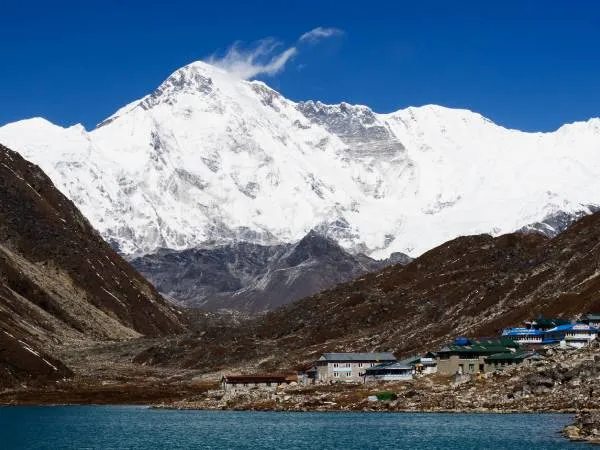
Ghandruk is a beautiful village in Annapurna region of Nepal inside the Annapurna Conservation Area. This beautiful settlement lies 32km of north west of Pokhara. The village is situated inside the Kaski district of Gandaki province. It is situated at an altitude of 2012 meters above sea level.
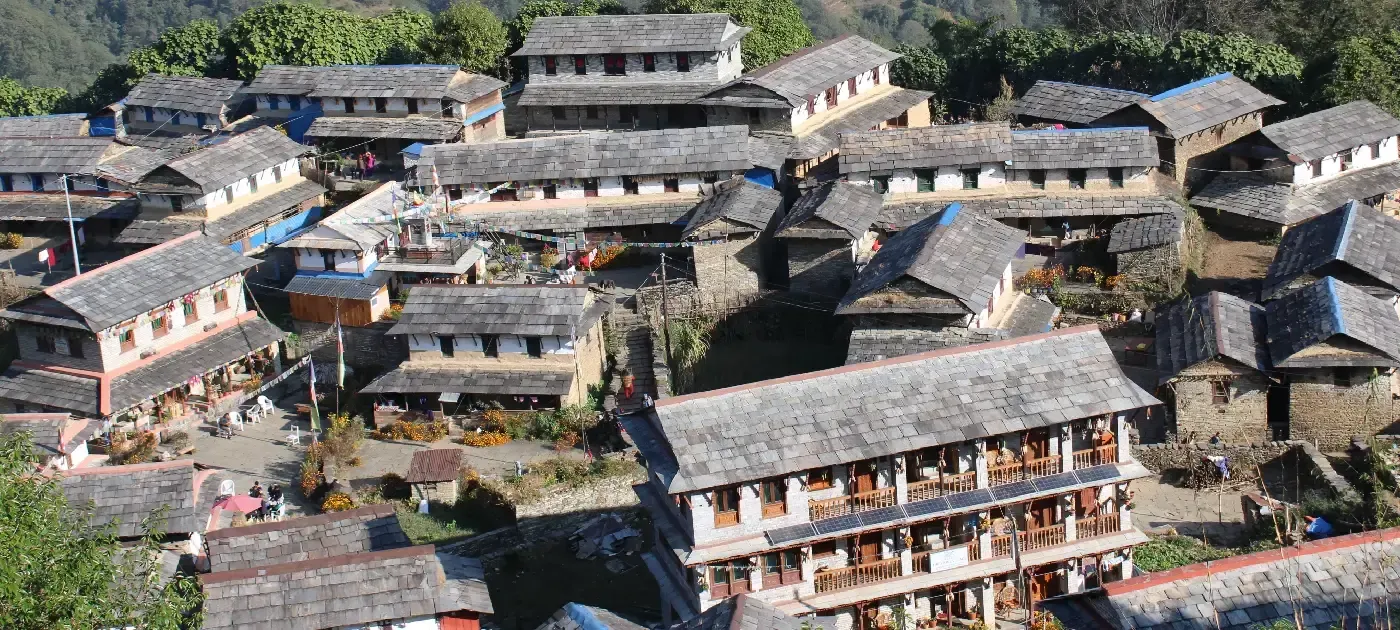
It is one of Nepal's oldest and best-preserved hill villages, with a documented settlement history of more than two centuries. It is home to around 5,316 residents (2021 census) spread across several linked hamlets Kotgaun, Majhgaun, Tallogaun, and Dandagaun among them and roughly 1,200 traditional stone-and-slate homes.
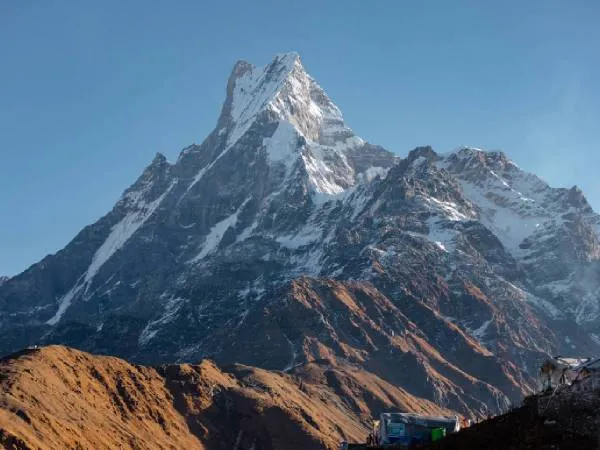
Ghandruk sits directly beneath Annapurna South, Hiunchuli, and Machhapuchhre (Fishtail), which makes it one of the very few places in Nepal where a first-time visitor can see 6,000–8,000 m peaks up close without multiple days of high-altitude trekking.
It functions both as a standalone cultural destination reachable by road from Pokhara and as a key waypoint on the Ghorepani Poon Hill, Annapurna Base Camp, and Annapurna Sanctuary trekking routes
Where is Ghandruk Village Located?
Ghandruk village is located inside the Annapurna Rural Municipality of Kaski District, Gandaki Province, in west-central Nepal, within the boundaries of the Annapurna Conservation Area.
Its approximate coordinates are 28.377°N, 83.807°E, and it sits at an elevation of roughly 1,940 m (6,364 ft) at the lower part of the village, rising to about 2,012 m (6,601 ft) at its upper edge village literature and mapping sources cite figures in this range depending on which part of the settlement is measured.
The Gurung village sits on a terraced, south-facing hillside above the Modi Khola (Modi River) valley, between the villages of Lumle and Dangsing, on the trail corridor that also connects to Ghorepani and Ulleri.
By road, it is about 32 km (and roughly 55–61 km by the actual driving route through Nayapul and Birethanti) northwest of Pokhara, the nearest major city and the standard gateway for all Annapurna-region travel
What is the History and Culture of Ghandruk?
The history and culture of Ghandruk is Historians and local accounts trace Ghandruk's founding to Gurung communities believed to have migrated into Nepal via Tibet from Mongolian-linked origins, settling the site more than 200 years ago.
For generations, the village served as a stop along an ancient trans-Himalayan trading route linking Nepal and Tibet, which shaped its early economy and layout of stone-paved lanes.
The name "Ghandruk" is not originally a Gurung word it is generally traced to the Nepali terms ghana (dense or compact) and rukh (tree), suggesting the settlement was named for a large or dense stand of trees at the founding site.
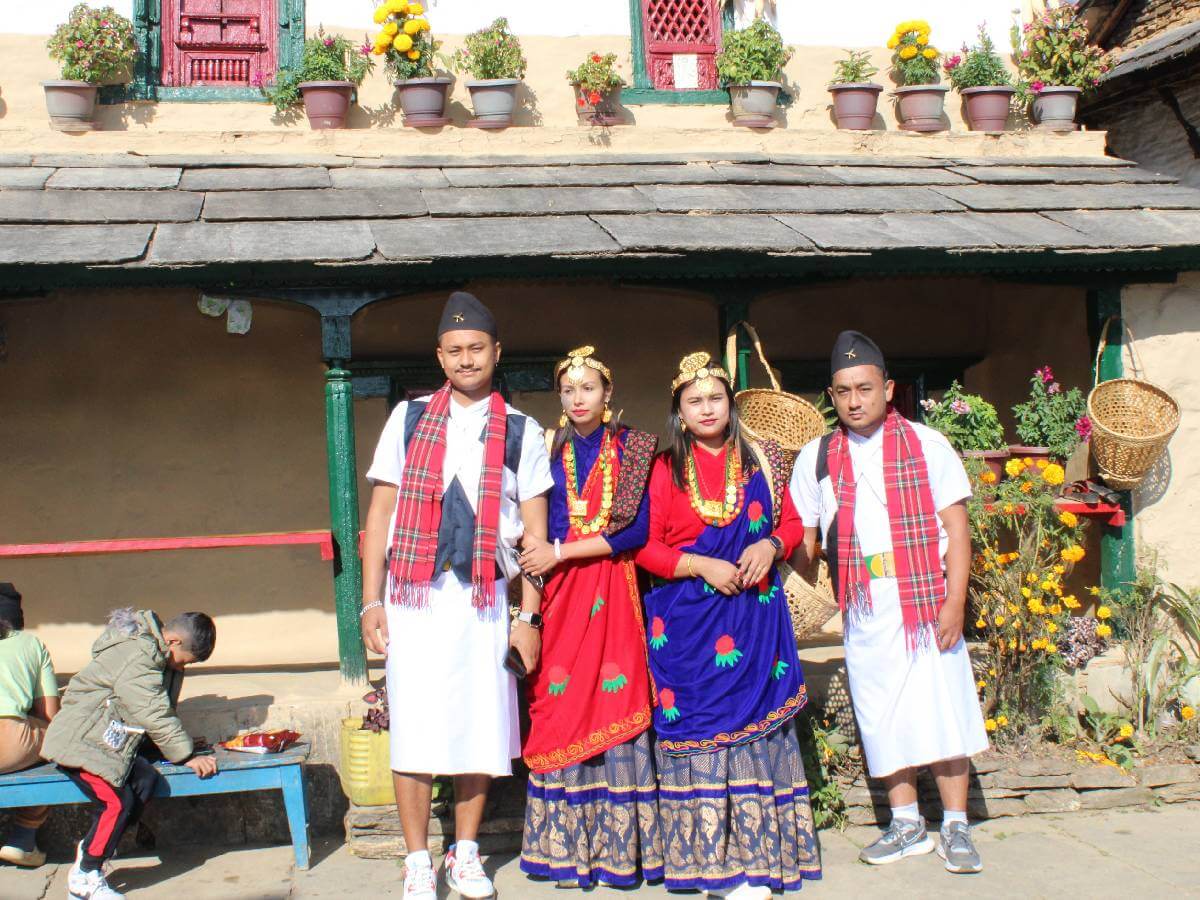
It is one of the most significant Gurung strongholds in Nepal, and the Gurung people here have a long, well-documented history of service as Gurkha soldiers in the British and Indian armies a legacy that shaped the village both economically (through military pensions and remittances) and culturally, and is preserved today in the village's Gurung Museum, which displays traditional tools, weapons, clothing, and artifacts tied to Gurkha history.
A second major turning point in the village's modern history came in 1986, when Ghandruk became a founding and flagship site of the Annapurna Conservation Area Project (ACAP), Nepal's first and largest protected area under a community-based conservation model.
ACAP's presence in Ghandruk funds schools, drinking-water systems, trail maintenance, and heritage preservation, and the model piloted here has since been replicated across Nepal's conservation areas.
Traditional Gurung houses in Ghandruk are built from local stone with slate roofs, arranged along narrow stepped lanes that follow the contour of the hillside an architectural style that has been substantially preserved, giving the village its distinctive, uniform look when viewed from the trail above
What Culture and Festivals are celebrated at Ghandruk?
There are different culture and festivals celebrated at Ghandruk such as the Tamu Lhosar, the Gurung New Year, celebrated on the 15th day of the Nepali month of Poush (typically late December). Dashain and Tihar the major pan-Nepali Hindu festivals, also widely observed by Gurung households alongside their own traditions, involving family reunions, tika ceremonies, and home decoration.
Local Gurung rites of passage including naming ceremonies, marriage rituals, and death rites conducted by Gurung shamanic priests (pachyu and klehbri), which remain part of everyday cultural life in the village rather than staged tourist performances.
Cultural dance shows for visitors many lodges and the village's cultural center arrange traditional Gurung dance and dress demonstrations for trekkers, offering a respectful, accessible way to engage with local heritage without intruding on private ceremonies.
Visiting the Gurung Museum in the village center is the best way to understand this culture in context it houses displays on Gurkha military history, traditional farming tools, weaving equipment, and everyday household objects going back generations
What are Trekking Routes Through Ghandruk?
There are many trekking routes that go through the Ghandruk such as the:
Ghorepani–Poon Hill Trek (via Ghandruk), 4–5 days
The classic Ghorepani Poon Hill Trek loop runs Nayapul/Birethanti → Ulleri → Ghorepani → Poon Hill sunrise viewpoint → Tadapani → Ghandruk → back to Nayapul or a road-connected point such as Kimche. Ending (or starting) in Ghandruk is a popular variation because it adds a full cultural stop to what is otherwise a scenery-only trek.
Annapurna Base Camp (ABC) / Annapurna Sanctuary Trek, 7–12 days
Ghandruk is a common first or second overnight stop on the classic ABC route, which continues via Chhomrong, Sinuwa, Bamboo, Deurali, Machhapuchhre Base Camp, and finally Annapurna Base Camp itself at around 4,130 m.
Ghandruk Loop / Short Ghandruk Trek, 2–4 days
A shorter, lower-altitude circuit ideal for families, first-time trekkers, or travelers with limited time, typically starting from Nayapul or Kimche and returning the same way (or via Landruk/Tadapani) without pushing to high altitude.
Mardi Himal Trek connection
Ghandruk is roughly a two-hour walk from Landruk, the common starting point for the Mardi Himal Trek, making it easy to combine both routes in one trip.
All of these routes pass through forested sections (notably rhododendron, oak, and pine), terraced farmland, and a series of stone-step trails, and none require technical climbing skills, though the elevation gain and stone stairways make reasonable fitness necessary.
What is the Best Time to Visit Ghandruk Village
The best time to visit the Ghandruk village in the Annapurna region is during the month of the Spring (March–May) and the Autumn (late September–November) because They are the most popular seasons and Clear mountain views are seen, moderate temperatures, and blooming rhododendron forests (Nepal's national flower) turning entire hillsides red and pink.
It is also Widely considered the best season overall because stable post monsoon weather, the clearest mountain visibility of the year, and comfortable daytime temperatures. This is also the busiest period for trekkers and lodges. You can visit during the month of the Monsoon and winter as well however you will not keep in mind for the Colder, with occasional snowfall at Ghandruk's elevation and nighttime temperatures well below freezing, but skies are often crisp and clear, and the village is far quieter.
This period also coincides with Tamu Lhosar, a strong reason to visit for cultural travelers who don't mind the cold and frequent rain, leeches on the lower trails, cloud cover that frequently obscures mountain views, and a higher risk of landslides affecting the Birethanti–Ghandruk road. Some travelers still visit for lush green scenery and low prices, but visibility of the peaks is unreliable
How to Reach Ghandruk Village?
All routes to Ghandruk begin in Pokhara, which is itself reached from Kathmandu by a roughly 25–30-minute domestic flight or a 6–8-hour drive by tourist bus from Kathmandu to Pokhara.
By road (jeep or taxi)
From Pokhara, vehicles travel via Kande, Nayapul, and Birethanti on paved road, then continue on a narrower, rougher hill road via Syauli Bazar to Ghandruk itself, or to the road-end at Kimche, a short walk below the village.
The full drive covers roughly 55–61 km and takes about 3–4 hours, largely because the final stretch beyond Birethanti is unpaved, steep, and best handled by a 4WD jeep rather than a standard car. A regular local bus also runs from Nayapul toward Ghandruk roughly every 20 minutes in season, offering the cheapest option for budget travellers.
On foot (trekking)
Trekkers typically walk in via Nayapul and Birethanti (a common approach on the Poon Hill or ABC routes), or via Dhampus and Landruk, reaching Ghandruk in one to two days of walking depending on the starting point and pace.
Combined option
Many travelers take a jeep or bus as far as Kimche or Syauli Bazar, then walk the final one to two hours into the village a good compromise that cuts down road time on the roughest section while still allowing a short trekking experience
Accommodation in Ghandruk Village
Ghandruk village has one of the most developed lodging networks of any village on the Annapurna trekking circuit, ranging from simple family-run teahouses to comfortable boutique lodges. Some options include.
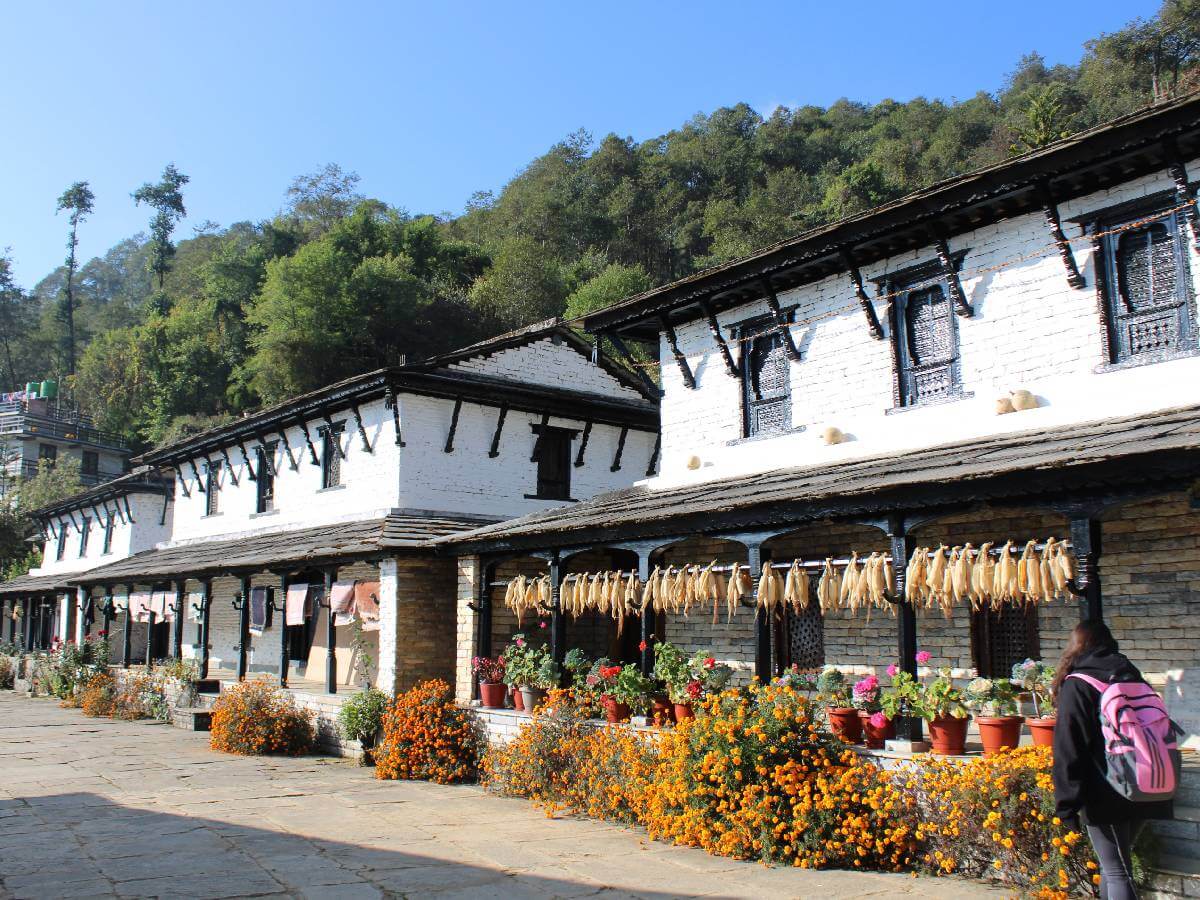
Teahouses/guesthouses
The standard option for trekkers basic twin rooms, shared bathrooms, hot showers usually available for a small extra fee, and an attached dining hall serving set meals. This is the backbone of Ghandruk's accommodation and the most authentic way to experience the village.
Homestays at Ghandruk village
A distinctive feature of Ghandruk village is that you can stay directly with a Gurung family, sharing meals and daily life. This is widely promoted as the best way to experience genuine Gurung hospitality and culture, and is typically the most budget-friendly option.
Mid-range lodges and eco-lodges
Properties such as Mountain Lodges of Nepal-branded lodges, eco lodges, and boutique guesthouses offer private bathrooms, better bedding, and mountain-facing rooms at a higher price point, popular with older travelers or those seeking more comfort after a trek.
Higher-end options
A small number of resort-style properties offer more amenities, though Ghandruk remains fundamentally a village of family-run lodges rather than a resort town.
Food in Ghandruk Village
Foods in Ghandruk village are served at guesthouse dining halls and are based on both standard Nepali trekking staples and distinct Gurung dishes.
- Dal Bhat steamed rice, lentil soup, vegetable curry, and pickle, the standard trekker's staple, valued for its refillable portions and balanced energy for walking.
- Dhido a thick, dense porridge made from millet, buckwheat, or maize flour, a traditional Gurung and hill-Nepali staple eaten with vegetable curry or meat.
- Gundruk soup a soup made from fermented leafy greens, a Nepali hill-cuisine specialty with a distinctive sour flavor.
- Sel roti a traditional ring-shaped, deep-fried rice-flour bread, especially prominent during festivals such as Tamu Lhosar and Dashain/Tihar.
- Standard trekker menu items such as the noodles, fried rice, momos (dumplings), soups, pancakes, porridge, and hot drinks (milk tea, black tea, ginger-lemon-honey tea), commonly offered alongside traditional dishes to suit international trekkers.
Things to Do in Ghandruk Village of Annapurna Conservation Area
There are many things to do in Ghandruk village of Annapurna Conservation Area such as:
- Walk the stone-paved village lanes and photograph the traditional slate-roofed Gurung houses, particularly in the older sections of Kotgaun and Tallogaun.
- Visit the Gurung Museum to see Gurkha military artifacts, traditional tools, and everyday household items tied to Gurung heritage.
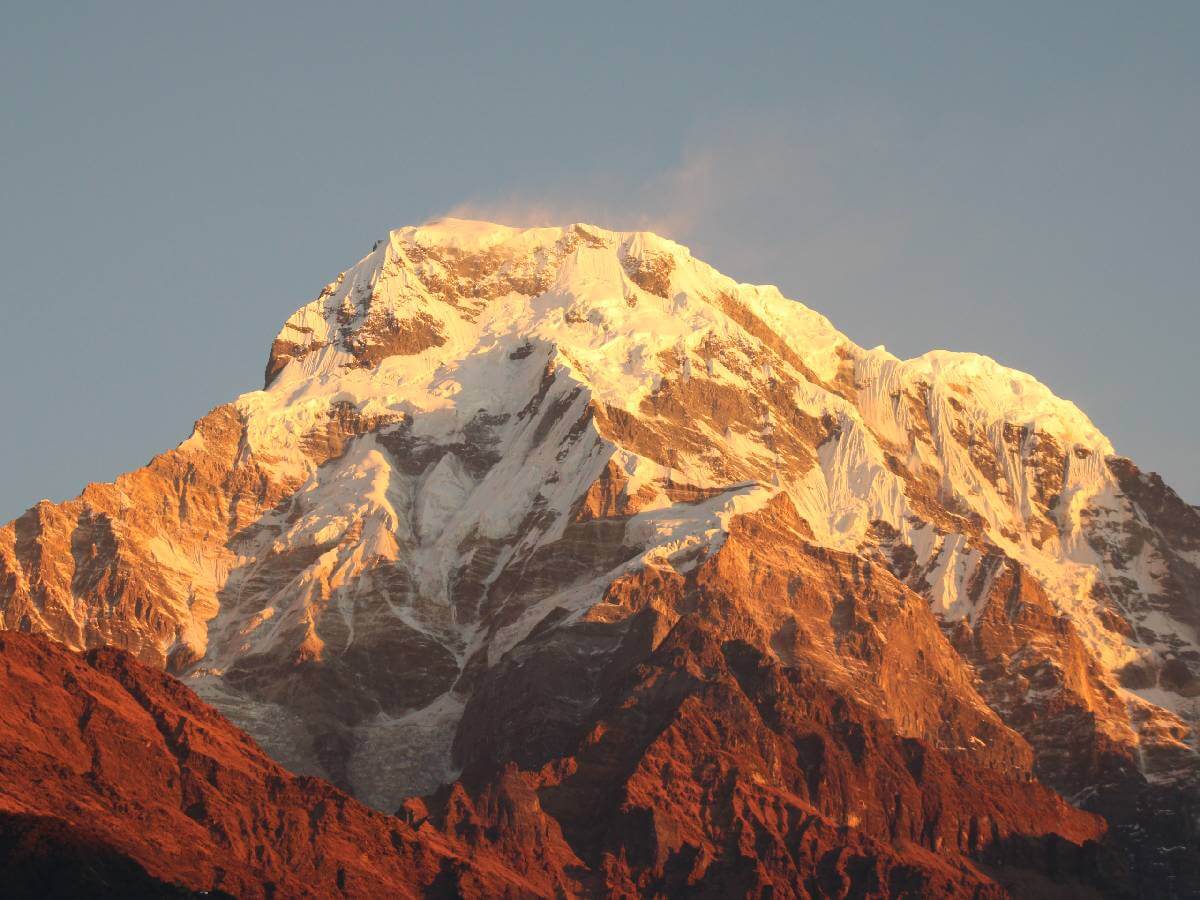
- Watch sunrise and sunset over Annapurna South, Hiunchuli, and Machhapuchhre the golden and pink alpenglow on the peaks in early morning and late afternoon is one of the village's signature experiences, visible from multiple points without needing to hike further.
- Attend or watch a traditional Gurung dance performance, arranged through lodges or the village cultural center, featuring traditional dress, music, and dance forms such as Ghatu.
- Explore the terraced farmland surrounding the village, where maize, millet, and potatoes are grown a good way to understand the agricultural backbone of daily Gurung life.
Permits Required for Visiting Ghandruk
The permits required for visit Ghandruk village are the Annapurna Conservation Area Permit often known as the ACAP which costs NPR 3,000 for foreign nationals and NPR 1,000 for SAARC nationals.
Before 2023 you were required to get the Tims permit as well but as of 2026 August there is no mandatory requirement of the TIMS making you easy to obtain the ACAP permit and visit this beautiful village.
If you are just exploring the Ghandruk village only you will not require the trekking guides however, if you are planning to do the Ghorepani Poon hill trek, Machapuchhare base camp trek or the Annapurna base camp trek then you will require the trekking guides as well without the guides you will not be allow to enter the conservation area above the Ghandruk village.
What mountains are seen from Ghandruk village?
There are many mountains seen from Ghandruk village such as the Annapurna South (7,219 m), Hiunchuli (6,441 m), Machhapuchhre / Fishtail (6,993 m), Gangapurna and the Annapurna I (8,091 m).
What Is the Cost of a One-Night Stay in Ghandruk?
The cost for one night stay in Ghandruk is varies by property type and the whether the meals are included or not. However you can check our table below for the average cost.
| Accommodation Type | Approximate Cost Per Night |
|---|---|
| Basic Teahouse / Guesthouse Room | USD 5–15 (often nominal if you eat dinner and breakfast at the lodge) |
| Homestay (Per Person, Often Meal-Inclusive) | USD 10–15 |
| Mid-Range Lodge / Eco-Lodge | USD 20–40 |
| Boutique / Higher-End Hotel | USD 36+ |
Vehicle rental for Ghandruk Village
Travel to Ghandruk Village in comfort by renting a private vehicle with us. We offer well-maintained Scorpio SUVs and 4WD Jeeps, ensuring a safe and comfortable journey to this beautiful Gurung village. Our vehicle Ghandruk rental prices start from USD 200 to USD 250, depending on your group size and the type of vehicle you choose. Whether you're traveling solo, with family, or in a group, we can provide the most suitable transportation option for your trip.