
Planning to reach Everest Base Camp and wondering where the journey actually begins? The trek starts long before you step onto the trail. Most trekkers first travel from Kathmandu to Lukla, the traditional gateway to the Khumbu region, before beginning the trek toward Everest Base Camp. In this guide, you’ll learn how to reach Everest Base Camp step by step, including flights from Kathmandu to Lukla, road and alternative routes into the Everest region, the main trekking starting points, and what the journey looks like from the trailhead to Base Camp. By the end, you’ll have a clear understanding of how the entire journey to Everest Base Camp works and where your trek actually begins.
Where Does the Everest Base Camp Trek Start?
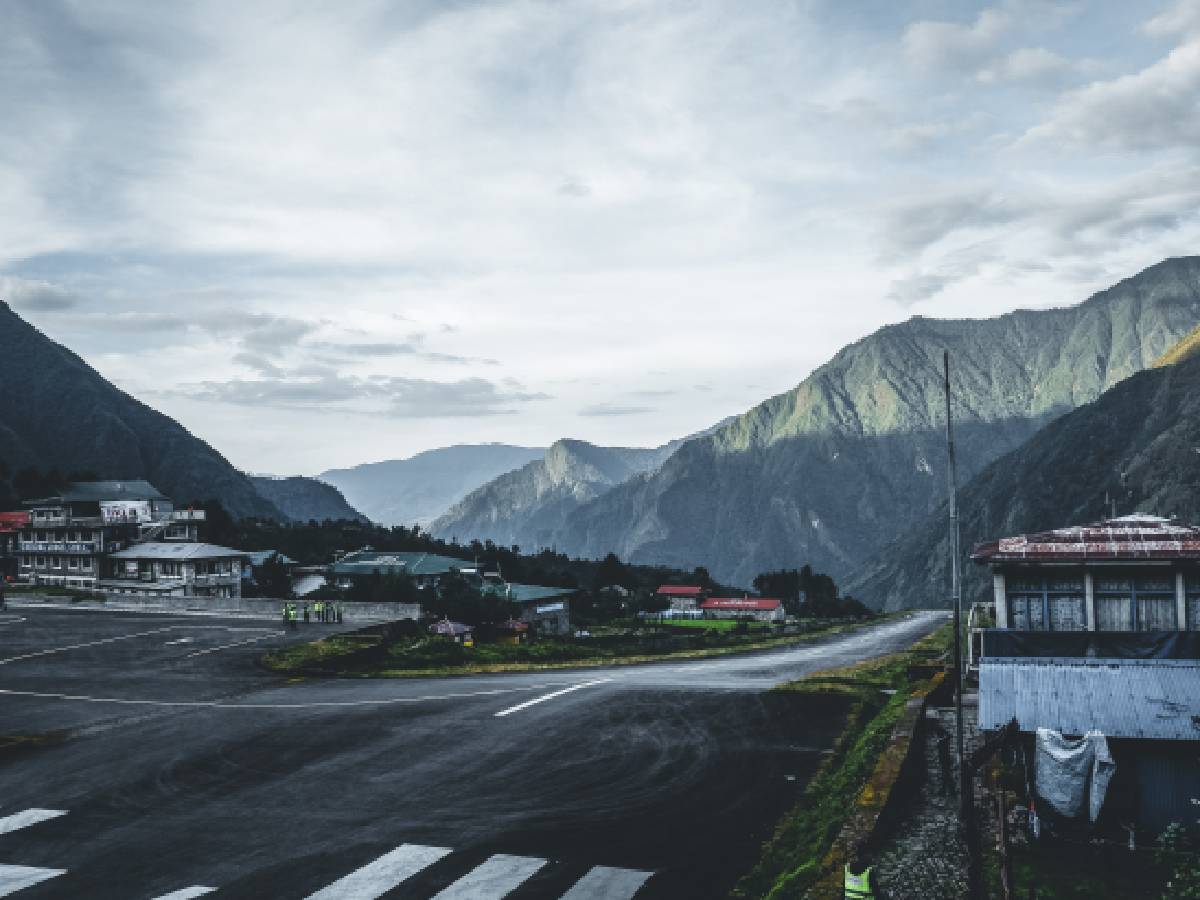
The Everest Base Camp Trek generally starts from Tenzing-Hillary Airport, also known as Lukla Airport, which is considered the gateway to the Everest region. However, the exact starting point can vary depending on the itinerary and route you choose. Alternative routes to EBC can begin from places such as Jiri, Salleri, or Surke, offering different trekking experiences and durations.
How to Reach Everest Base Camp from Kathmandu?
You can reach Everest base camp from Kathmandu via many ways such as:
Domestic Flight from Kathmandu to Lukla
The fast and the most convenient way to reach the Everest base camp from Kathmandu is take a domestic flight from the Tribhuvan International airport and fly to the Lukla airport. The travel time is around 45 minutes from the capital city.
Sharing Helicopter from Kathmandu to Lukla
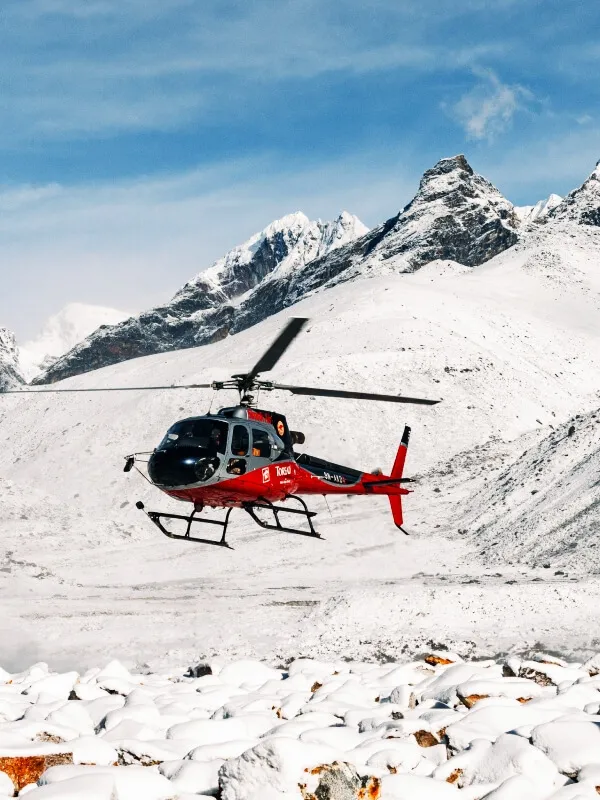
You can take a shared helicopter from Kathmandu to Lukla. It is a direct and convenient option for travelers who want to reach Lukla without taking a regular flight or traveling by road to Ramechhap first. The helicopter usually takes around 45–60 minutes, depending on weather and operating conditions. Because the cost is shared among passengers, it is generally cheaper than chartering a private helicopter, but more expensive than a regular domestic flight.
Sharing Helicopter from Kathmandu to Everest base camp
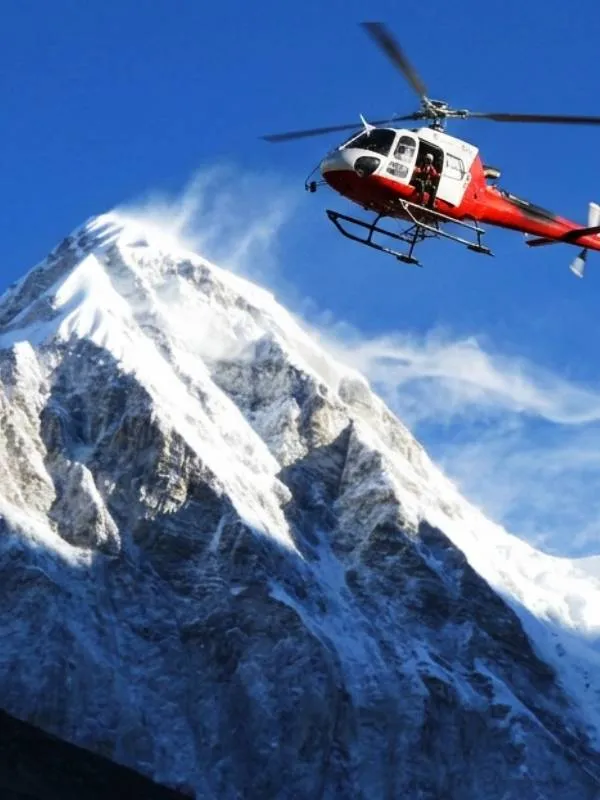
If you want to experience Everest Base Camp without completing the full trek from Lukla, you can choose a shared helicopter tour from Kathmandu. Instead of trekking through Namche Bazaar, Tengboche, Deboche, and Lobuche, you can fly directly into the Everest region, enjoy incredible views of Everest Base Camp and the surrounding mountains, and land at a permitted viewpoint such as Kala Patthar. After spending a short time in the Everest region, you can fly back to Kathmandu on the same day.
How to Reach Lukla by Flight?
You can reach Lukla by flight in two different ways. You can either take a domestic flight from Kathmandu Airport to Lukla Airport, which normally takes around 45 minutes, or, if the flights are diverted to Ramechhap due to air traffic, you can drive from Kathmandu to Ramechhap and then take a flight from Ramechhap Airport to Lukla, which takes around 30 minutes. The cost may vary depending on the season, number of travellers, and demand.
Can You Reach Everest Base Camp Without Flying to Lukla?
Yes, you can reach Everest Base Camp without flying to Lukla. While Lukla is the traditional gateway to the Everest region, trekkers who prefer to avoid the flight can travel by road from Kathmandu toward Salleri, Phaplu, or Jiri and continue the journey on foot.
These alternatives take longer than the standard Lukla route, but they offer a completely different experience and allow you to reach Everest Base Camp without taking a flight to Lukla.
Kathmandu to Salleri or Phaplu by Road
If you want to reach Everest Base Camp without flying to Lukla, you can first travel from Kathmandu to Salleri or Phaplu by road and then begin the trek toward the Everest region.
Salleri is generally the more practical road-access point for trekkers. From Kathmandu, the journey is usually made by jeep or bus, and the road takes you through the hilly regions of Nepal before reaching Solukhumbu. From Salleri, you continue by road toward Thamdanda/Surke, depending on current road conditions, before joining the trekking trail toward Namche Bazaar.
Phaplu is located close to Salleri and is also connected to Kathmandu by road. Because the two places are very close, itineraries may mention Salleri/Phaplu interchangeably, although your exact road endpoint depends on the vehicle and current road conditions.
How Long Does It Take to Reach Everest Base Camp?
The Everest Base Camp general itinerary takes around 14 days, from your arrival in Kathmandu to the flight and trek through Phakding, Namche, Tengboche, Dingboche, Lobuche, and finally Everest Base Camp. We have written a short itinerary for you, which you can check below. If you want the full detailed itinerary, WhatsApp us at +977 9841120805 or email us at [email protected].
Check the 14 day outline itinerary below:
| Day | Itinerary |
|---|---|
| Day 1 | Arrival in Kathmandu |
| Day 2 | Kathmandu to Lukla – Trek to Phakding |
| Day 3 | Phakding to Namche Bazaar |
| Day 4 | Acclimatization Day in Namche Bazaar |
| Day 5 | Namche Bazaar to Tengboche |
| Day 6 | Tengboche to Dingboche |
| Day 7 | Acclimatization Day in Dingboche |
| Day 8 | Dingboche to Lobuche |
| Day 9 | Lobuche to Gorak Shep – Everest Base Camp |
| Day 10 | Gorak Shep to Kala Patthar – Trek to Pheriche |
| Day 11 | Pheriche to Namche Bazaar |
| Day 12 | Namche Bazaar to Lukla |
| Day 13 | Lukla to Kathmandu |
| Day 14 | Departure from Kathmandu |
How Difficult Is It to Reach Everest Base Camp?
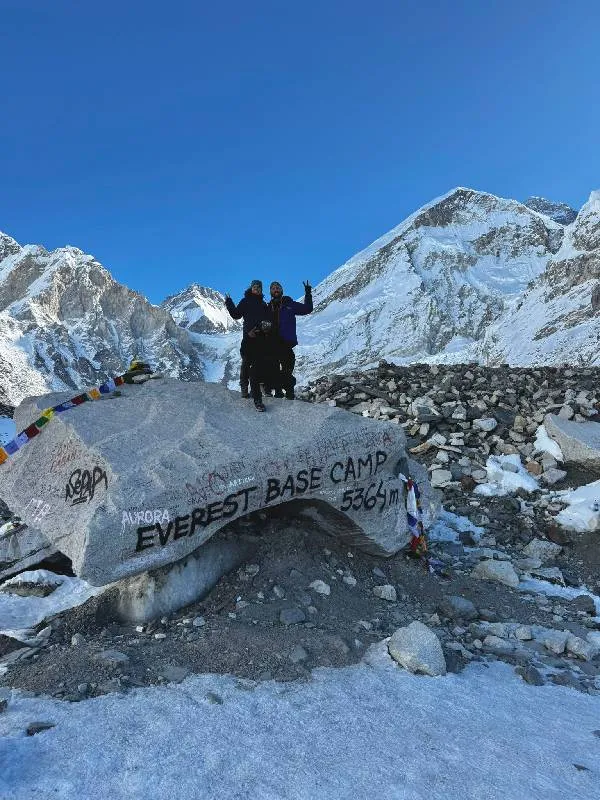
The difficulty level of the Everest Base Camp trek is moderate, as the highest altitude you will reach at Everest Base Camp is around 5,364 m (17,598 ft). If you also hike to Kala Patthar, the highest point you will reach is around 5,545 m (18,225 ft). The trek is considered moderate because of the high altitude, long walking days, steep and uneven trails, and changing mountain conditions. However, you do not need technical mountaineering skills or previous climbing experience to complete the trek. For a detailed explanation of the Everest Base Camp trek difficulty, read our complete blog.
What is the best time to trek to Everest base camp?
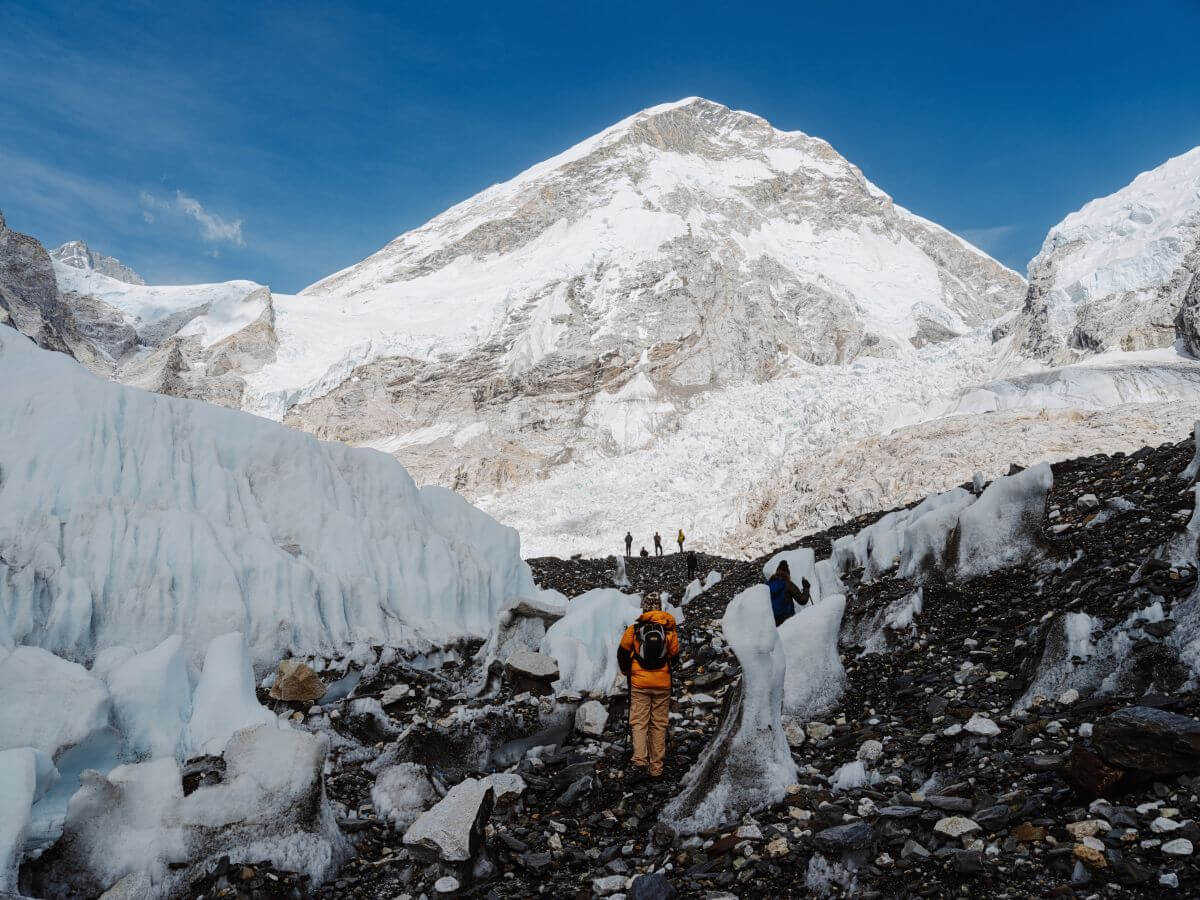
The best time to trek to Everest Base Camp is during spring (March to May) and autumn (September to November). These months generally offer the best combination of clear mountain views, stable weather, good trail conditions, and comfortable trekking temperatures, making them the most popular seasons for the EBC trek.
If you want to understand the best time month by month, including the weather, temperature, crowds, visibility, advantages, disadvantages, and which season is best for different types of trekkers, we have covered everything in our dedicated guide to the best time to trek to Everest Base Camp.
Read our complete guide: Best Time to Trek to Everest Base Camp for a detailed seasonal and month-by-month breakdown.
Frequently Asked Questions About Reaching Everest Base Camp
What is the starting point for reaching Everest Base Camp?
The starting point for the Everest Base Camp trek is generally Lukla Airport, which serves as the main gateway to the Khumbu region. If you prefer not to fly to Lukla, you can also reach the EBC by road, traveling via Salleri or Phaplu and continuing the trek from there.
Is there more than one way to get to Everest Base Camp?
Yes, there is more than one way to reach Everest Base Camp, as discussed in this blog. The main options include flying from Kathmandu to Lukla and trekking to EBC, taking a helicopter directly to Everest Base Camp, or traveling by road to Salleri, Phaplu, or Jiri before continuing the journey toward the Everest region.
Which villages do you pass through before Everest Base Camp?
You will pass through several beautiful Sherpa villages on the way to Everest Base Camp, including Lukla, Phakding, Namche Bazaar, Tengboche, Debuche, Lobuche, and Gorakshep, before reaching Base Camp. Unlike Annapurna Base Camp, Everest trek base camp does not have a permanent settlement or tea house. Trekkers therefore stay overnight at Gorakshep, the final settlement before reaching EBC, and make the return journey to Gorakshep after visiting the base camp.
How far do you have to walk to reach Everest Base Camp?
You will need to walk around 100 km before reaching Everest Base Camp, starting from Lukla. The days are divided into multiple stages, which makes your journey more comfortable. You will typically need to walk for 6 to 8 hours a day and cover around 8 to 10 km each day.
What is the last place before reaching Everest Base Camp?
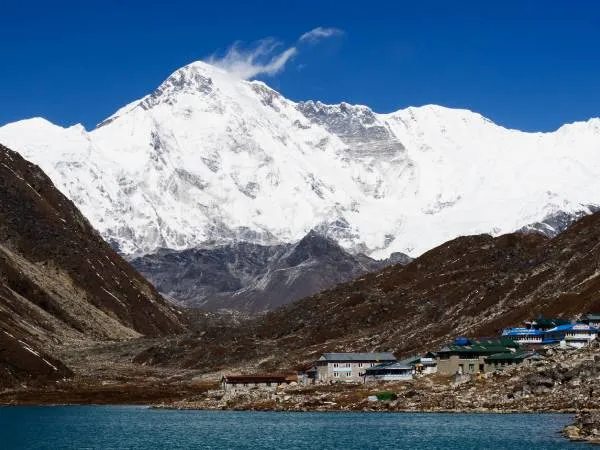
The last place before reaching Everest Base Camp is Gorakshep, which is the final settlement before reaching the foot of the world's highest mountain, Everest. It lies at an altitude of 5,164 meters (16,942 feet) above sea level. It is located next to a frozen, dry lake bed in Sagarmatha National Park and is surrounded by massive Himalayan peaks and glaciers.
How do trekkers get from Gorak Shep to Everest Base Camp?
Trekkers get from Gorak Shep to Everest Base Camp by walking along the trail through the Khumbu Glacier area. The walk takes around 2 to 3 hours one way, depending on the pace and trail conditions.
Trekkers usually start early in the morning, reach Base Camp, spend some time exploring and taking photographs, and then walk back to Gorak Shep for an overnight stay.
Can you reach Everest Base Camp in a single day?
Yes, you can reach Everest Base Camp in a single day by flying from Kathmandu to Base Camp, exploring the place, and returning to Kathmandu on the same day. You can get both options, a shared helicopter flight and a private charter, if required.
Do you need a guide to reach Everest Base Camp?
Yes, you need a guide for Everest Base Camp because a guide is not only your trekking partner, but he or she is also someone who knows the mountains, weather conditions, altitude sickness and takes care of you. He knows the mountains well and is trained to keep you safe and help you in case of an emergency.
Can you trek to Everest Base Camp independently?
Yes, you can currently do the Everest Base Camp trek independently. However, there is a mandatory guide bill for trekking in the national parks of Nepal, and as it has not been passed yet as of September 4, the writing date of this blog, solo trekking is still allowed. However, if anything changes, we will update you, or you can check the latest regulations from the Nepal Tourism Board.
Can you reach Everest Base Camp during winter?
Yes, you can reach Everest Base Camp during winter with proper planning and a proper packing list. You will need to prepare for snowfall, freezing conditions, unpredictable weather conditions, and harsh, cold nights. So, be prepared for it, get the proper sleeping bags, crampons, warm down jackets, shoes, pants and especial winter packing list for the Everest Base Camp trek.
Can you reach Everest Base Camp during the monsoon?
Yes, you can reach Everest Base Camp during the monsoon, but you will need to be prepared for changing weather conditions and rainfall. The Everest region receives less rainfall than many other parts of Nepal, especially at higher elevations, but the trails can still be affected by rain, clouds, and flight delays. With proper planning, a good packing list, and some flexibility in your schedule, you can still complete the Everest Base Camp trek during the monsoon.
Can you reach Everest Base Camp if you have never trekked before?
Yes, you can reach Everest Base Camp even if you have never trekked before. You do not need previous trekking experience, but you should be physically prepared for the long walking days, high altitude, and changing mountain conditions. With proper preparation, a suitable itinerary, and a gradual pace, beginners can complete the Everest Base Camp trek successfully.